Uniden CR-2021
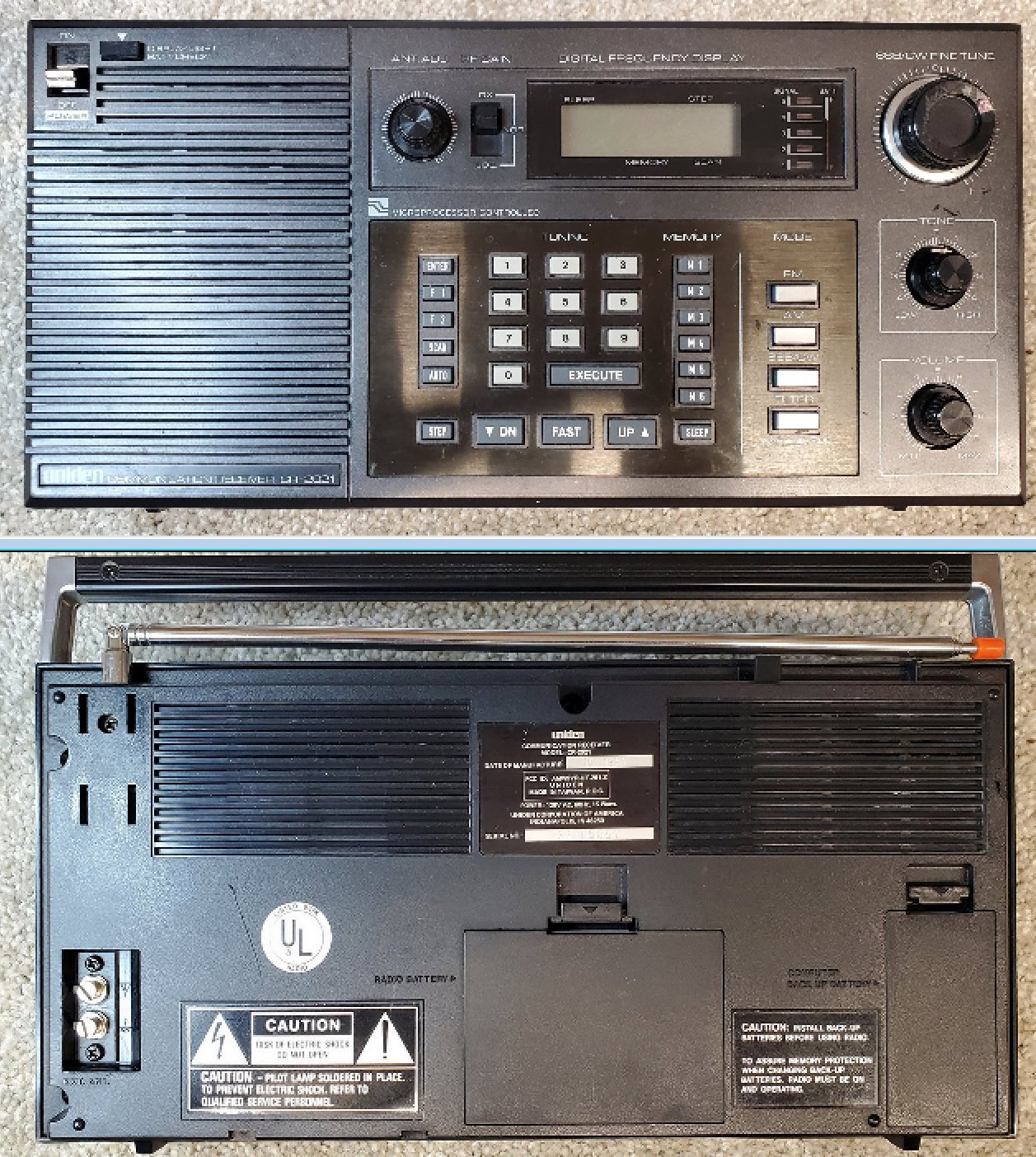
The Uniden CR-2021 is an early digital radio introduced in 1983 and it is one of the quirkiest models I have seen. While many early digital radios had some unusual characteristics by today’s standards, this Uniden leads in the strangeness category. While it is a well-made and nice-looking radio with some cool features such as an Antenna Tuning control, the tuning arrangement is odd. There is no Tuning knob as such…only an SSB Fine Tuning knob, regular tuning is accomplished by Up/Down buttons which itself is not that unusual, but what is really odd is that the tuning steps are 1KHz and 3 KHz. Why 3 KHz? Evidently that would work in countries with 9Hz AM Tuning steps but here in the US with 10 KHz AM steps or on SW bands that just doesn’t’ work except on 1 KHz mode. Luckily there is a keypad for direct frequency entry which is a saving grace.
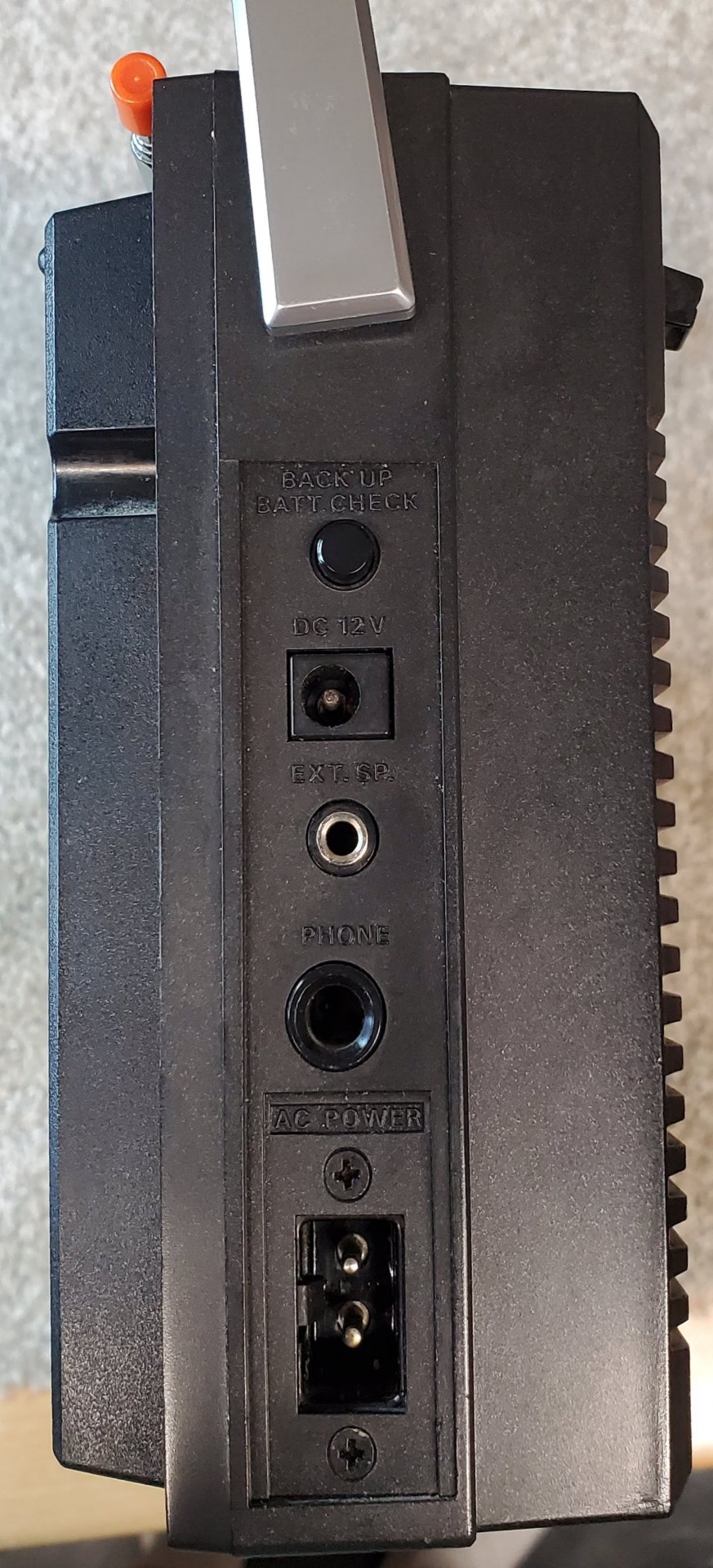
Specifications & Features:
Keypad for Direct Frequency Entry
AM/LW/SW: 150 – 29,999 KHz
FM: 87.4 – 108 MHz
Tuning Steps (AM/LW/SW) 3KHz/1 KHz, (FM) 100 KHz/50 KHz)
Auto Scan
Wide/Narrow Bandwidth Control
Tone Control
SSB Mode with BFO & Fine Tuning Knob
Antenna Trimmer Knob
RF Gain Switch (3 Settings)
Triple Conversion
Headphone Jack
External Speaker Jack
Ext Antenna Screws work on all bands
Record Out Jack
12 Memories
Scan between 2 Frequencies
LED Tuning Indicator
Main Battery Test Switch
Backup Battery Test Switch
Dial Lamp Switch
Sleep Timer
Amplifier: 1.8 watts
Power: 120 Volt AC, 12 Volt DC, Battery (6 C Cells, 2 AA Cells) *
Battery Life: 8 Hours (with older carbon/zinc batteries)
* Notes: If radio is ON when the AA’s are changed the clock and memories will be saved.
* Between 360 KHz – 2.199 the ferrite rod works with the whip.
* If you input an incorrect frequency, Try Again appears on the display
* It is unusual that there are two battery check buttons – one for the main cells and one for the backup cells.
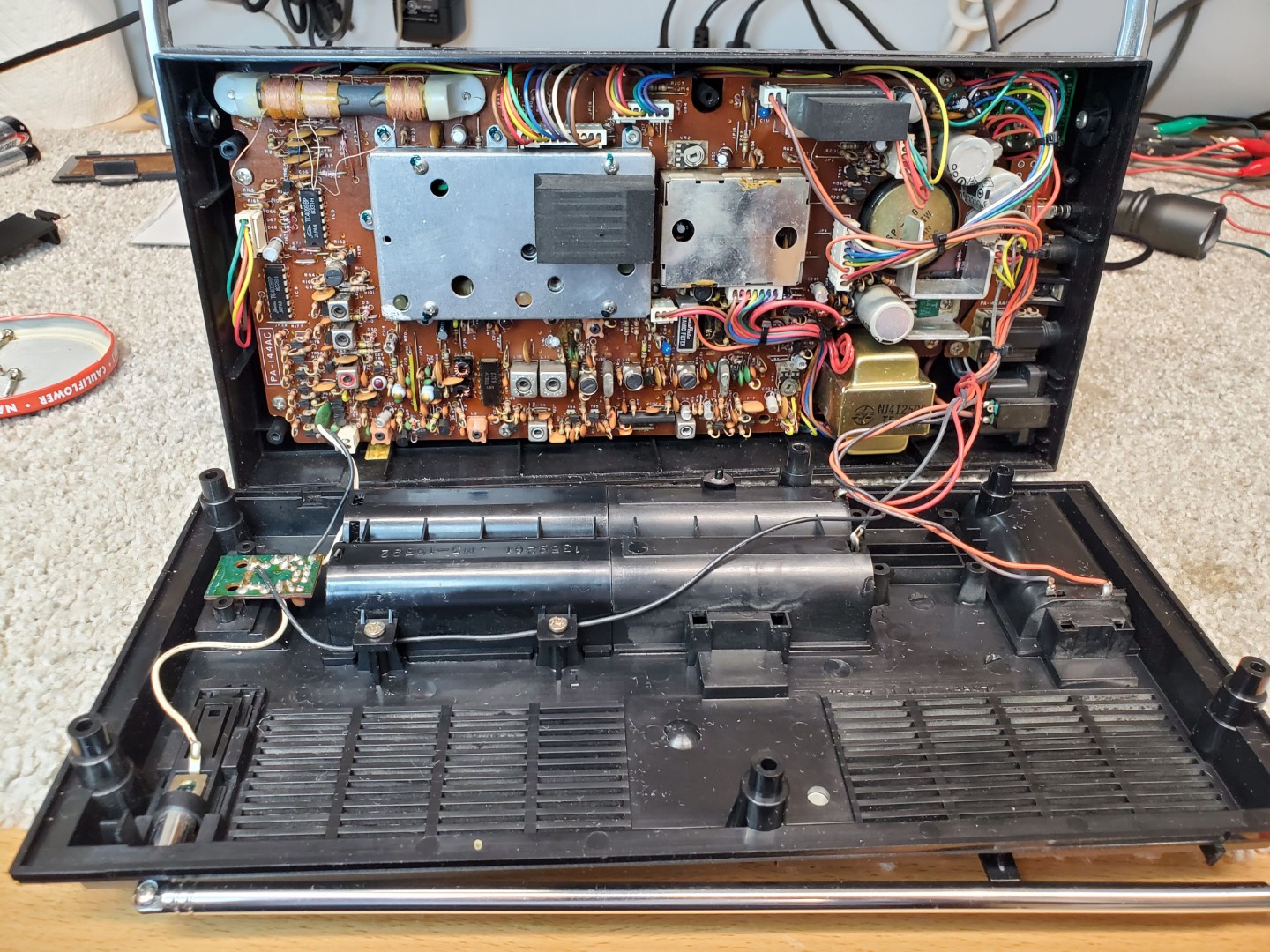
Checking out the Uniden CR-2021
I said at the top that this radio is a bit quirky and that became obvious as I began to experiment with it. I am inclined to cut the radio some slack because it was born during the infancy of digital portable radios, and overall, the performance is not bad at all. But the most noticeable oddity is the AM/LW/SW Tuning Steps of 1 KHz and 3 KHz. Of course, the 1 KHz steps are typical for fine tuning but 3 KHz steps are useless on SW and on AM in the US where the stations are spaced 10 KHz apart. Using the Up/Down buttons at 1 KHz is tedious but luckily there is direct frequency input via the keypad. Most radios offer a choice of 10KHz/9 KHz steps and for normal tuning 5 or 10 KHz steps are the norm. 3 KHz is odd to say the least for a radio made for the US market.
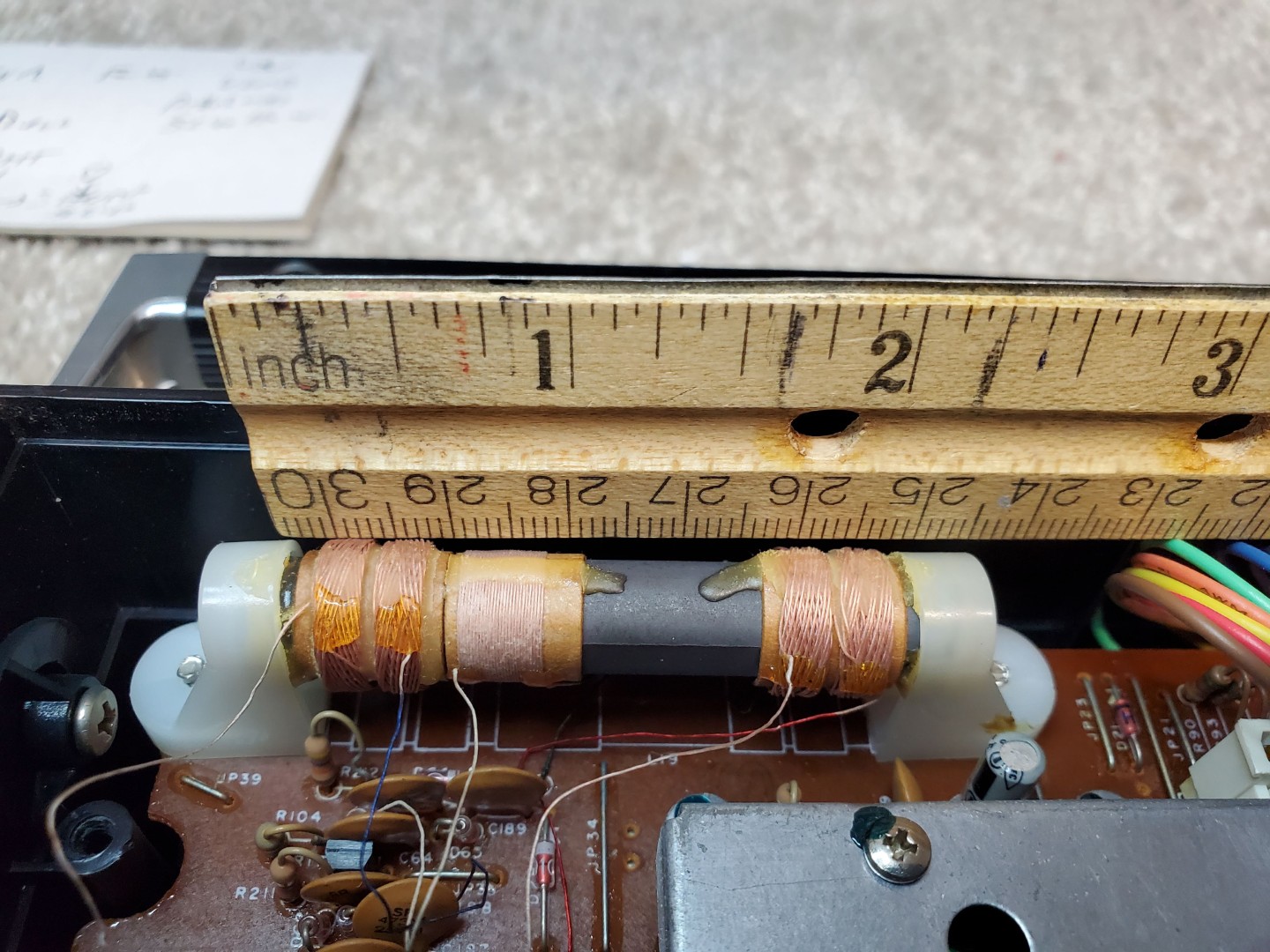
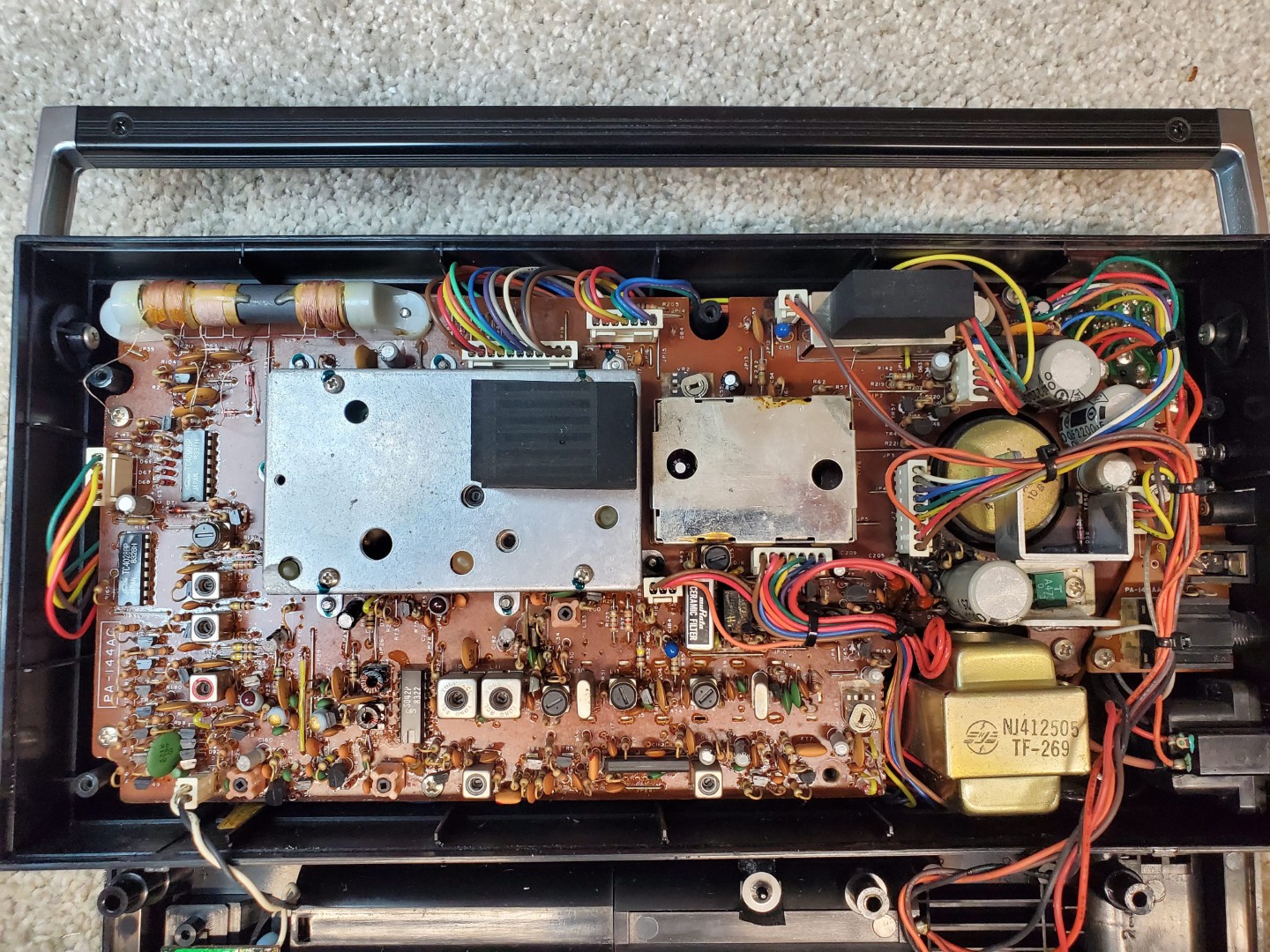
You will also note the unusually short AM ferrite Rod antenna…at just over 2 inches it is the tiniest I have ever seen in a full-sized portable radio, although it was a surprise that the AM sensitivity is not terrible…it will rank about 3 on the AM Mega Shootout. The manual states that the ferrite rod works along with the whip between 360 KHz – 2.199 and if you are in a low noise location (usually outdoors) where whips work well on AM you can give that option a try. I noted little benefit from using the whip near the lower parts of the AM band but higher up on the band the whip did sometimes increase the signal a bit. Generally whips are more effective on AM as the frequency increases.
SW was reasonably sensitive as well and FM was typical of the era with adequate sensitivity but barn-door-wide FM selectivity so it is not good at separating closely spaced FM stations on a crowded dial. SSB was reasonably stable as well and the sound was quite good.
Conclusion: What can one say about the Uniden CR-2021? Well, the most negative thing is the weird AM Tuning Steps which require that you either enter every frequency via the keypad or scan in 1 KHz steps which is of course, really slow. If you are an active band-scanner this is clearly not the radio for you, but other than that the radio performs quite well for its day. I found its reception and sound pleasing and I spent many enjoyable hours listening to it. Note that the manual claims 8 hours of battery life for the 6 C cells which would probably equate to perhaps 16 – 20 hours with modern alkaline but these early digital sets were certainly power hungry.
For everyday use it would not be my choice but it stands as an interesting note on how things were evolving in the early 1980’s.


You must be logged in to post a comment.