GE 7-2865A & Sony TFM-6100W
2 Cool Portables from Radios’ All-Analog Heyday
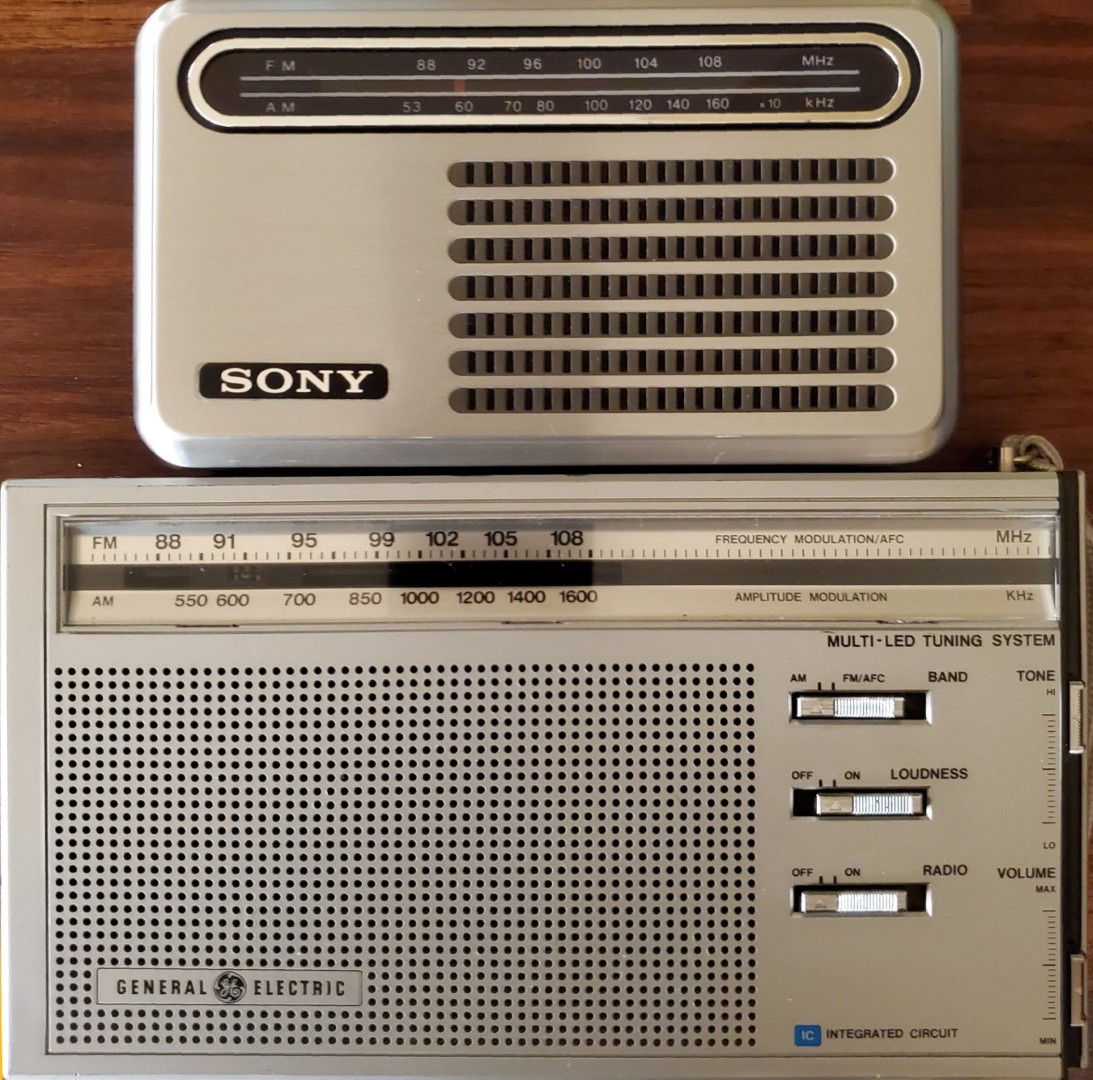
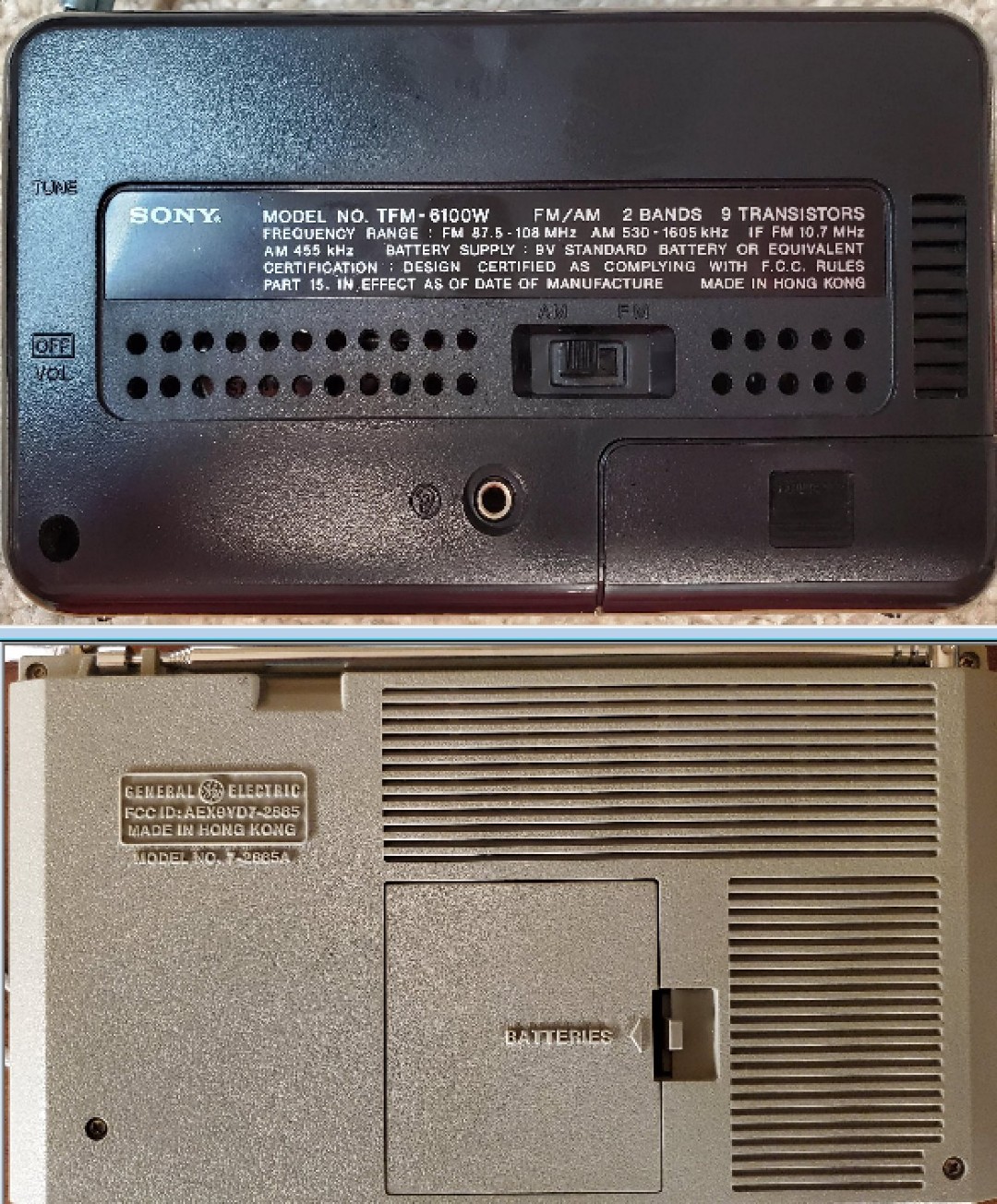
A reader who is downsizing sent me two interesting radios for review. The Sony TFM-6100W, introduced in 1975 and the GE 7-2865A from 1981. The smaller Sony retailed for around $38, measures approximately 6 x 3.75 x 1.6” and weighs about 14 Oz. The GE is somewhat larger at 8 x 4.5 x 1.5” and sold for between $40 – $50 as far as I can determine. Both cover the standard AM/FM bands although the GE is spec’d to reach 1630 KHz while the Sony’s specs list 1605 KHz at the top end, but both samples extended a bit further as received.
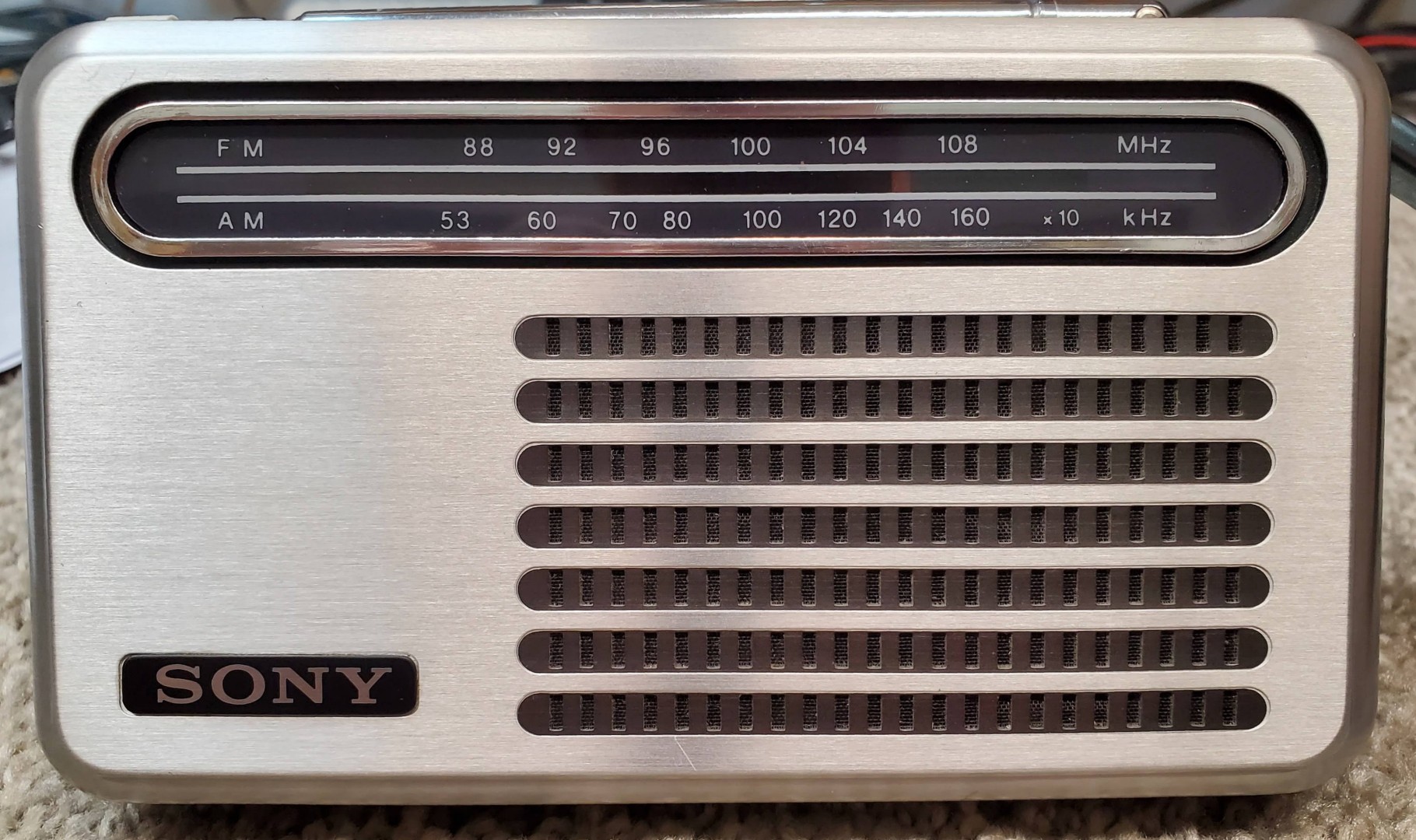
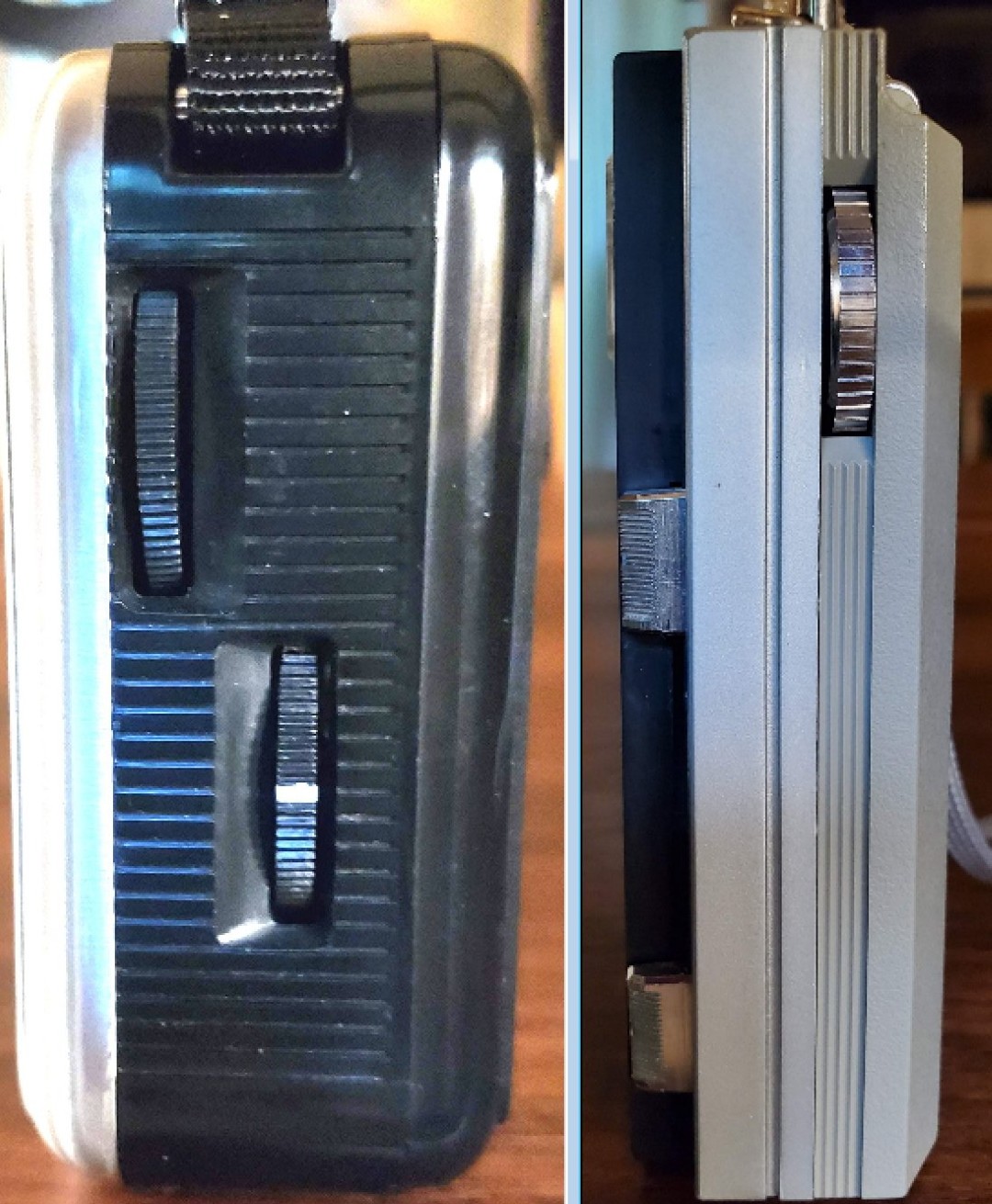
The Sony utilizes 8 transistors, runs on a 9-volt battery and has a 2.5” speaker. The GE contains 8 transistors and an IC to do much of the work. It runs on 4 AA cells and has a 3” speaker. Both radios have a standard mono earphone jack, the GE also has a 6-volt DC input jack. The Sony is the more basic model with an ON/Off Volume thumbwheel and tuning thumbwheel plus a rear-mounted band switch. The GE adds a Loudness switch (which is quite rare in a smaller portable), a tone control and unique 2-color Tuning LED’s which show two green indicators when you are mistuned and a red LED to indicate proper center-tuning…another very unique feature.
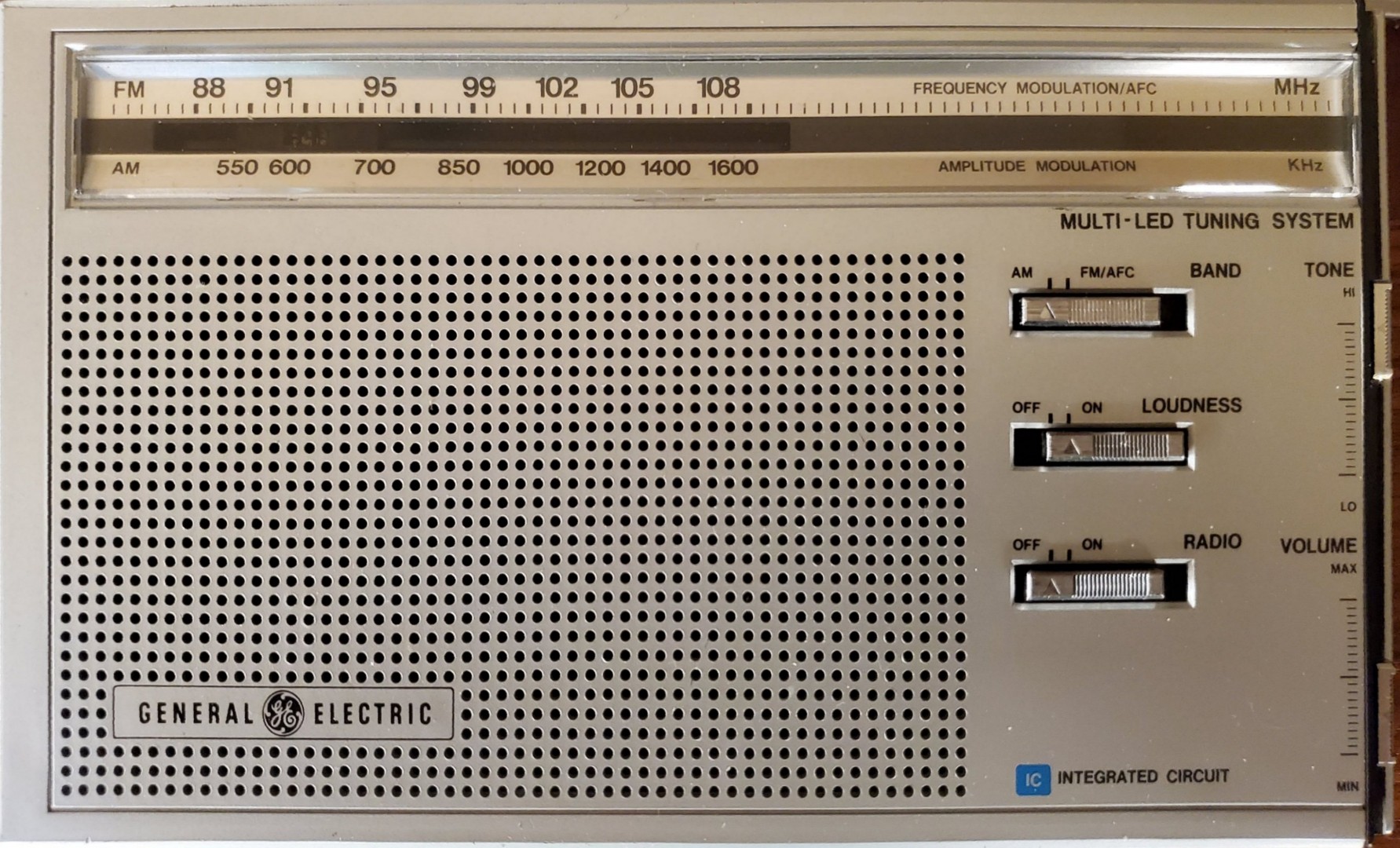
Checking Them Out: I first checked both radios for normal operation and while the Sony seemed to be working well in all respects the GE had two issues: The AM/FM switch required way too much force to move…it was virtually stuck, and when I finally forced it to move it was extremely erratic and intermittent. I also noted the dial calibration was quite far off on both bands.
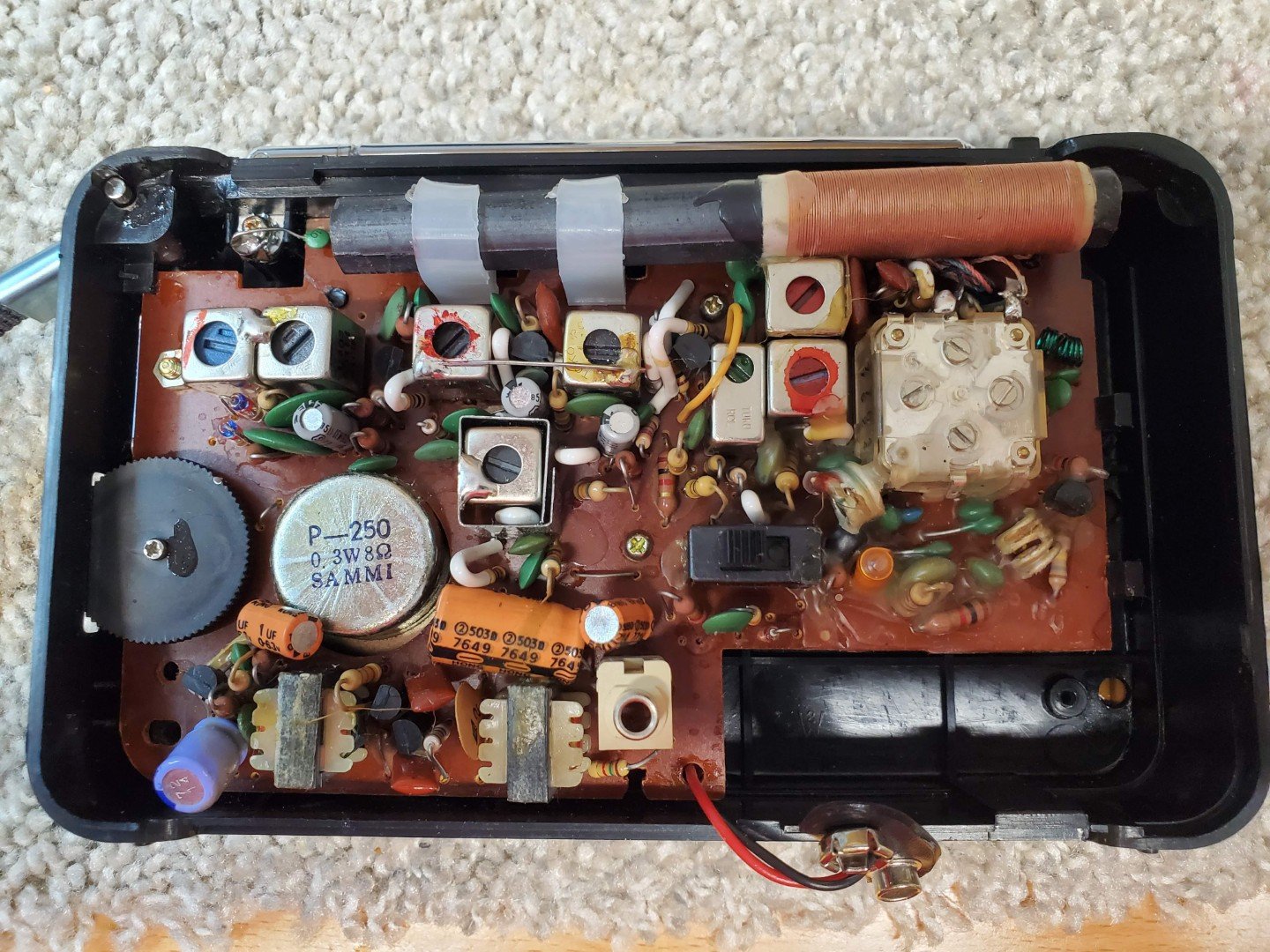
I obtained service manuals for both radios and since the Sony seemed to have no issues, I aligned it first and found it was quite close overall with only very minor improvements noted. This is impressive for a portable radio over 50 years old!
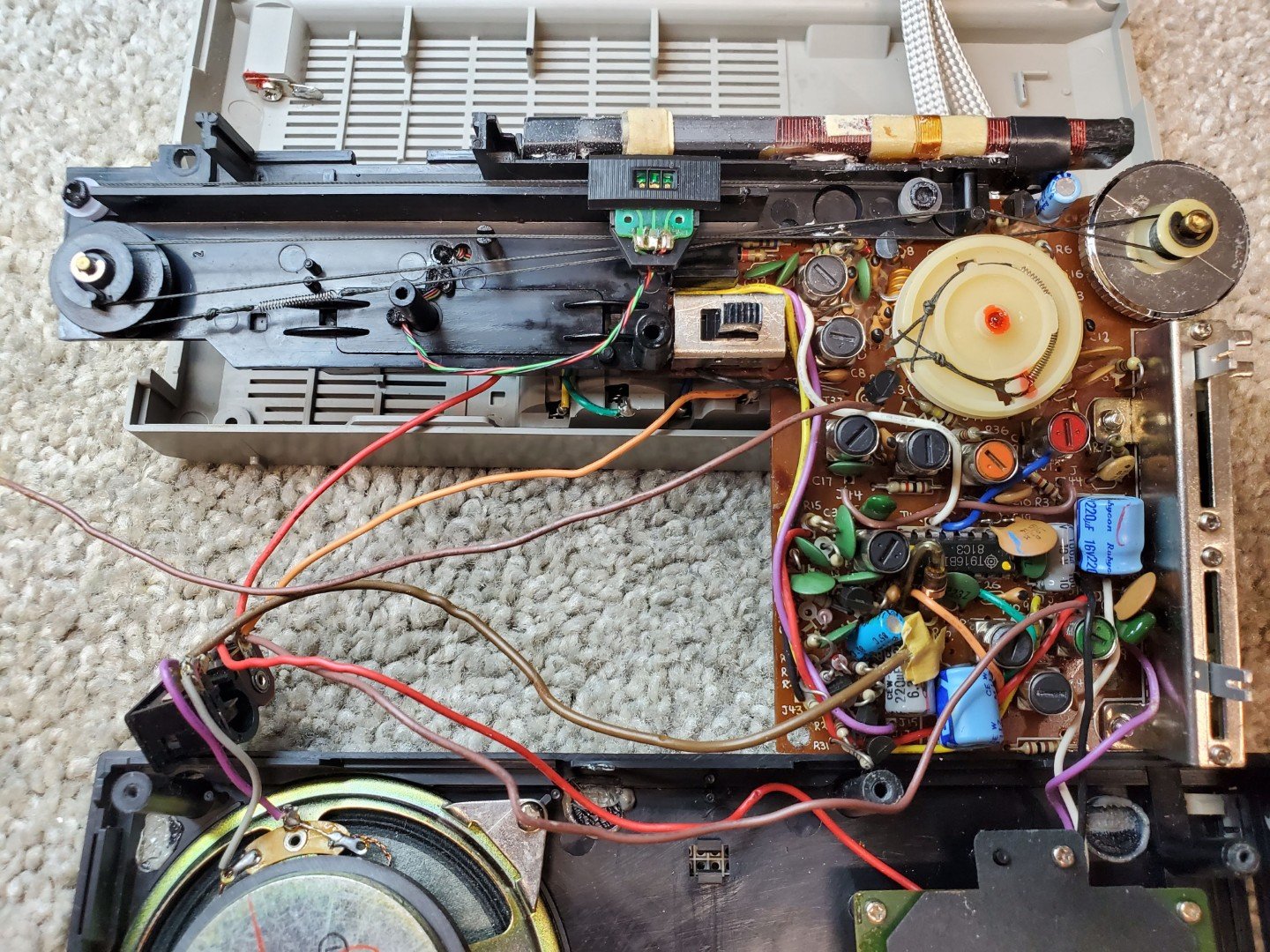
I then turned to the GE and ended up removing the band switch which was so stuck I could barely move it using pliers, even after squirting it with a few cleaners and solvents. I desoldered the switch and soaked it overnight in 91% Isopropyl. The next day it was still a little tight but the more I worked it the more it loosened up. I used compressed air to blow it dry then used De-Ox-It and although it was still a little tighter than it should be it was good enough that I decided to re-install it. Interestingly, a day later it was completely normal…I guess I lucked out.
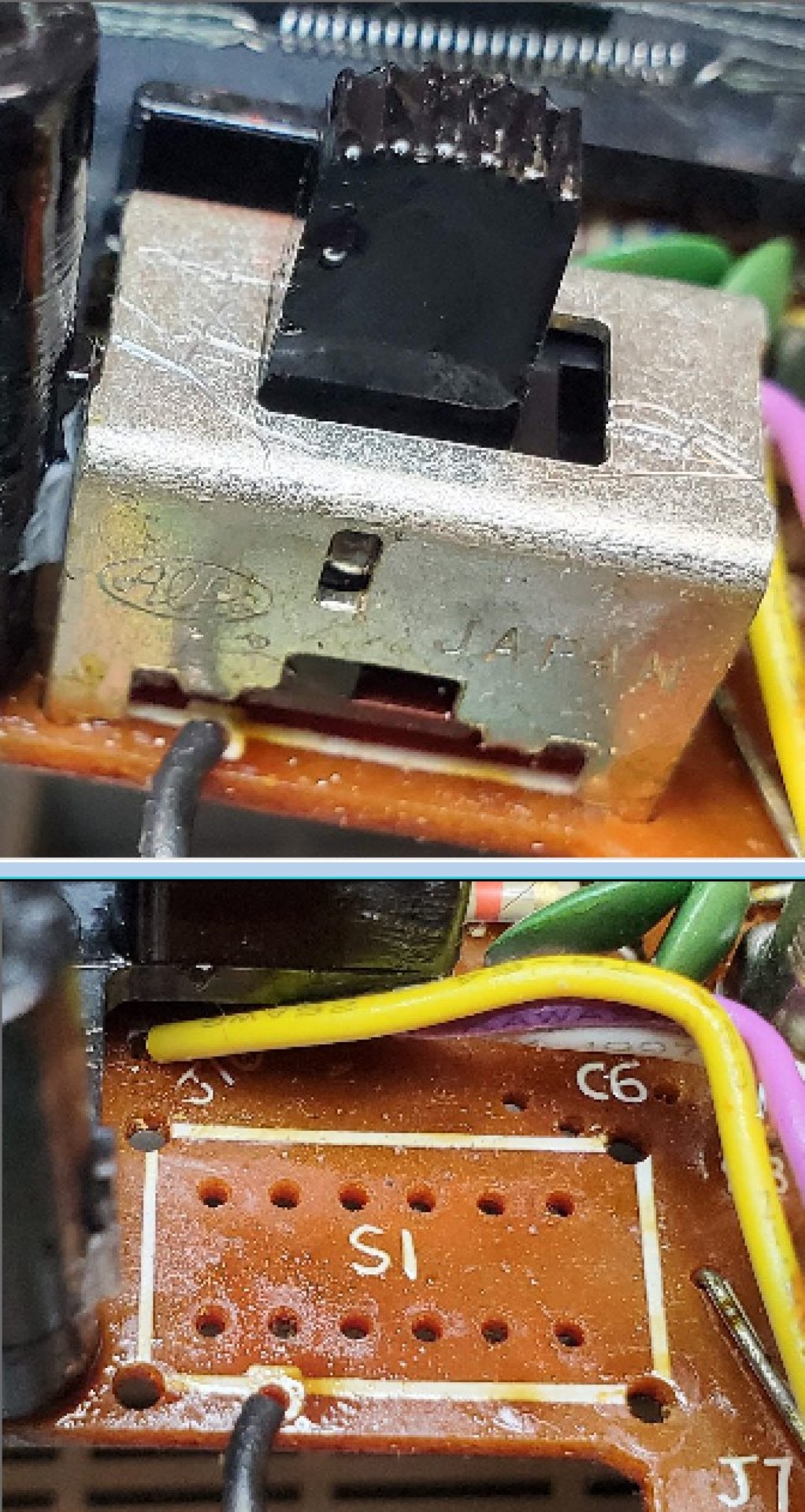
Above: Band switch removed for overnight soaking
After aligning the GE I determined that the dial calibration was off by the same amount on both AM and FM and was due to the dial pointer being incorrectly positioned on the dial string. I adjusted that and now the dial calibration was correct on both bands.
Performance: Here the GE was a clear winner, but more four sound quality than reception. The GE slightly outperformed the Sony on the AM Mega Shootout, rating *** for the GE versus ** ½ for the Sony. On FM they were closer…both around *** on the FM Mega Shootout. Typical of portables radios of the day they both had reasonable sensitivity but rather poor selectivity by modern standards with the GE just slightly better at separating tightly-packed FM signals. A much bigger difference was the sound quality…while the Sony sounds just fine for a compact portable, by comparison the larger GE sounded much richer and fuller and its Loudness switch and Tone control helped tailor the sound to my preference. Both radios have very strong AFC (Automatic Fine Tuning) on FM…this was common in the days when drifting off a station was considered more of a problem than the ability to separate closely spaced stations. With both radios this may cause the radio to skip over a weak signal next to a stronger one but sometimes you can catch the weaker signal by carefully tuning back and forth.
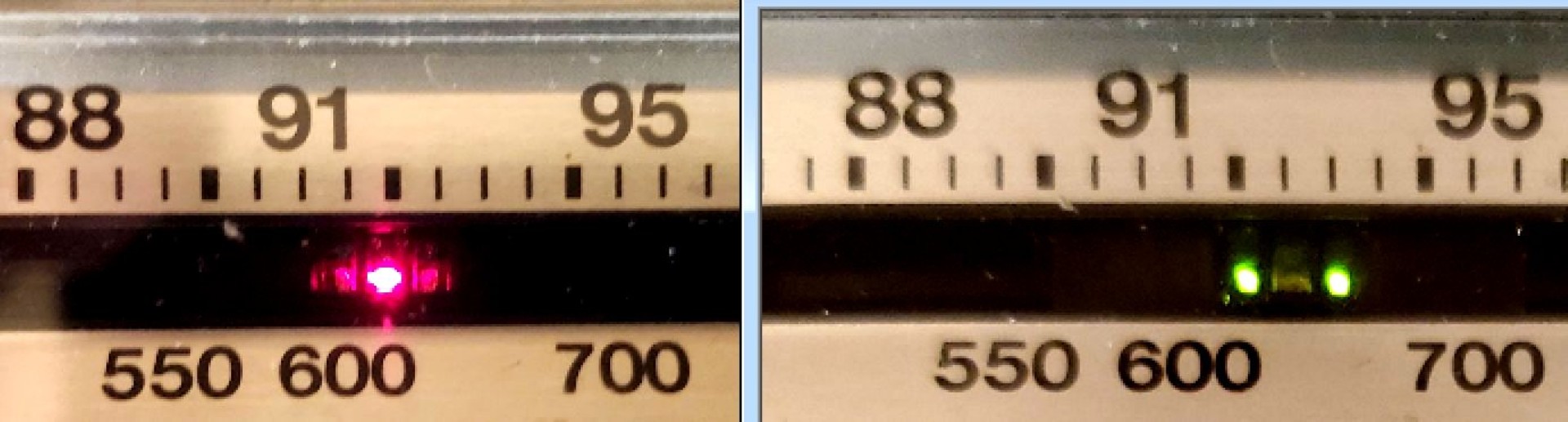
Above: Red – Center-tuned — Green – Mistuned
The two-color LED Tuning Indicators on the GE are certainly pretty but unfortunately they are not as helpful as they might be. As you tune to a station you can tune up and down across the signal quite a bit, even to the point where the station is obviously mistuned while still seeing the red LED. You have to be grossly mistuned before the two green LED’s come on so yes, they look cool but don’t actually help you fine tune nearly as well as you can do by ear. Apparently the sensing circuit for this feature is much too wide to be helpful.
However, I don’t want to overstate this because I like the GE quite a bit. It has a sleek, attractive design and impressive sound for its paperback book size…I really enjoy listening to this radio, and its reception is very good. And while the Sony does not compete for sound quality its reception is almost as good and its compact size is great for an AM/FM portable of its day…I imagine that getting one of these in 1975 would have been exciting. Add the fact that it survived over 50 years and still worked as well as new when I first tried it out in an impressive testament to its inherent quality. The Sony is a cool compact AM/FM while the slightly larger GE has more features and better sound…both are interesting in their own way.


You must be logged in to post a comment.