Sanyo RP-8700 Multiband Portable
(A nice radio with one big surprise)
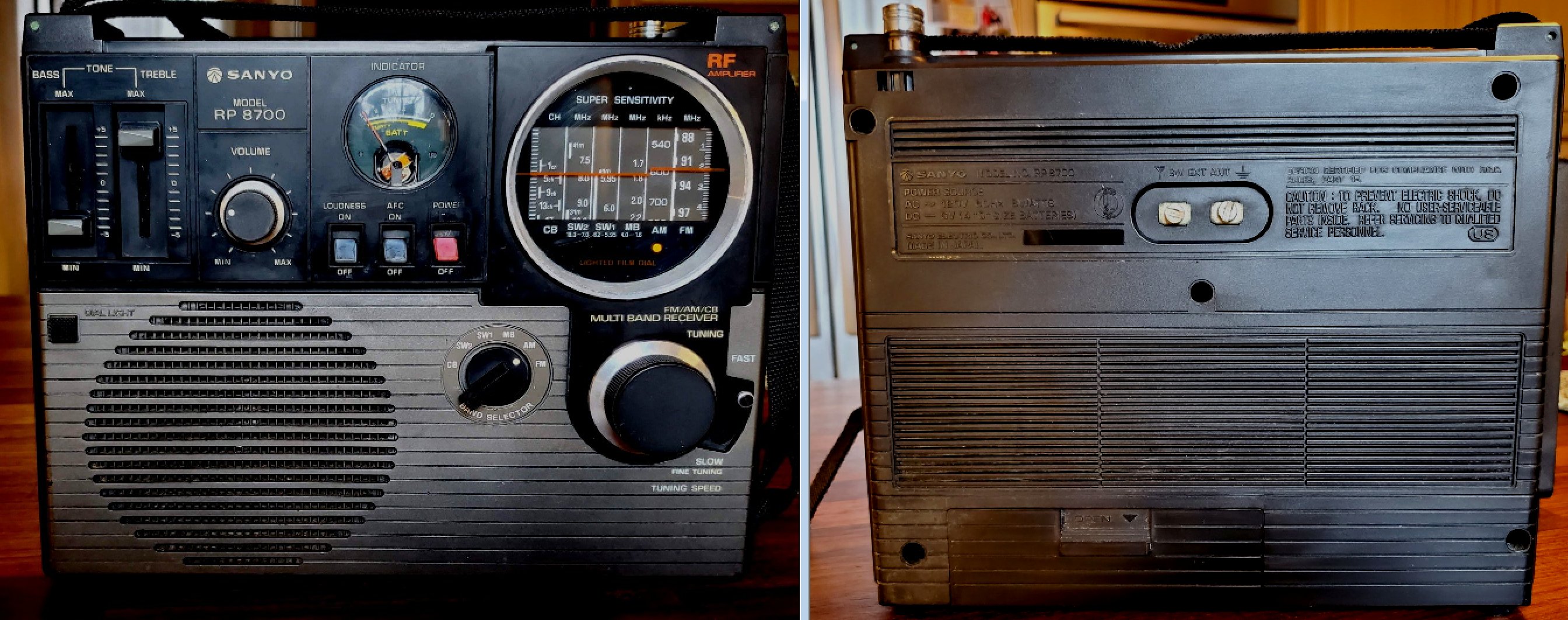
Sanyo was founded in 1947 and became a large manufacturer of electronic products and component parts. It was sold to Panasonic in 2009 and later to other entities but back in the day they made many portable radios not only under the Sanyo name but under many other names as well. It is common to look inside a vintage radio and find the name Sanyo inside, sometimes as the manufacturer of the entire radio and sometimes on the internal components as well. The RP-8700 was sold between approximately 1975-1978 and was a heavy-duty, solid all-analog design.
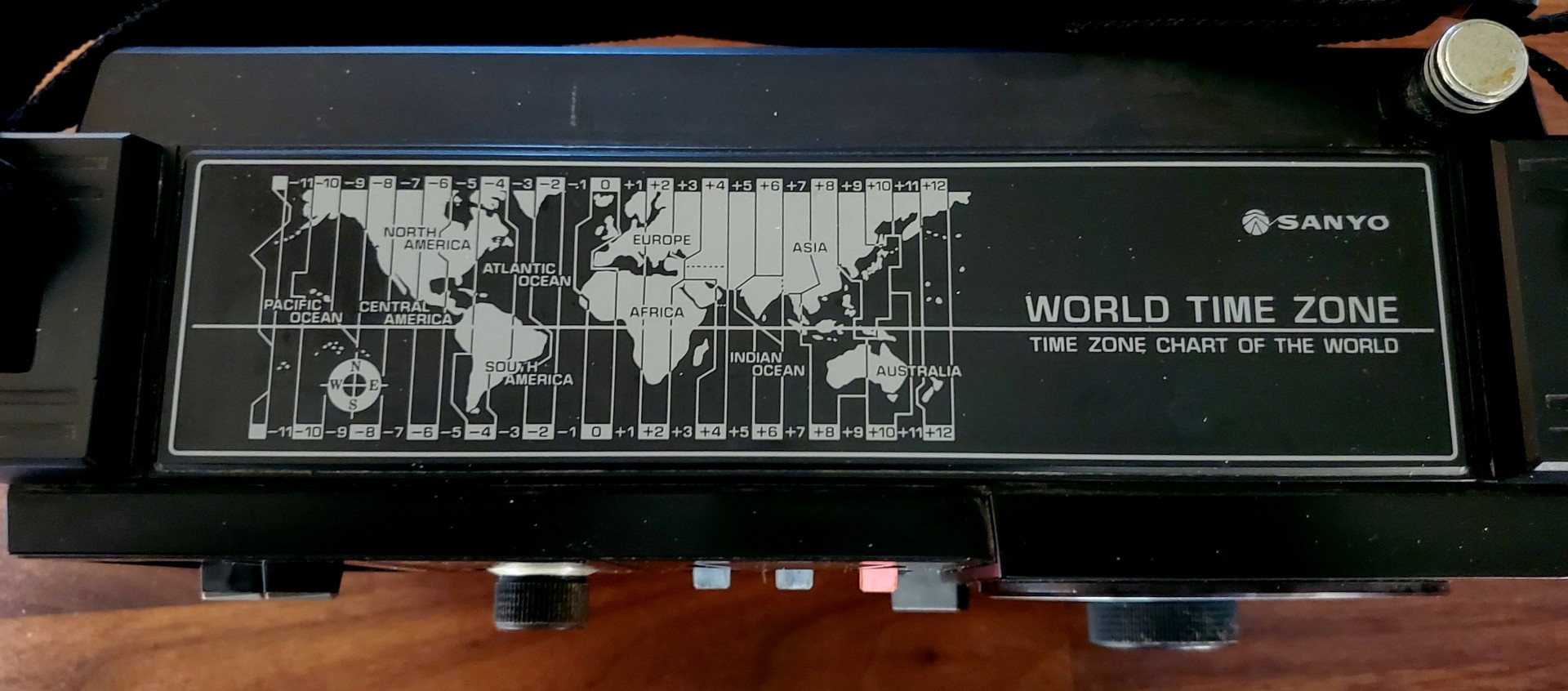
Features & Specifications:
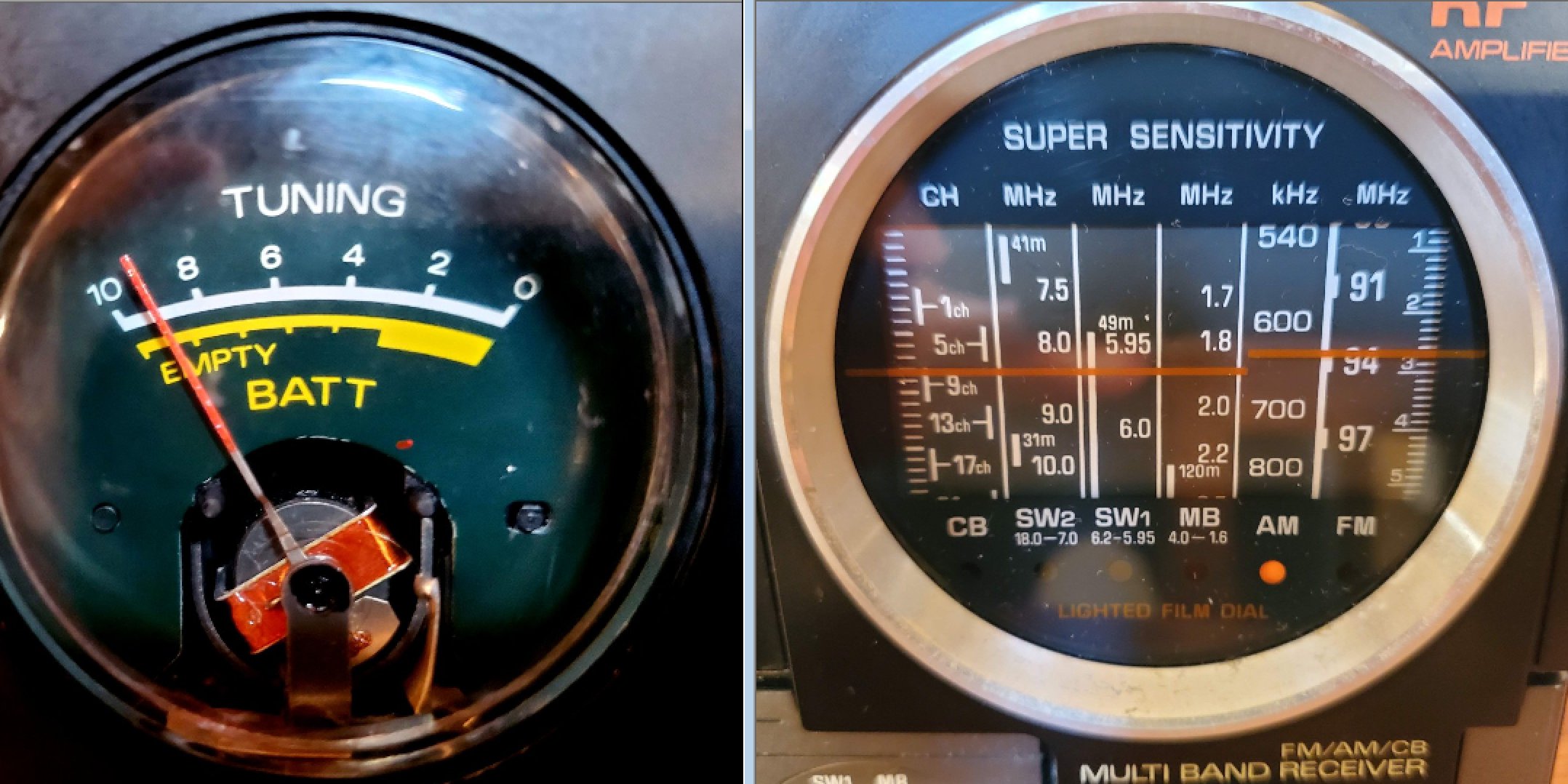
As is often the case the radio was offered in several different versions depending on the target country with different AC voltage input and different band coverage. While most versions cover MW (AM) from 530-1605 KHz, FM from 88 – 108 MHz, and 4 SW bands, the US version I have is the most unique covering:
AM: 530 – 1605 KHz
FM: 88 – 108 MHz
MB/Marine Band 1.6 – 4 MHz
SW 1 – 5.95 – 6.25 MHz
SW 2 – 7.1 – 18.0 MHz
CB/Citizens Band from 26.965 – 27.505 which corresponds to Channels 1-40
The other versions dispense with MB and CB but offer 4 SW bands covering approximately:
SW1 2.3 – 7.3 MHz
SW2 9.5 – 12 MHz
SW3 15.1 – 17.9 MHz
SW4 21.4 – 28 MHz
All run on 4 D cells or AC (voltage as below)
RP-8700 (Japan) – 100 V 50/60Hz
RP-8700 SS/AS (Australia) – 240 V 50Hz
RP-8700 G UK 240 v 50Hz plus Long Wave
RP-8700 UM Europe 115 – 230 v50/60Hz plus Long Wave
RP-8700 US 120 V 60Hz
Dimensions: 10.2” x 8.3” x 3.5” / 259mm x 212mm x 89 mm
Weight: Approx” 4 1/3 lb / 2 Kg without batteries
There is not a lot of information on the RP-8700 online but it is regarded as a good sounding radio with sensitive reception. It’s not perfect… it lacks dual bandwidths, there is no SSB mode and as was common by the mid 1970’s it uses a ceramic vari-cap rather than an ir core tuning condenser.
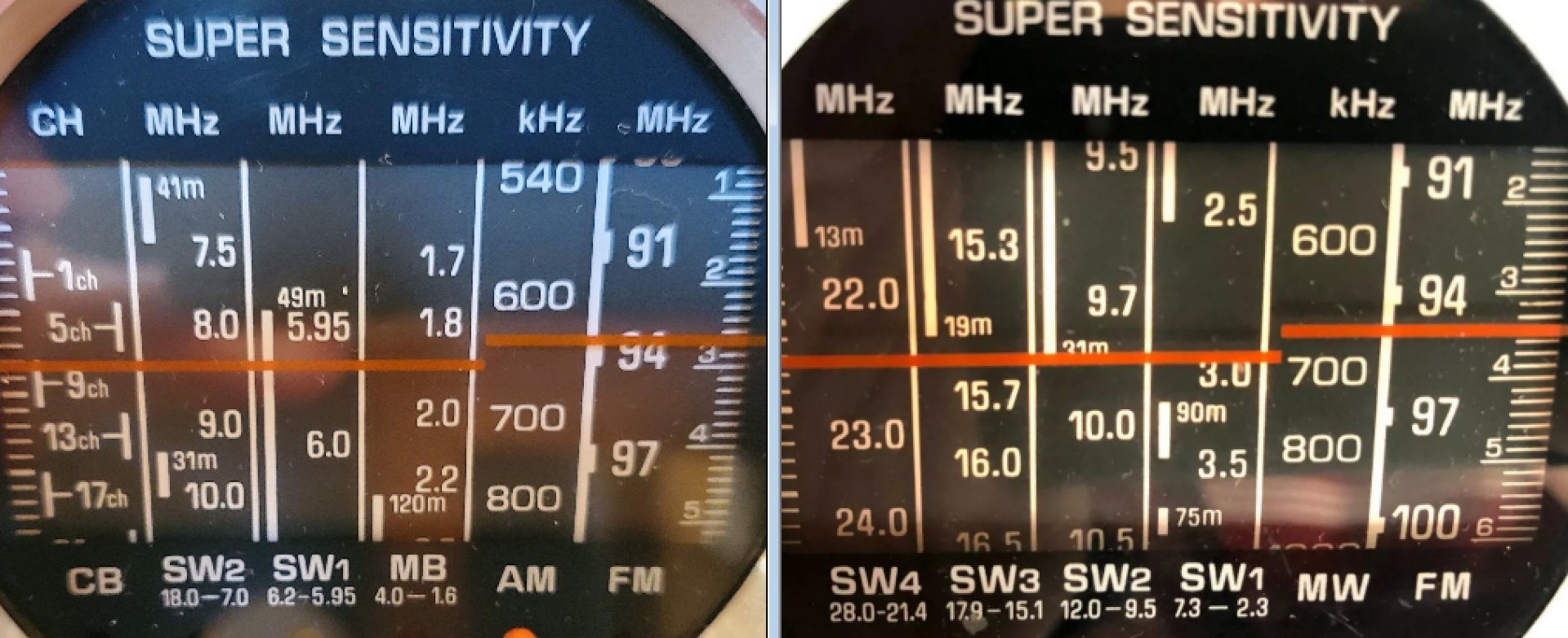
Left: US Version – Right: Euro Version
Controls include:
Power Switch
Rotary Volume control
Tuning Knob with Fast/Slow switch
Bass and Treble sliders
Band Selector switch
FM AFC switch
Loudness switch
Dial Light switch
AC Input
Speaker Output (See text)
SW External Antenna screws
Carry Strap
As Received: The radio I bought was described as fully working and in good cosmetic condition but as seems to happen more often than not, what I received fell far short of that description. Had I not been interested in trying to revive it I would have retuned it but this was a challenge and I was curious to learn about this radio plus I got it at a good price. (I never cease to be amazed at how misleading some seller descriptions can be). The radio was filthy (which of course could not be seen in the auction photos), the whip antenna was corroded and would not retract into the cabinet and there was virtually no reception on any band…just loud noises as I fiddled with the controls and tuned around. It was a total mess. And battery operation was intermittent due to a rusted battery contact. And this radio was described as working well!
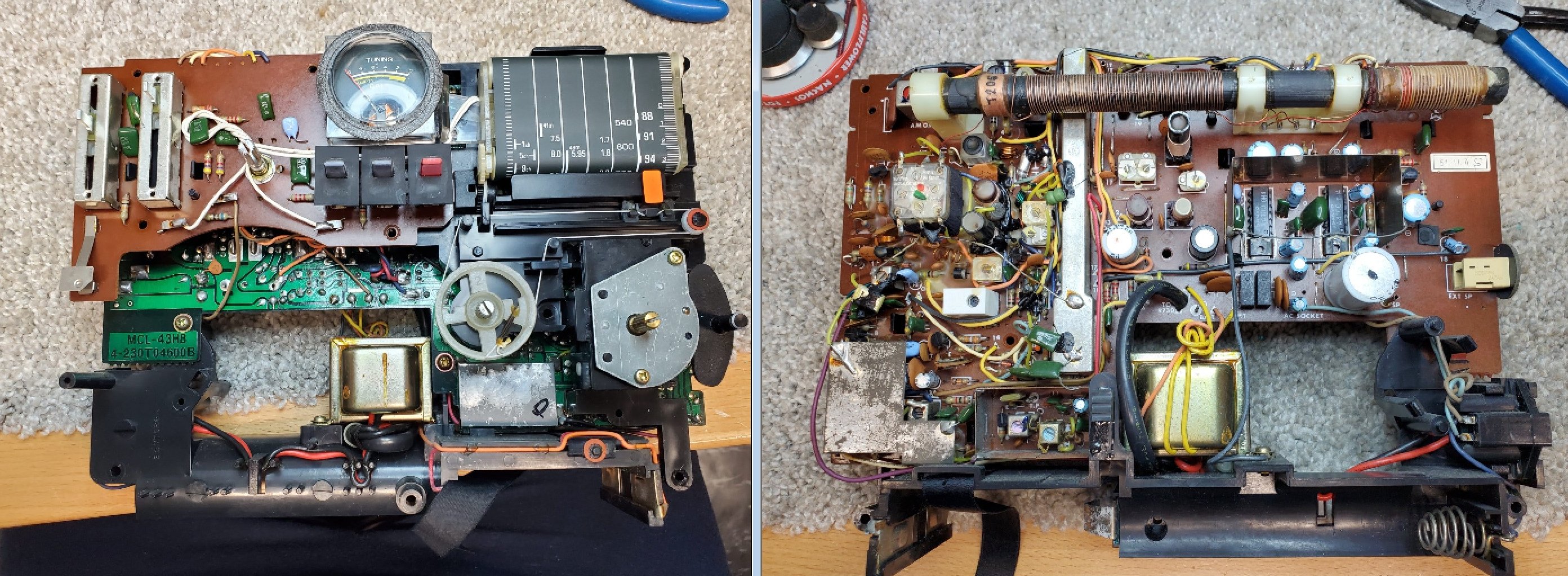
Disassembly was easy and straight forward. Removing 6 screws allowed removal of the back panel. All adjustments were now accessible and even the wires leading from the whip and back panel antenna screws were long enough that they could remain connected while working on the radio. However, I needed to remove the chassis so I unplugged those antenna leads, removed three screws on the main PCB and unplugged two speaker leads and the chassis was free…very easy.
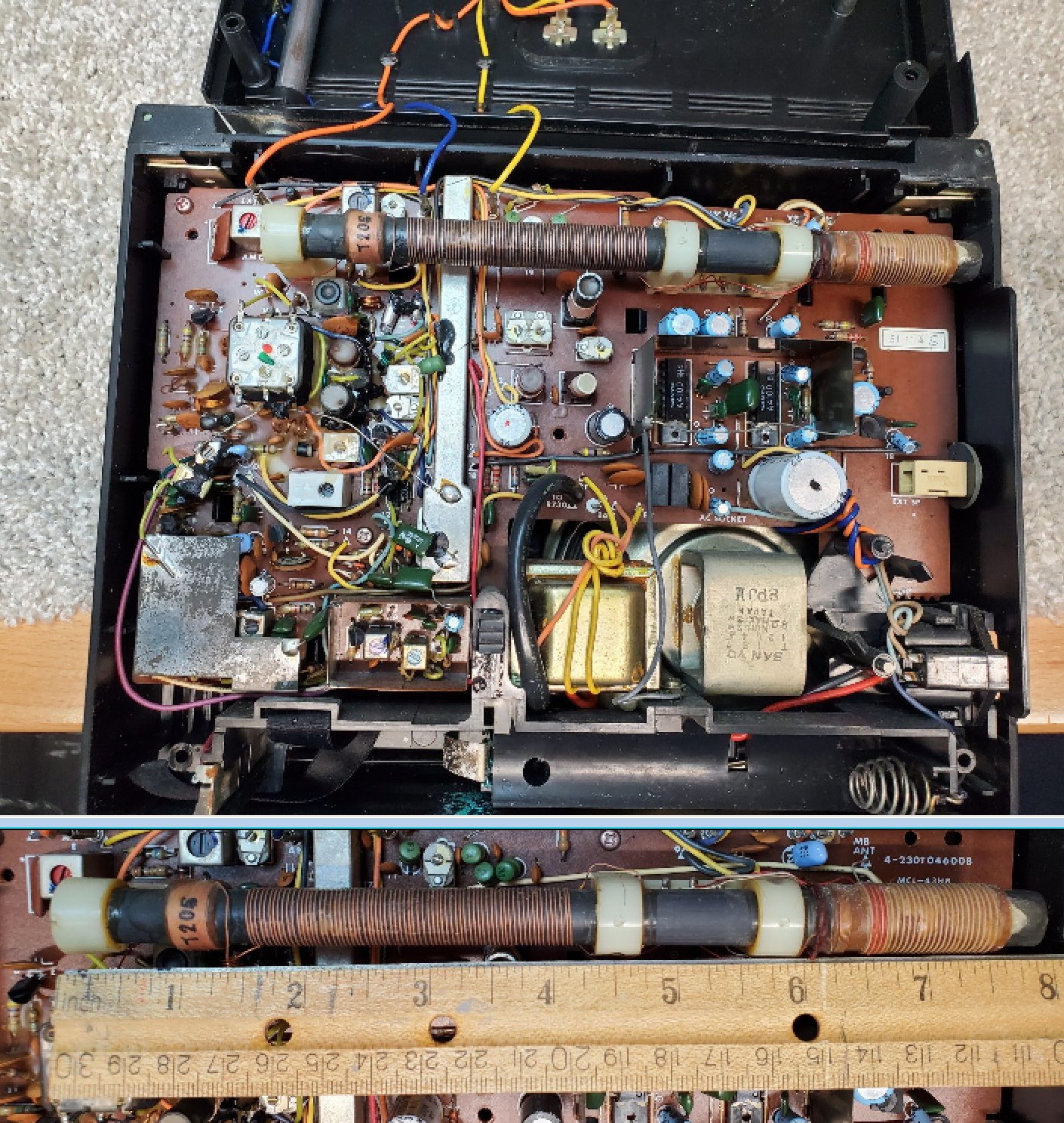
The RP-8700 has a large 8” ferrite rod AM antenna which also works on MB or SW1 (depending on country version) which is a bit unusual although I have seen similar arrangements before.
The first order of business was to clean the switches to see if there was any reception at all and luckily this was effective. Several bands came to life although reception was not good. I had seen one comment that these radios need to be recapped but the original caps were all fine on this sample. I decided to check the alignment as this is often the easiest way to see clearly what is working properly and what is not.
The AM IF adjustments were very close and this is always a good sign, but as I proceeded through the AM alignment, I was able to improve sensitivity and dial calibration considerably. SW2 calibrated properly but SW 1 was so far out it seemed dead at first. While trying to adjust it I found things seemed to be popping in and out…then I discovered an oxidized solder connection to the SW 1 oscillator coil and after fixing that SW 1 came to life. There is usually lots of interaction during alignment…you have to repeat certain adjustments two or more times until there is no further improvement and everything falls into place, so it took a few run throughs but eventually everything ended up normally. There was only one corroded battery terminal and by unsoldering its connection I was able to remove it for cleaning. I used baking soda and Rust-oleum Rust Remover and it cleaned up pretty well…it was not too far gone
I also lucked out with that crusty-looking whip antenna. Amazingly, steel wool removed all the corrosion revealing shiny metal…there no sign of pitting at all. I had not expected this to clean up so well and it will now retract fully as it should.
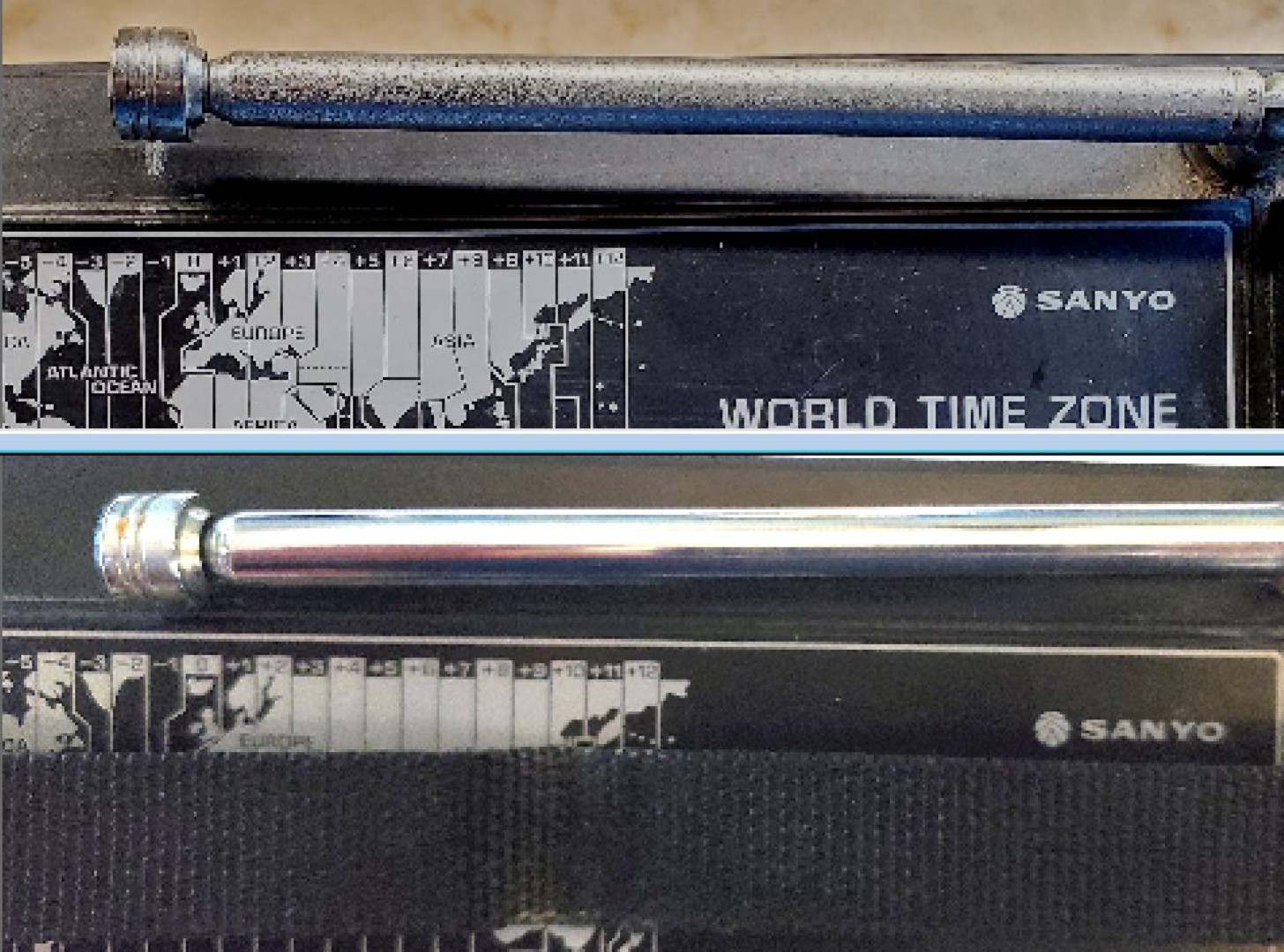
Above: Before & After Cleaning the Whip
The plastic cabinet was another story. Usually, one can do wonders with cleaners and various plastic polishes…I use several, and I get a lot of enjoyment from transforming an ugly duckling into a nice-looking piece, but although I was able to clean away lots of crud the plastic retains a somewhat mottled appearance after I tried everything in my arsenal. More aggressive polishing would begin to remove lettering so I stopped at that point. It actually looks much better in person than the pictures show and in daily use it looks just fine. Mine arrived without its carry strap but I was able to salvage one from another radio which worked out well.
The Sanyo RP-8700 is a beautifully built radio and was obviously designed to be a top performer. Many of the internal components from the capacitors to the IC’s (used in the audio amp circuit) and even the speaker are of Sanyo’s own manufacture. The large 8” ferrite rod is impressive and access for routine service is easy. There are two omissions of note though: there is only one (medium-ish) AM/SW bandwidth and there is no SSB capability.
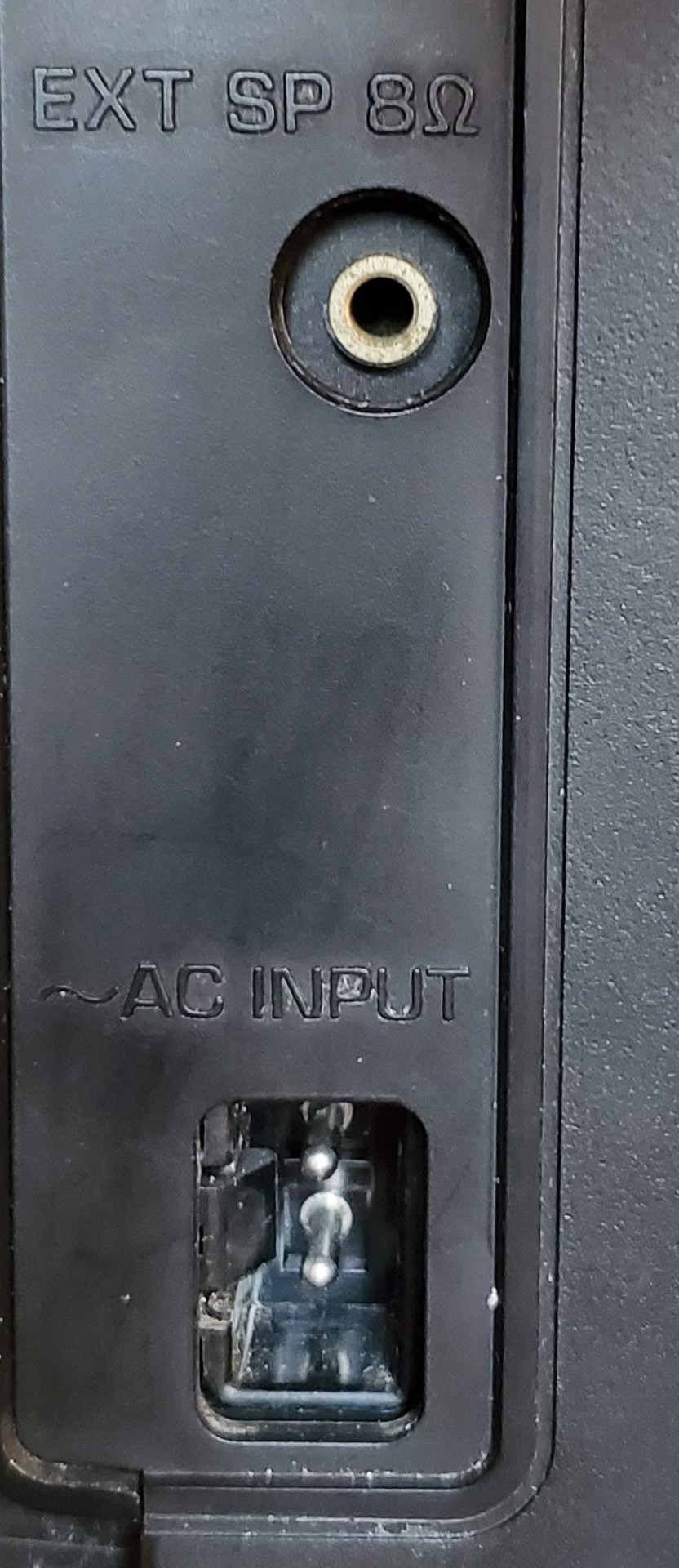
One more note: The Speaker Out jack is a true speaker level output…there is no attenuation applied as is often seen with headphone outputs. It can drive an external speaker quite well.
Performance – AM: A few sources claim the RP-8700 can compete head-to-head on AM with long held ***** reference radios like the Panasonic RF-2200, the C. Crane CC-2E/CC-3 or EP-Pro. My tests revealed that the RP-8700 is very close, rating ****1/2 on the AM Mega Shootout.
In low noise locations the AM reference radios do render weaker signals with a tad less background circuit hiss. I might wish for a wider bandwidth option… the single bandwidth provided is not a bad compromise between clarity and selectivity but I generally prefer a bit wider bandwidth. AGC action is also a bit mild – this doesn’t affect actual reception much but it does require you to increase the volume on weaker signals. Still, at ****1/2 on AM your reception will usually be limited by local interference, not the radio’s sensitivity. This is a very nice AM.
FM Reception was the big surprise rating ***** on the FM Mega Shootout list. It pulled in weak and problem stations as well as most of my ***** FM radios. Interestingly the RF-2200 is one of the few vintage radios that perform this well on FM. At a time when most FM portables suffered from very poor FM selectivity the Sanyo has an excellent FM tuner with excellent sensitivity and selectivity which lets it separate weak and closely-spaced FM signals very well. FM is the strongest band on the Sanyo and the sound on FM is wonderful. With the switchable loudness along with bass and treble controls you can get some impressive FM sound out of this box. It’s definitely better on FM than most portables of the era.
SW Reception was a bit less sensitive than the RF-2200 or better current day portables. It is quite usable, especially with stronger nighttime signals, but weak signals were just weaker sounding on the Sanyo. I did try a few external antennas on SW and they did help quite a bit. And remember, the MB band or SW 1 Band (depending on which version you have) uses the ferrite rod rather than the whip. There was some backlash in the tuning action noticeable on SW but the Fast/Slow tuning switch helped a lot…this might vary sample-to-sample.
Conclusion: The Sanyo RP-8700 is a nice radio. It seems to be less well known than some of its contemporaries but is nevertheless a cool vintage design. Some owners feel it is a top tier AM radio and it is good on AM but I found its real superiority is on FM where it receives as well as most FM portables. It rates ****1/2 on AM and ***** on FM, and although I could wish for a slightly wider bandwidth setting for AM, FM sounds great. SW is not bad but not the best. For general listening as well as AM or FM DXing its smooth two-speed analog tuning has a great feel and I had lots of fun with it and if FM is what you use most this is a radio you should get to know.!
Recommended.
 radiojayallen
You must be logged in to post a comment.