* Pocket Portable Radios
2025 Update:

Above: Testing all these radios was a huge job!
I last reported on Pocket Portables in 2016 and 2022 (and you can still read the previous articles at the bottom of this article). Some of those models are still available and you will find added details on some of them, but things in this arena continue to evolve rapidly.

Above: Sony 2R-27 & SRF-5 typify late 60’s speaker style and late 70’s Walkman Earbud styles
There are two main types of pocket portables – those that are primarily used with earbuds like the old Sony Walkmen, and those which are primarily used with their speakers like vintage pocket portables. I say primarily because some earbud models also have speakers and of course all speaker models also have earphone jacks…but there are differences. The “earbud” portables are generally higher performing and more expensive although some very inexpensive models have recently appeared. They may or may not have a speaker but they have digital displays and many digital features such as clocks, memories, wide and narrow bandwidths, and importantly, they provide FM stereo through the earbuds and use the earbud wire as their FM antenna…these last two points are key differentiators. The traditional “speaker” portables have a whip antenna for FM and almost all are mono although they now have stereo earphone jacks which allows their mono sound to be heard in both channels of stereo earbuds. As we will see though, some of these distinctions have begun to blur somewhat as some of the least expensive radios here are beginning to add some digital features at the sub $20 price point.
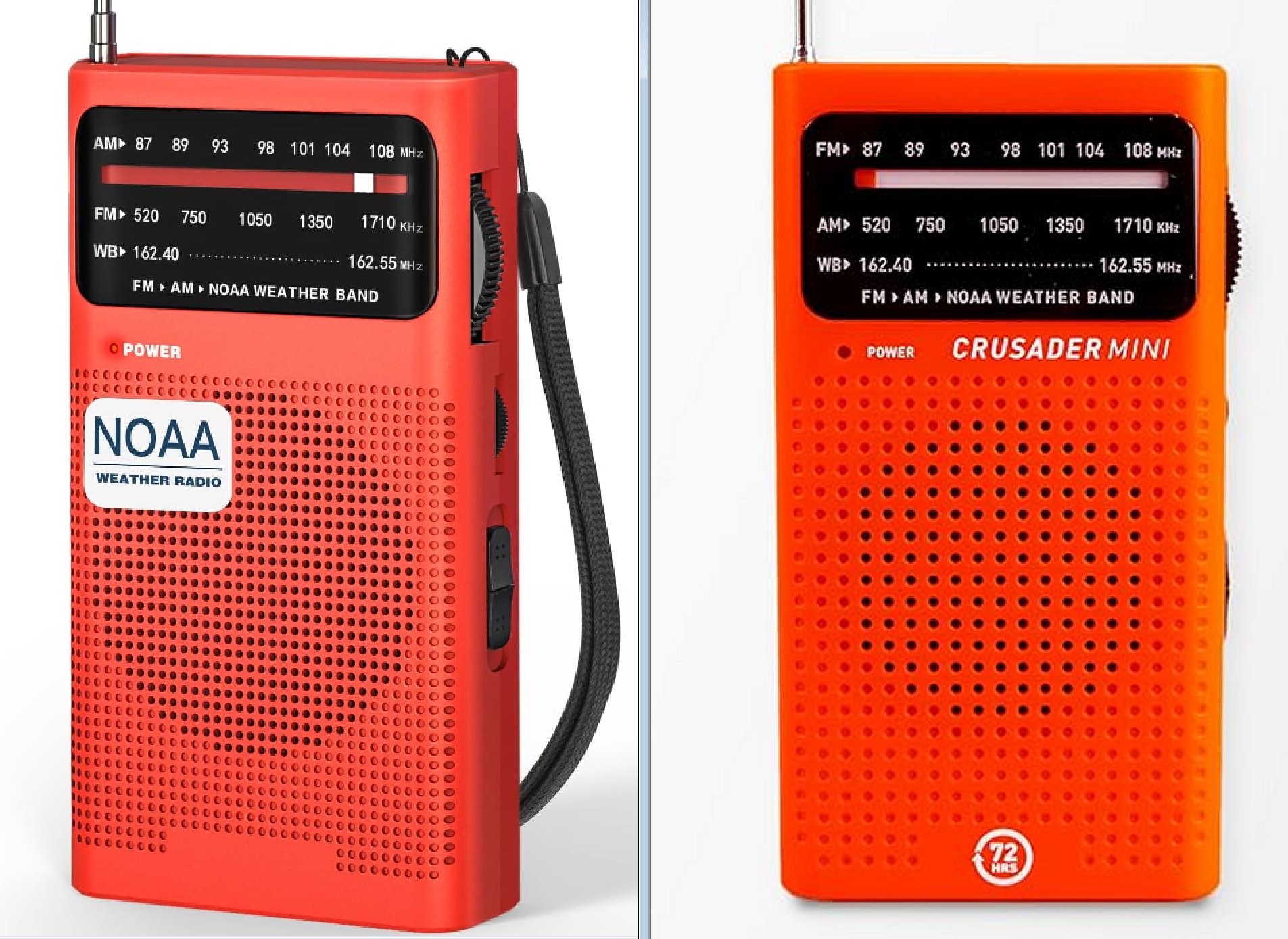
Above: Some say Cruader, other’s don’t. Same as the AM/FM only GES-FM-012/ RD/W-908
Another big change is the way these radios are marketed with many manufacturers rather vague in their model names…some of these radios are available under multiple names and some models lack model designations altogether which makes identifying some of them confusing. I received one radio whose box carried two different model numbers (I’ll show you that one further down in this report) and some radios seem to have no model designation at all…I will show a few examples of this as we go along. Also, many models change frequently such that one model I bought for this review was discontinued while I was still working on this report, yet I found it still exists under a different name. I have included prices and my personalized Amazon links which are valid as of this writing in late 2024 but during the several weeks during which I worked on this report many of the prices varied on Amazon so if you see a range of prices that means those are prices I actually saw during that time. Also, some models have different prices for different colors. Everything is somewhat fluid these days..

General Notes: As a group, DSP chips have eliminated many of the big differences among models and unit-to-unit consistency seems to be improving as well but not all DSP chips are created equal so some models perform much better than others. All are limited to strong to medium strength AM signals because their small size means they have tiny internal AM antennas…they are fine for typical reception conditions. FM performance relies on the extendable whip antenna or earbud cable and thus can be better than AM. Also, the earbud models often have Li-ion internally rechargeable batteries while the speaker portables generally use AA or AAA batteries.
Tuning feel of the analog-style tuners varies quite a bit for a few reasons. The biggest issue with these radios is that, although they have analog-style dials, they actually tune in steps rather than continuously as old analog radios did. This means that as you try to tune in a station there may be several peaks as you “tune across” the signal, but only one will be the true peak with the best reception and sound. You will get the feel of this with some practice. Radios with a Tuning indicator make finding the true peak a lot easier…it will illuminate more brightly when you are correctly tuned.
Another common aspect of this stepped tuning behavior is that the radio may skip over a desired station and hop to the next one on the dial…a characteristic I have often found on other radios of this type, even some fairly expensive ones. I have found that you can sometimes receive the weaker station by tuning in one direction (Up or Down) but not the other. The key is to slowly rock the tuning Up then Down to see if you can lock onto the desired signal. This is one area where the digitally-tuned models are much easier to tune…you enter or scan to the frequency you want or use a memory preset and there is the station… no fiddling or guessing. This is the first time we’ve seen digital tuning in some very inexpensive radios. FM reception on these also varies dramatically as you move the radio and antenna even small amounts and holding the radio in your hand or putting it in a pocket may enhance sensitivity dramatically due to hand capacitance effects…this is very common with smaller radios.
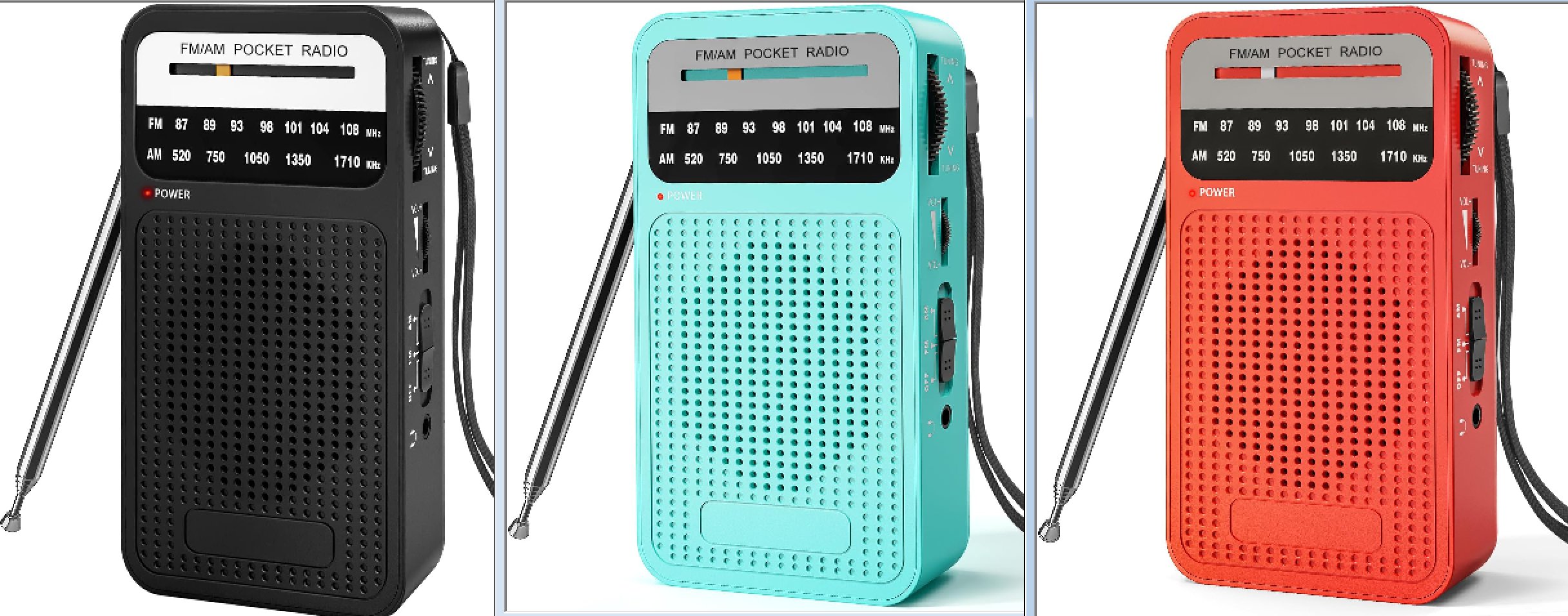
Above: Many models come in a variety of colors
Sound Quality: No one expects high fidelity out of a pocket radio’s speaker but they can sound very good with earbuds. Still, their sound does vary quite a bit so some may provide better intelligibility on weak AM signals while others may provide a warmer, fuller sound on FM music, so I will describe how these radios compare for sound. And many come with mediocre to poor earbuds so a good set of ‘buds can make a huge difference, especially with very inexpensive radios…you can’t expect great earbuds with an $11 dollar radio.
For this report I will focus on how they compare in reception and sound. I will look for easy operation with good ergonomics, decent reception of strong to medium strength signals and decent sound.
Now, onto the reviews… Here are the Pocket Portables in alphabetical order:
C. Crane CC Pocket: (Earbud with speaker) $64.99
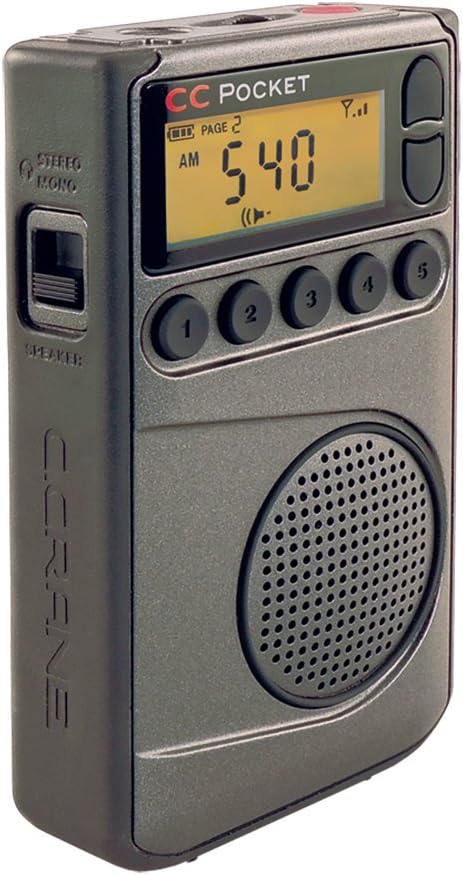
AM/FM/NOAA Weather – Another C. Crane classic with many features to enhance the excellent overall reception and good speaker sound. AM good, FM sensitive and selective. 10K/9K AM tuning steps – LCD can be turned off to reduce AM noise – FM Stereo/Mono mode. Read the Full Review:
Degen DE28 (Speaker) $24.98
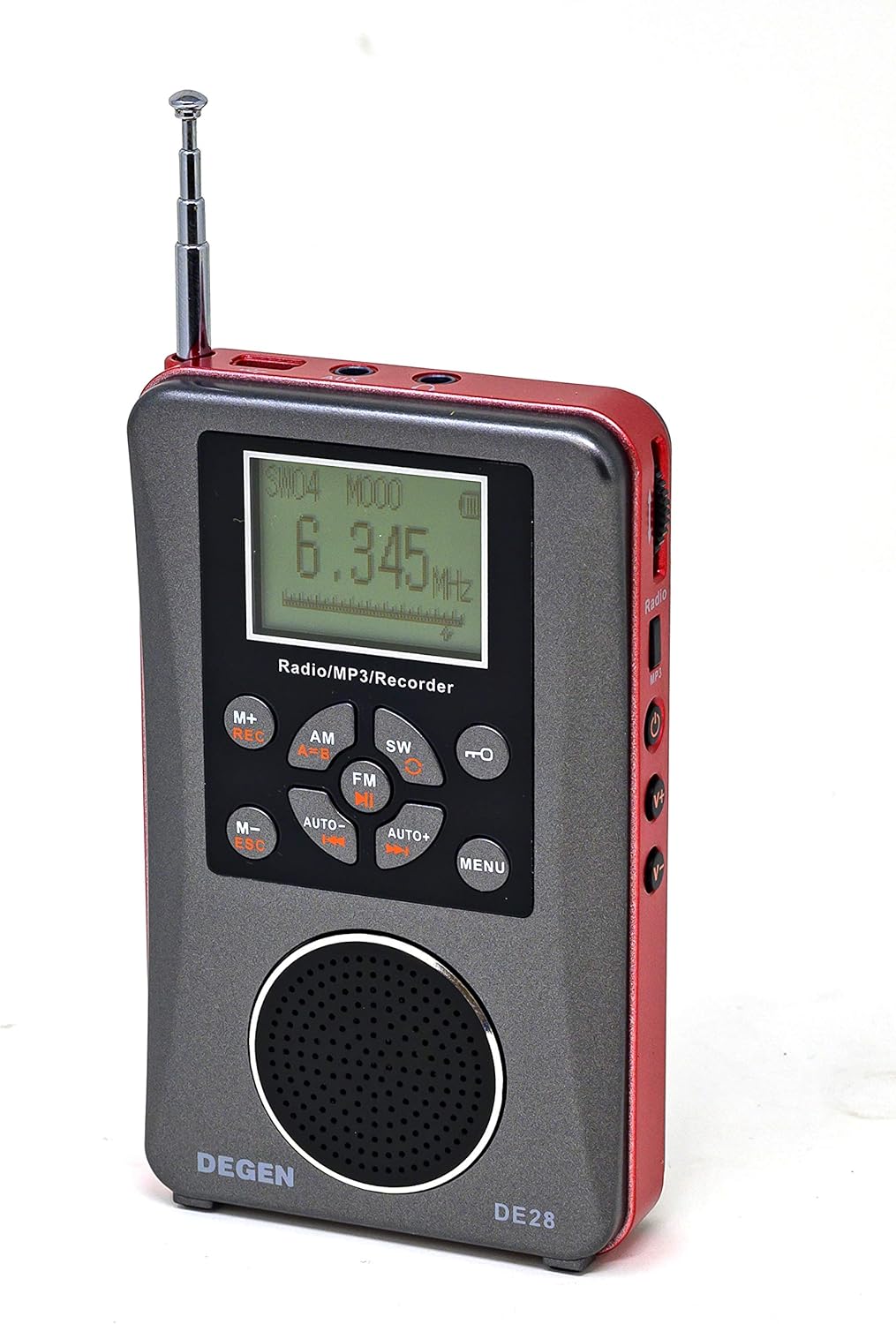
The DE-28 has been around for a few years. Li-ion battery, digitally tuned, plays and records audio from SD Card which is amazing at this price. Good FM, OK AM/SW. Sound Good.
Eton Elite Mini (Speaker) $39.00

Eton’s Elite Mini is a very slim design. It’s good on FM, OK on SW, Weaker on AM, speaker sound a bit thin.
GES FM006 (Speaker) $9.00 – $$11.97 (Depending on Color)
The GES FM006 is one of the least expensive radios in this group. It performed in the middle of this group on AM and FM reception and I noted that it had nice audio on FM. It has a Power led but no Tuning indicator.
GES FM-012-RD (Now Called Goodes) (Speaker) $11.97 – $12.97 (Depending on Color)
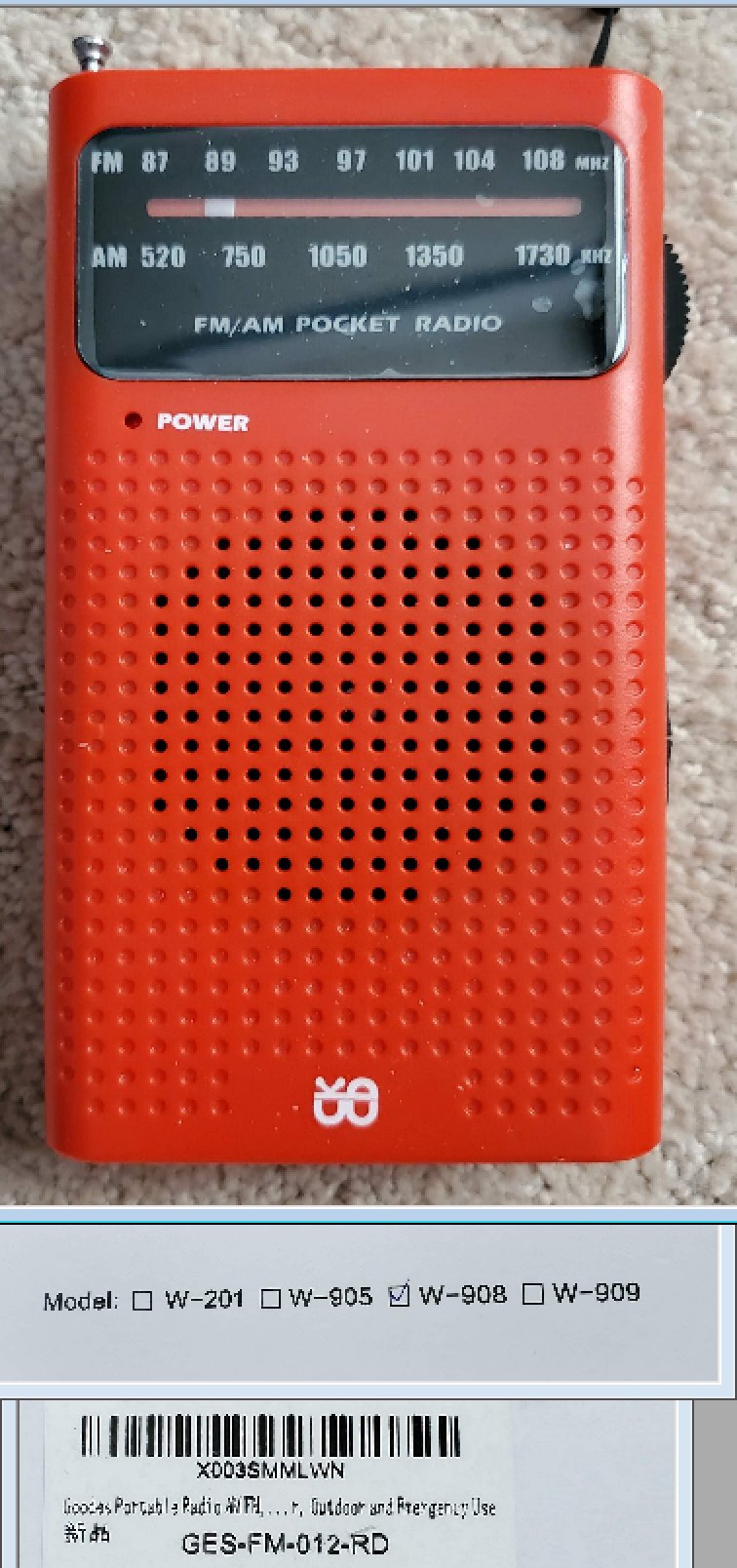
This one’s box had two model designations as you can see, labeled both as the GES-FM-012-RD and also as the W-908. This radio was discontinued before I published this article but is still available as the Goodes in Black or Silver with no model name given at Amazon. This sample had low volume on AM which may be a sample defect, although it has exceptionally good reception and sound on FM, on a par with the Sangean SR-35. Has a Power LED…larger than most in this group.
Goodes NOAA or Crusader (Speaker) 11.99- – 15.99
Same as the GES FM-012-RD above but no problem with AM volume..has very good AM/FM reception and adds the NOAA Weather band. One of the best sounding models in this collection and one of the best overall values…one of the larger models.
Panasonic RF-P50D (Speaker) $18.00 – $20.99

The RF-P50D looks identical to the older RF-P50 I reviewed previously but has much improved AM performance. The Pan had the nicest tuning feel compared with the others whose tuning action was stiffer by comparison…the RF-P50D just glides more smoothly and easily. Reception is good on both bands, sound a bit mellow on AM but nice on FM. Has a Tuning LED.
Prunus I-159 (earbud) $13.99

Li-ion rechargeable battery. One of the tiniest radios in this report which is its main attraction. Throw away the included earbuds…they are miserable. With good ‘buds sound is still a bit thin compared with most. Decent FM reception but the similarly-sized Retekess V112 sounds better.
Prunus J-166 (Speaker) $9.97 to $11.99 (Sometimes Depending on Color)
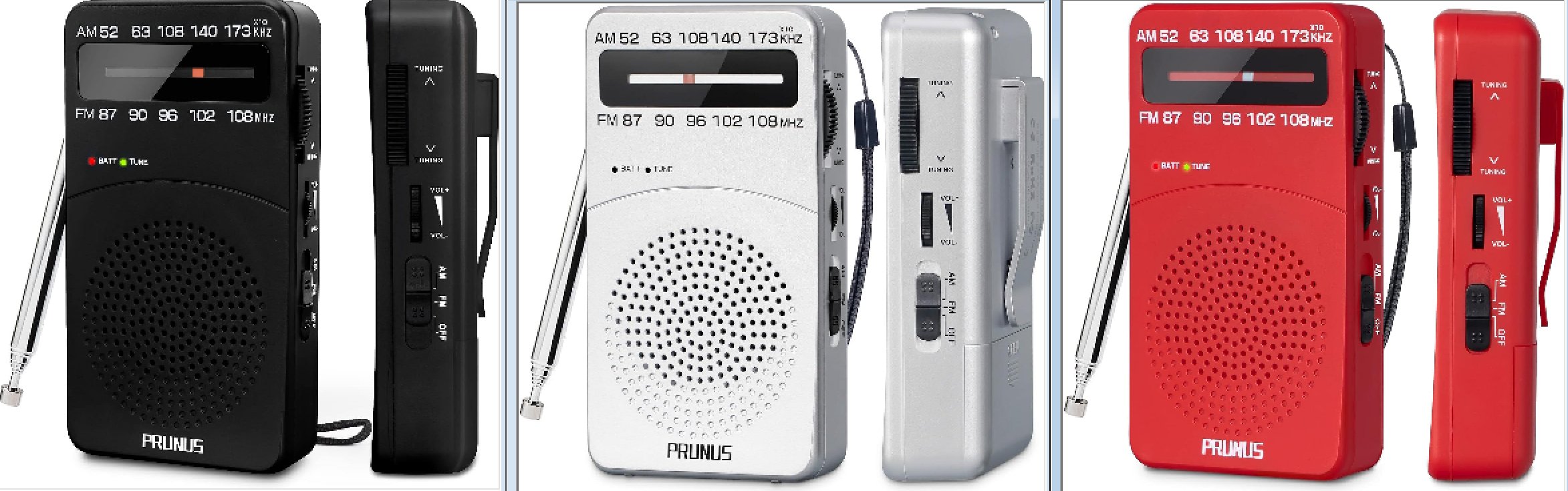
The J-166 had good AM/FM reception and middle of the road audio, not muffled and not thin…similar to Sony ICF-P27. Has Battery and Tuning LEDs. Among the larger models. Decent sound but weaker AM reception.
Prunus NOAA (Inexpensive Upgrade of Prunus J-166 adding Weather Band) $12.99
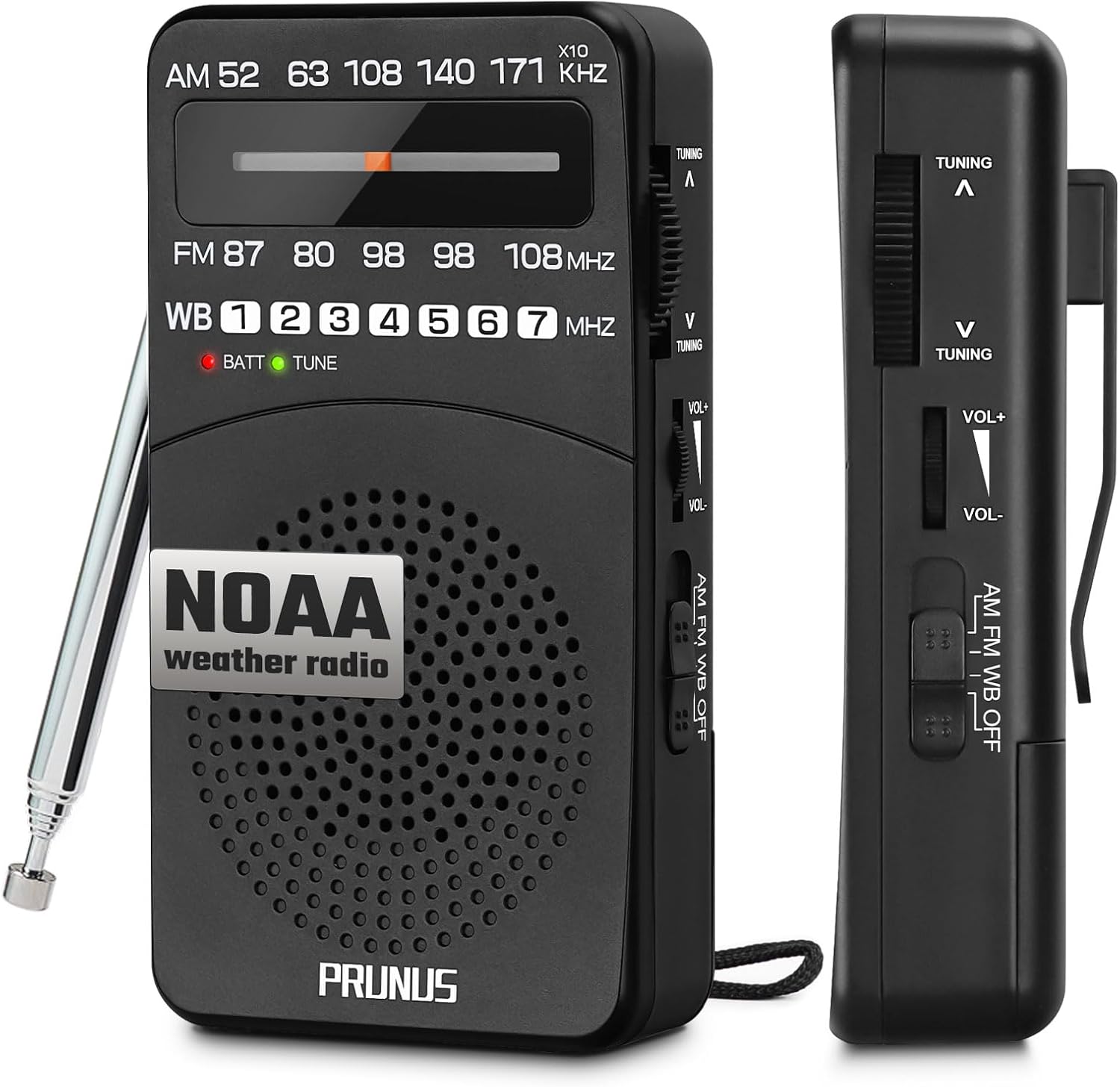
The Prunus NOAA had much stronger AM than the apparently similar J-166 above which may be a bad sample. Has Battery and Tuning LEDs…among the larger models but delivers good sound
Retekess PR15 $13.49 – $14.99 (Speaker)

The Retekess PR15 has been around for a few years. Features NOAA Weather Band – One of the smallest speaker-type radios which you can actually stick in a pocket…cool little radio. FM & Weather band work with either the whip or earbud cable…an unusual feature for a mono FM mini portable.
Retekess V112 (Earbud) $12.39 – $15.49
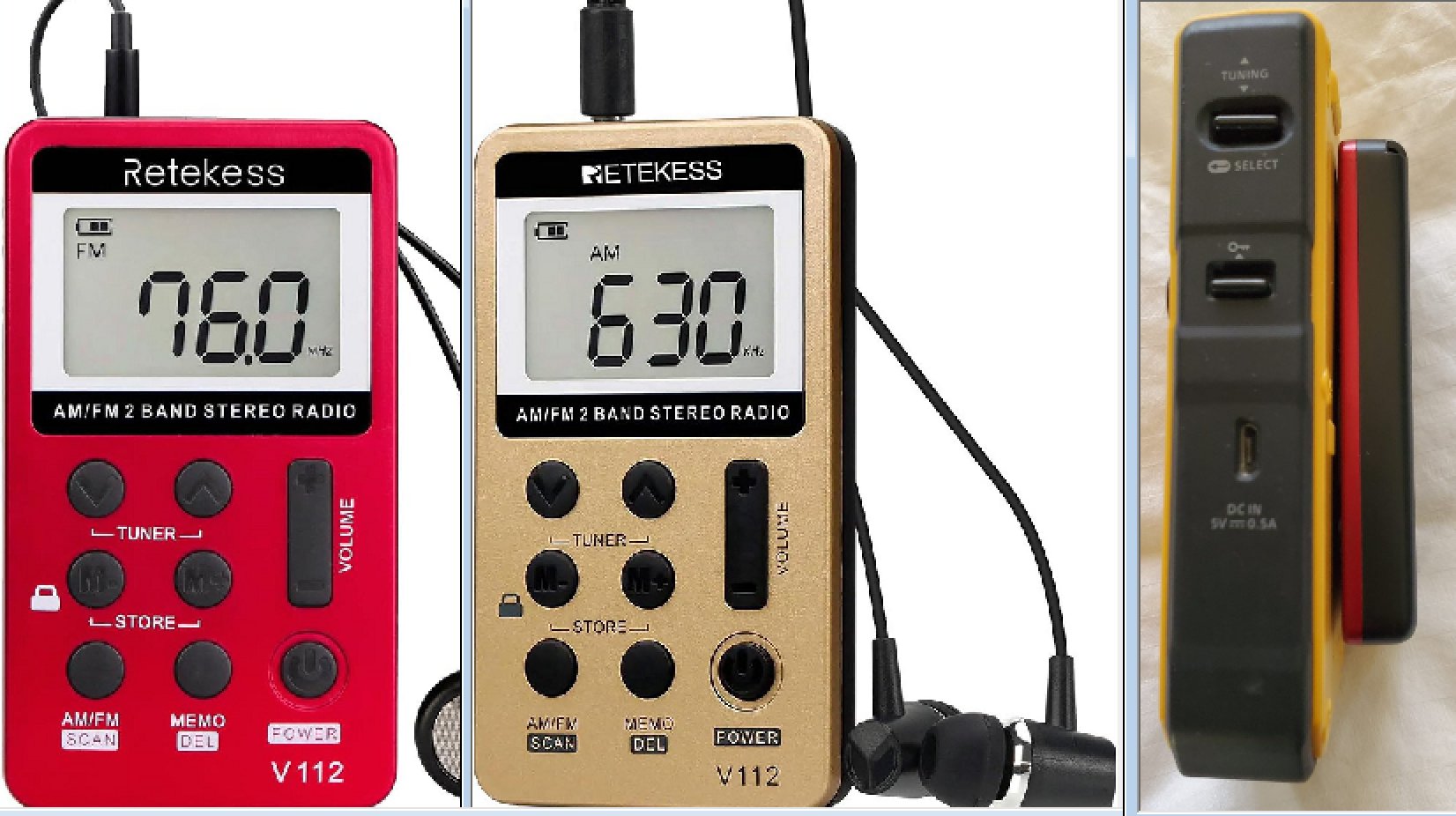
Above Far Right – Tiny Retekess shown next to Sangean DT-800
Very small inexpensive digital but with great performance overall…rather amazing for the price. Comes reasonably close to the big boys with a few compromises in reception. Sounds better with decent aftermarket earbuds than the ones supplied.
RunningByte (Earbud/Speaker Hybrid) $16.98 (Digital)
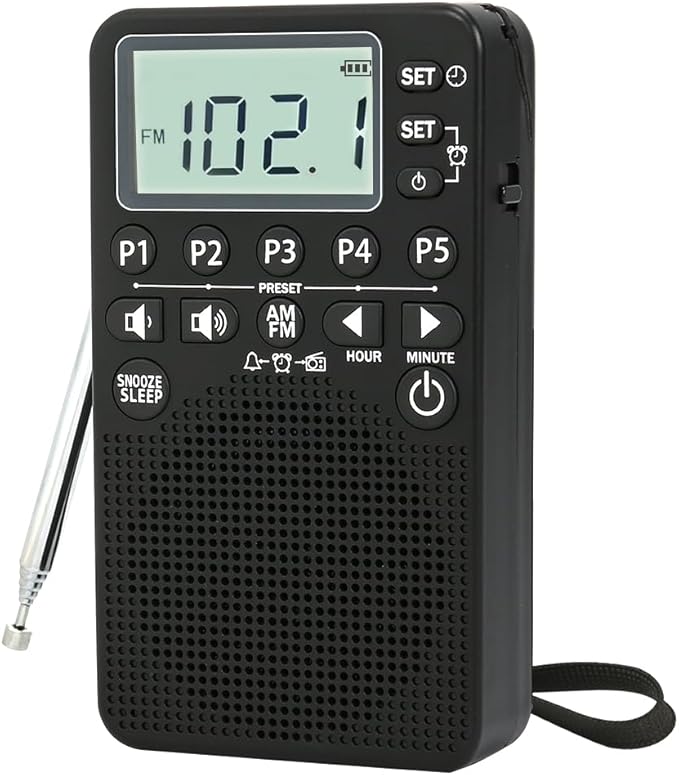
I describe it as an Earphone/Speaker Hybrid because it has digital tuning and FM stereo yet uses a whip antenna for FM rather than the earbud cable as in most such portables…an inconvenience when used with earbuds. Still, it offers digital features along with great sound and reception.
Sangean DT-160 (Earbud) $46.99 – $48-24
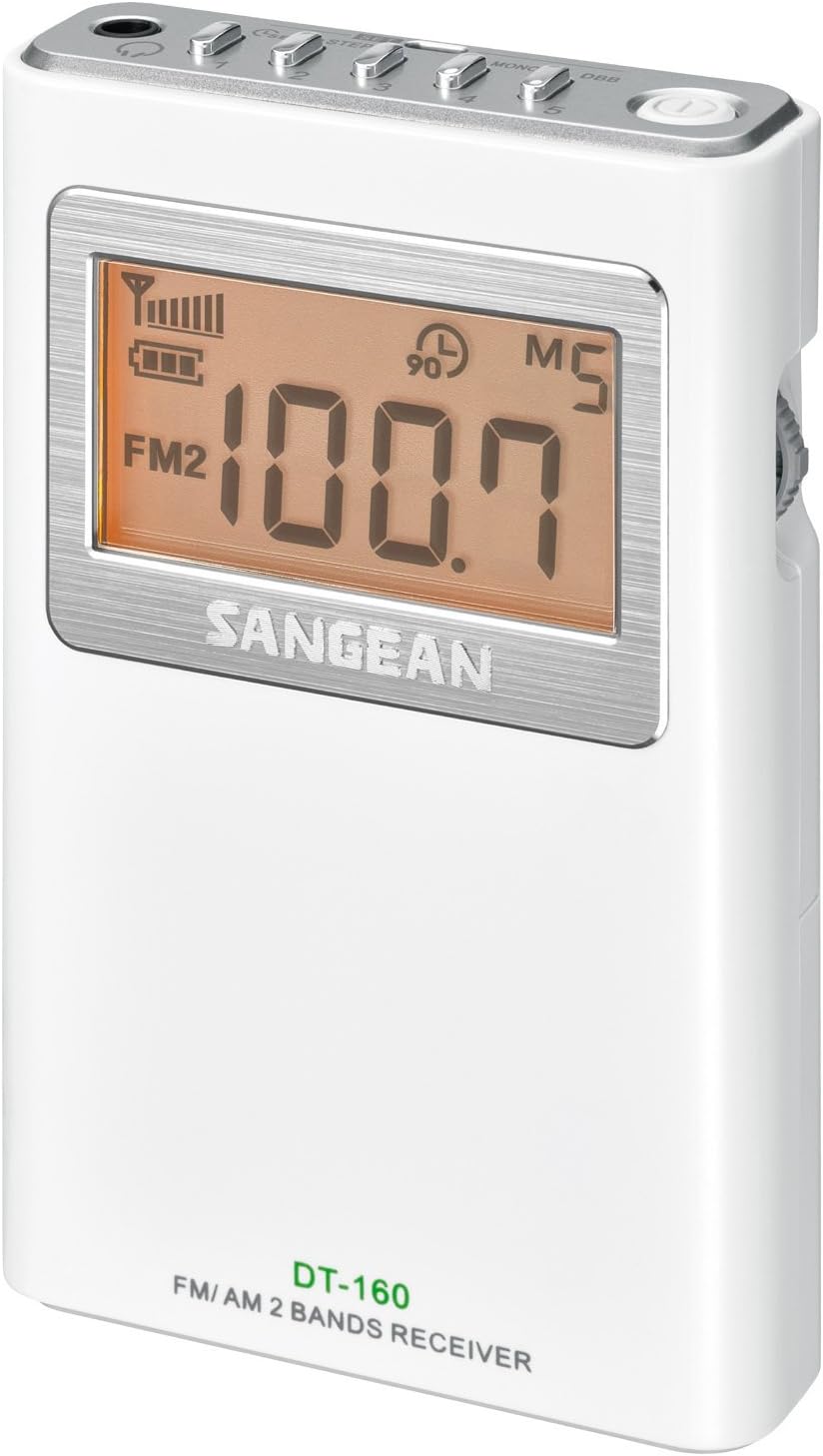
Excellent performance overall with strong reception and many features such as Wide & Narrow AM/FM Bandwidths – Dynamic Bass Boost helps many earbuds sound fuller.
Sangean DT-210 (Earbud with Speaker) $48.56
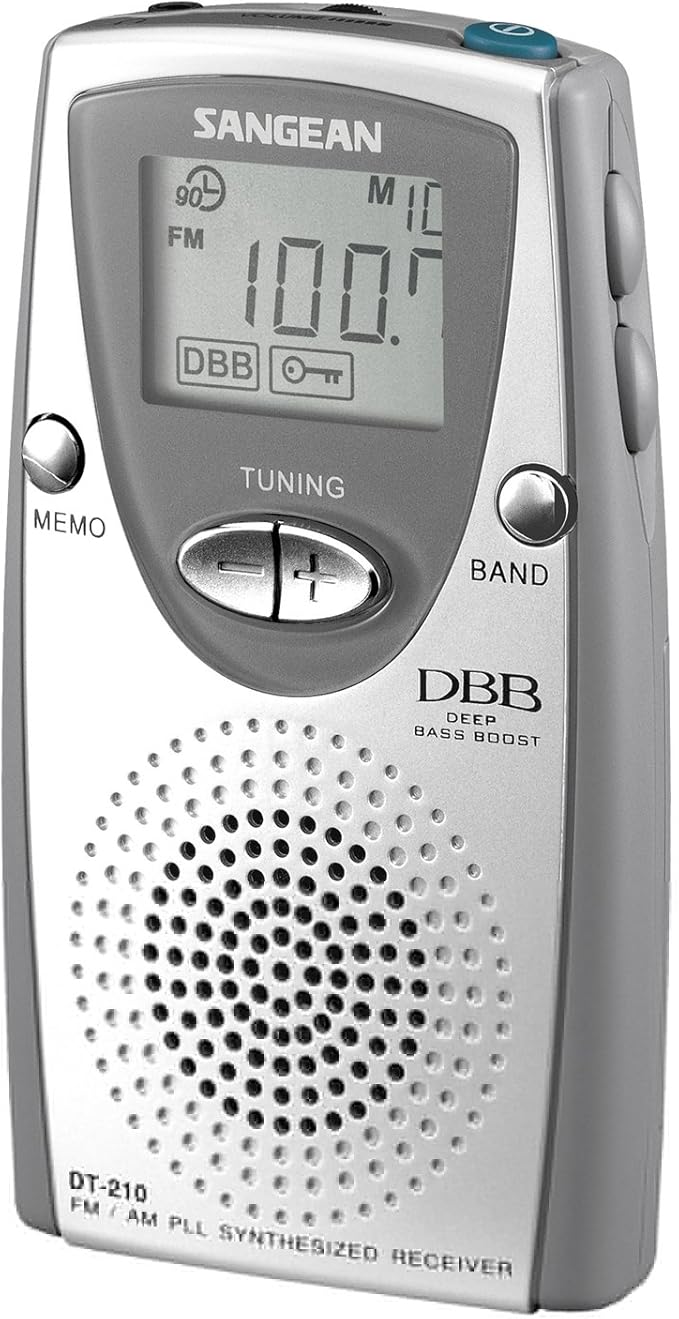
Another excellent Sangean in a smaller package – PLL tuned but similar overall performance as DT-160 above. Runs on two AAA cells – has Bass Boost feature as above.
Sangean DT-400W (Earbud withspeaker) $53.82 – $54.95
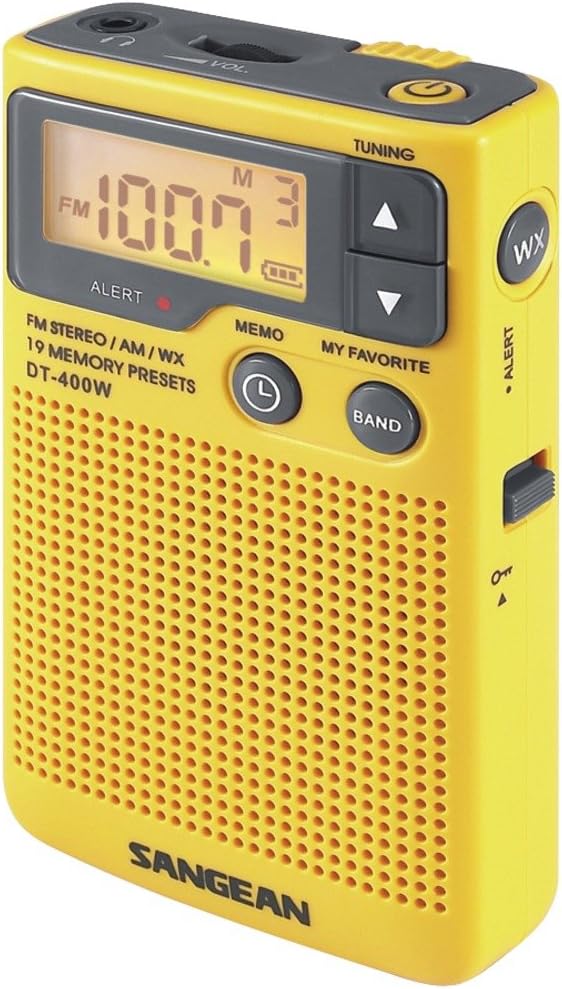
An older model with good sound and good overall performance with very good AM but less selective FM than newer designs.
Sangean DT-800 (Earbud with speaker) $64.99 – $69.99 Sometimes depending on color
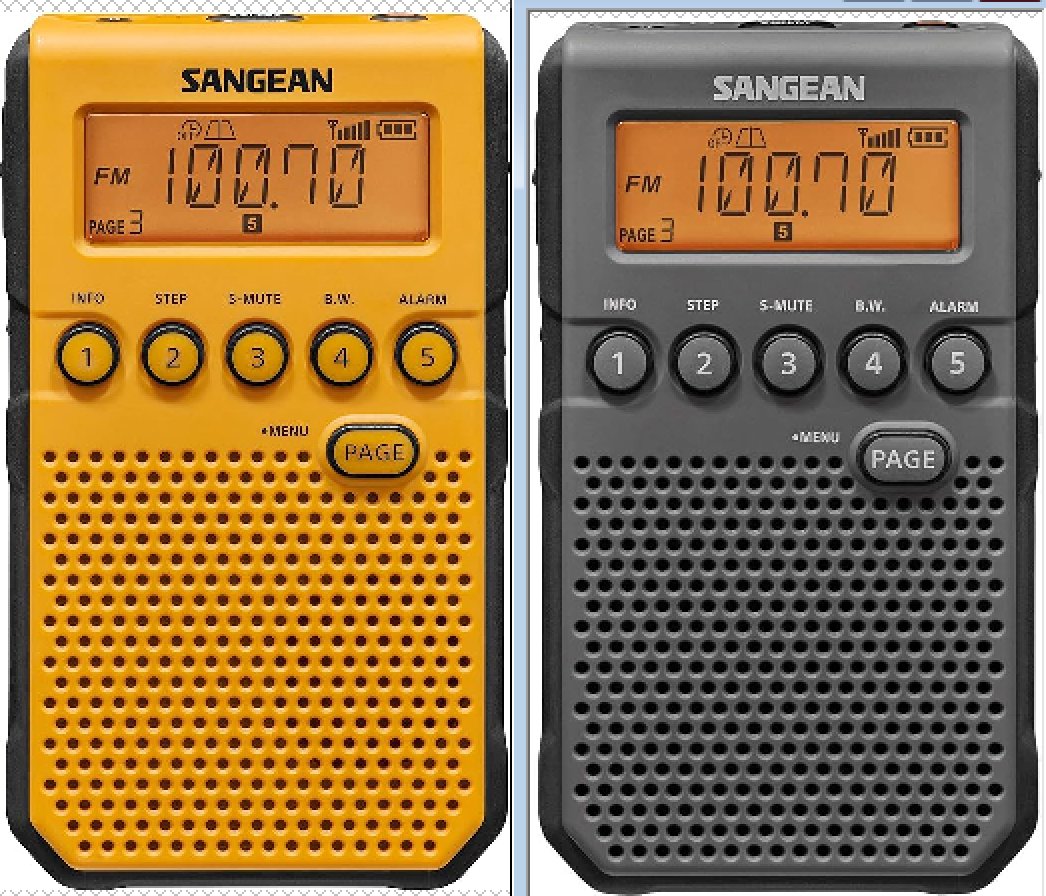
Sangean’s top of the line earbud portable the DT-800 has all the features you will find on the best of these models. Full digital features…Bass Boost feature, Dual AM/FM bandwidths with great overall reception and NOAA Weather. In my full review I wrote, “I am lucky enough to own quite a few earbud-style radios … and while a few match the DT-800 in one area or another none outperform it overall…they just don’t get any better than the DT-800”. It is my current reference in this category.
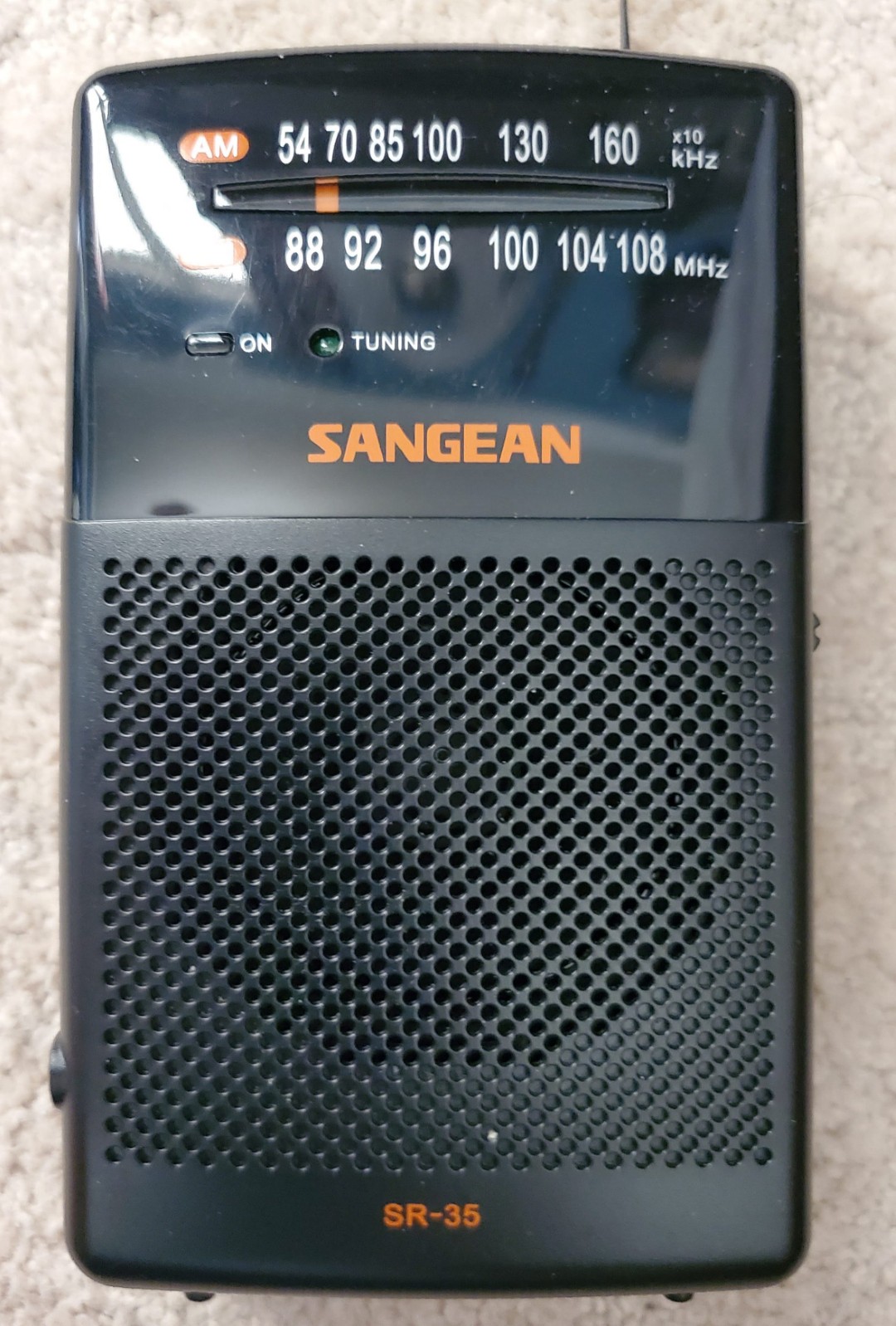
Sangean SR-35 (Speaker) $24.35
The PLL-tuned SR-35 is not a new model but it has excellent speaker sound among the best in this group – nice tonal balance but at the sacrifice of maximum volume. Has better reception than most speaker only models. Natural PLL tuning feel too with a Tuning LED…one of the best sounding speaker portables. See more in earlier article below.
Sony ICF-P27 (Speaker) $63.68 (See Note)
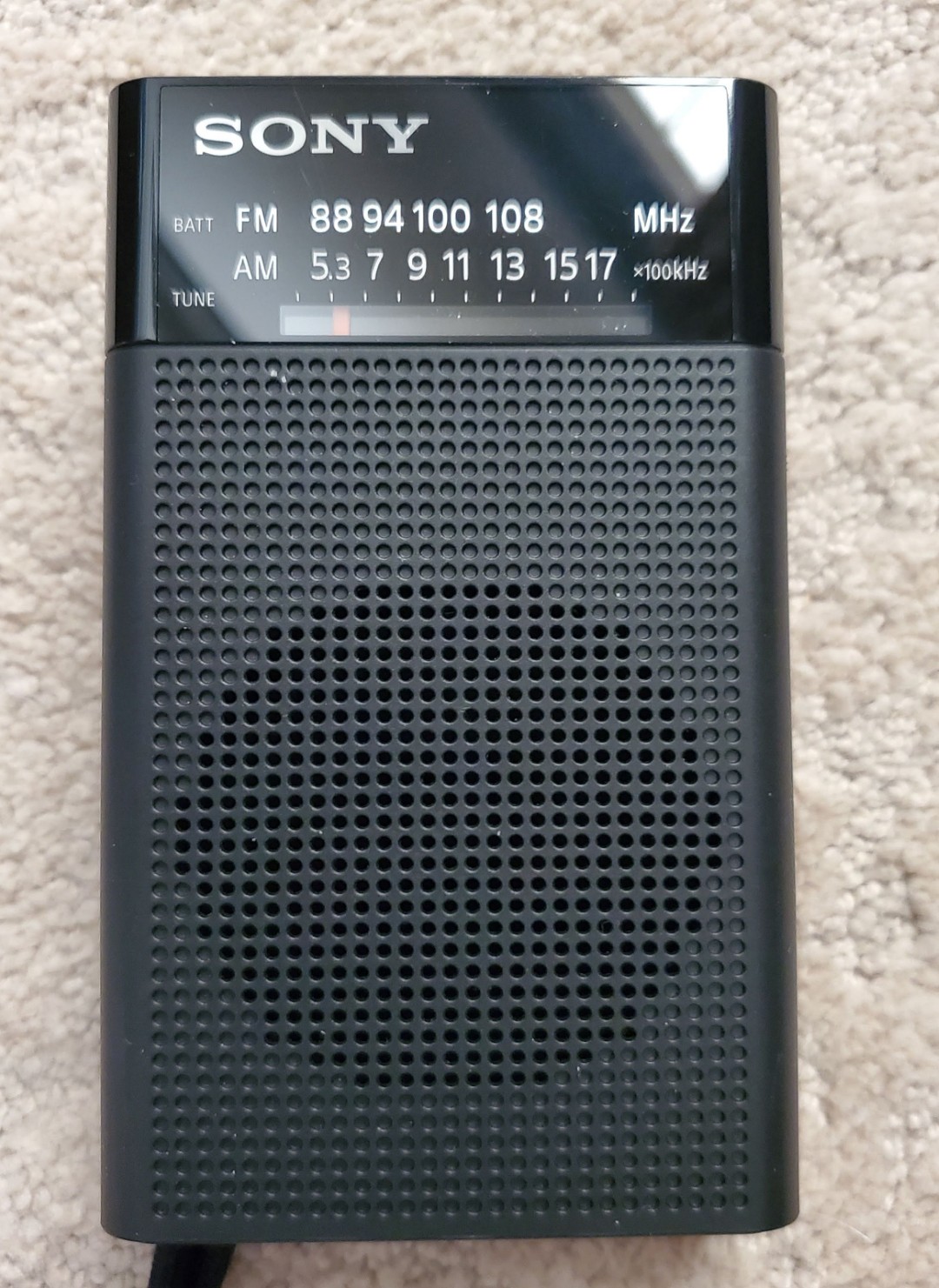
Note: High price may signal that this radio is about to be discontinued although I couldn’t find an apparent successor. This Sony has good reception and very good FM selectivity with average sound quality. Only worthy if you can find one near its original price around $24.
Still $24.97 at Sony.com as of this writing.
Vondior VX (Speaker) $9.99 – $16.99 (Sometimes depending on Color)

Above: Vondior VX in Black & Silver and VX-W NOAA version
Looks like the long-discontinued Sony ICF-S10MK2 but actually outperforms it with good reception, better than average FM selectivity and good sound which is in the middle of this group. Solid performer at the price it was discussed in detail in the previous Pocket Portables article which appears at the end of this new roundup. Scroll down to see it.
PowerBear (Speaker) $14.99 – $17.99 (Sometimes depending on color)
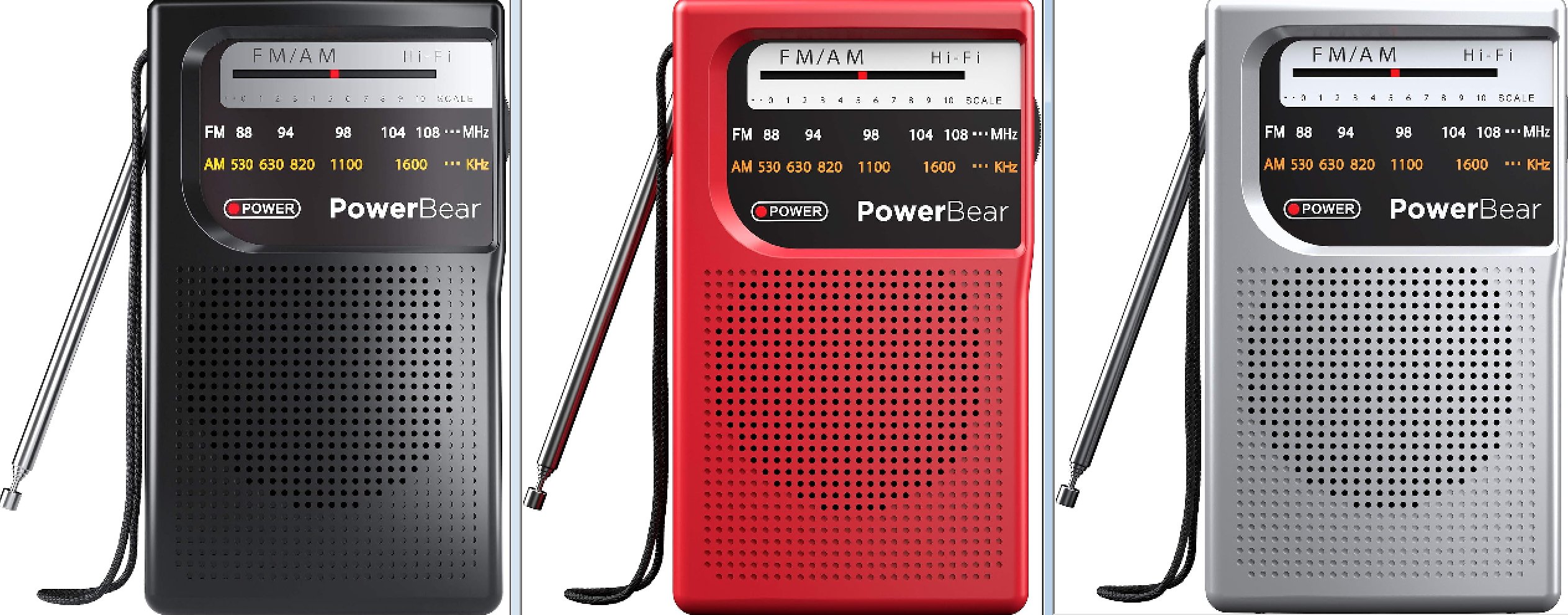
The PowerBear is the same radio as Vondior VX above in 3 colors
Vondior VX-W (NOAA) (Speaker) $16.99 – $23.98
Same as Vondior VX in 2 colors with NOAA Weather Band
XHDATA D-220 (Speaker) $9.95 – $13.99 (Sometimes depending on Color) Black, Orange or Green:
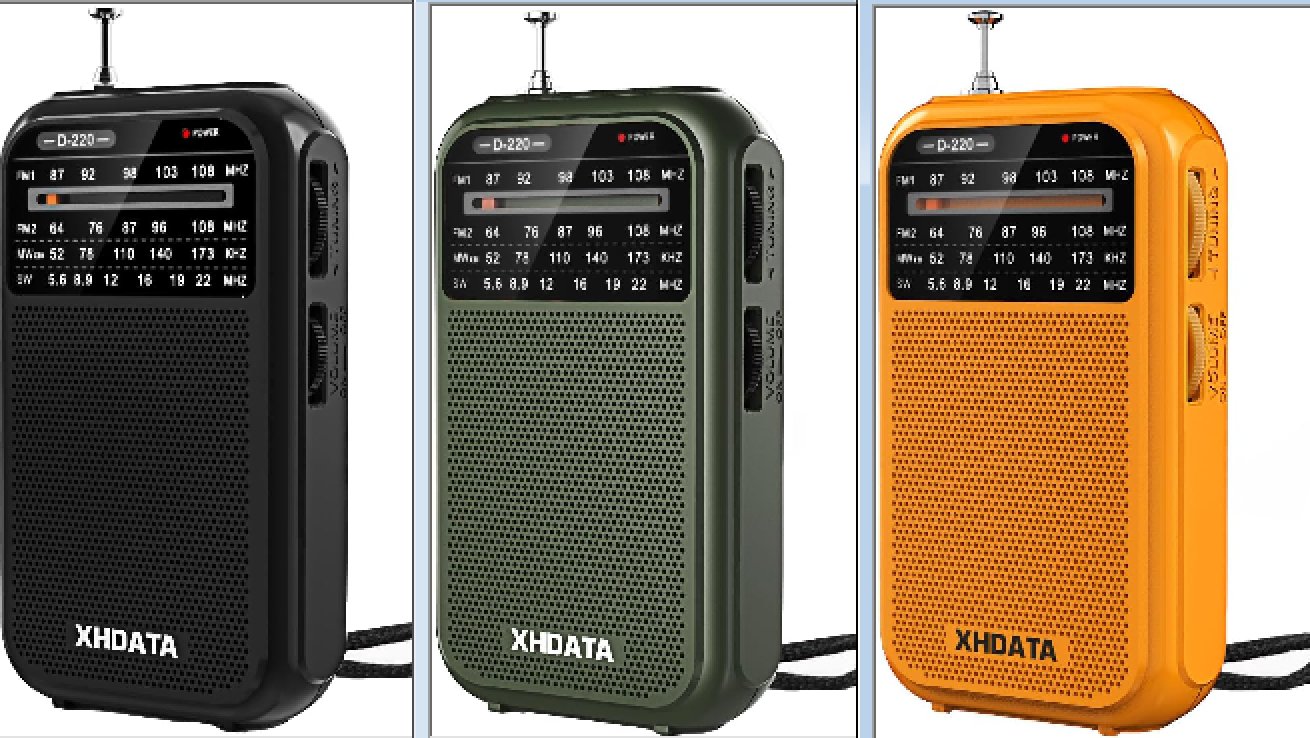
The D-220 is one of only a few radios in this group that includes SW from 5.6 – 22 MHz which is amazing at this price. Reception is good on all bands but sound has somewhat limited frequency although it’s strong midrange is good for intelligibility. Has a Power LED.
XHDATA D-221 (Speaker) $18.90
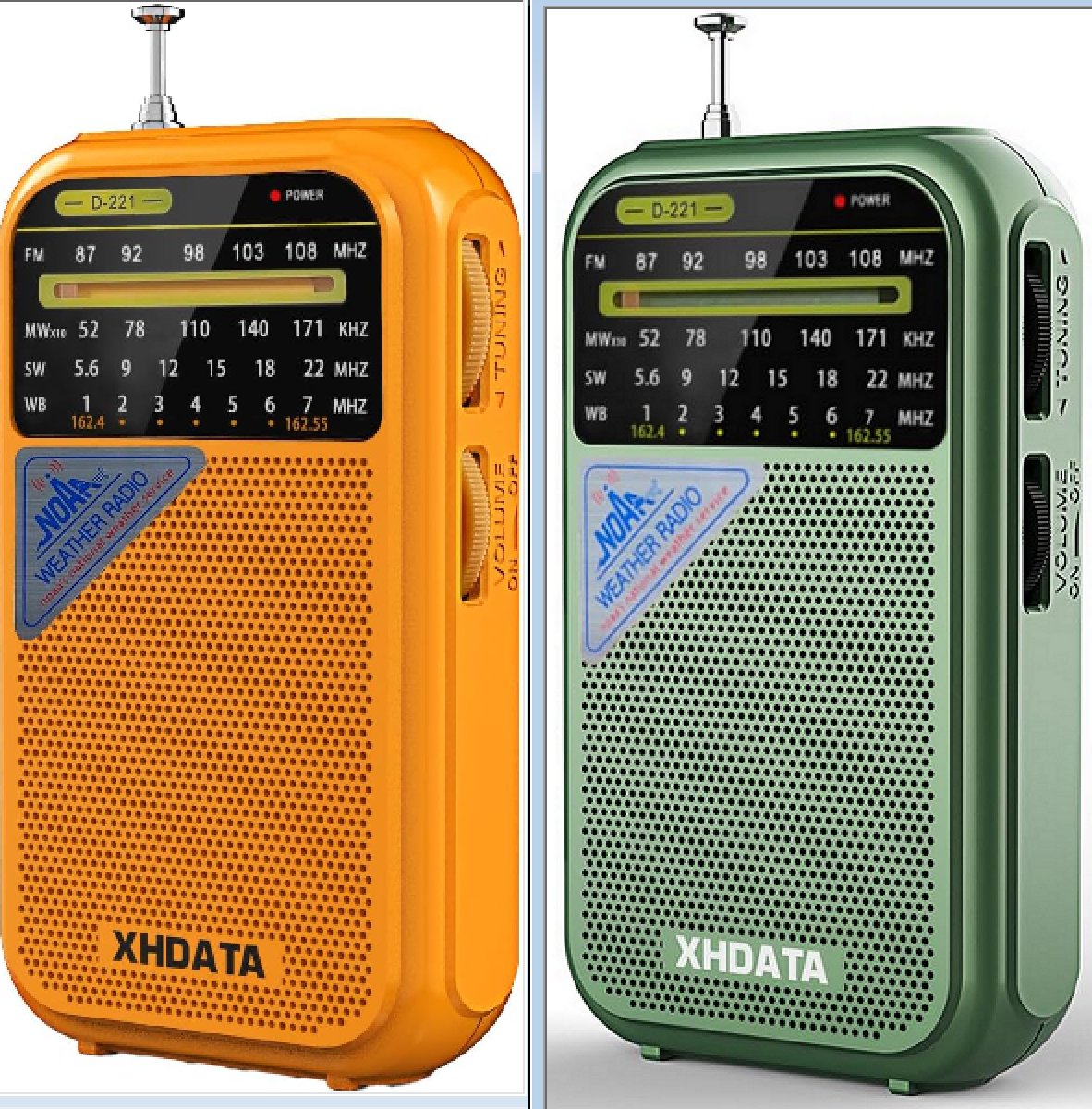
Same as D-220 above this USA – only version adds NOAA Weather and deletes the second FM band which is not used in the US- Orange or Green
Conclusion: Many of these inexpensive pocket portables could be a good choice because with few exceptions all are adequate overall and at their extremely low prices most of them are hard to fault. Yet they do certainly differ in terms of their specific strengths and weaknesses and I hope my capsule reviews and some of the extended reviews will help you choose a model most likely to suit you. You can also scroll down to read the previous two Pocket Portable articles which were published previously. Many of those models are no longer available but several are and you may find additional info on those which will be of interest
I hope you enjoyed this article!
For historical perspective below you will find the two previous Pocket Portable Reviews. Although much of this material is outdated, some models are still available.
Pocket Portable AM/FM Radios – 2022 Update
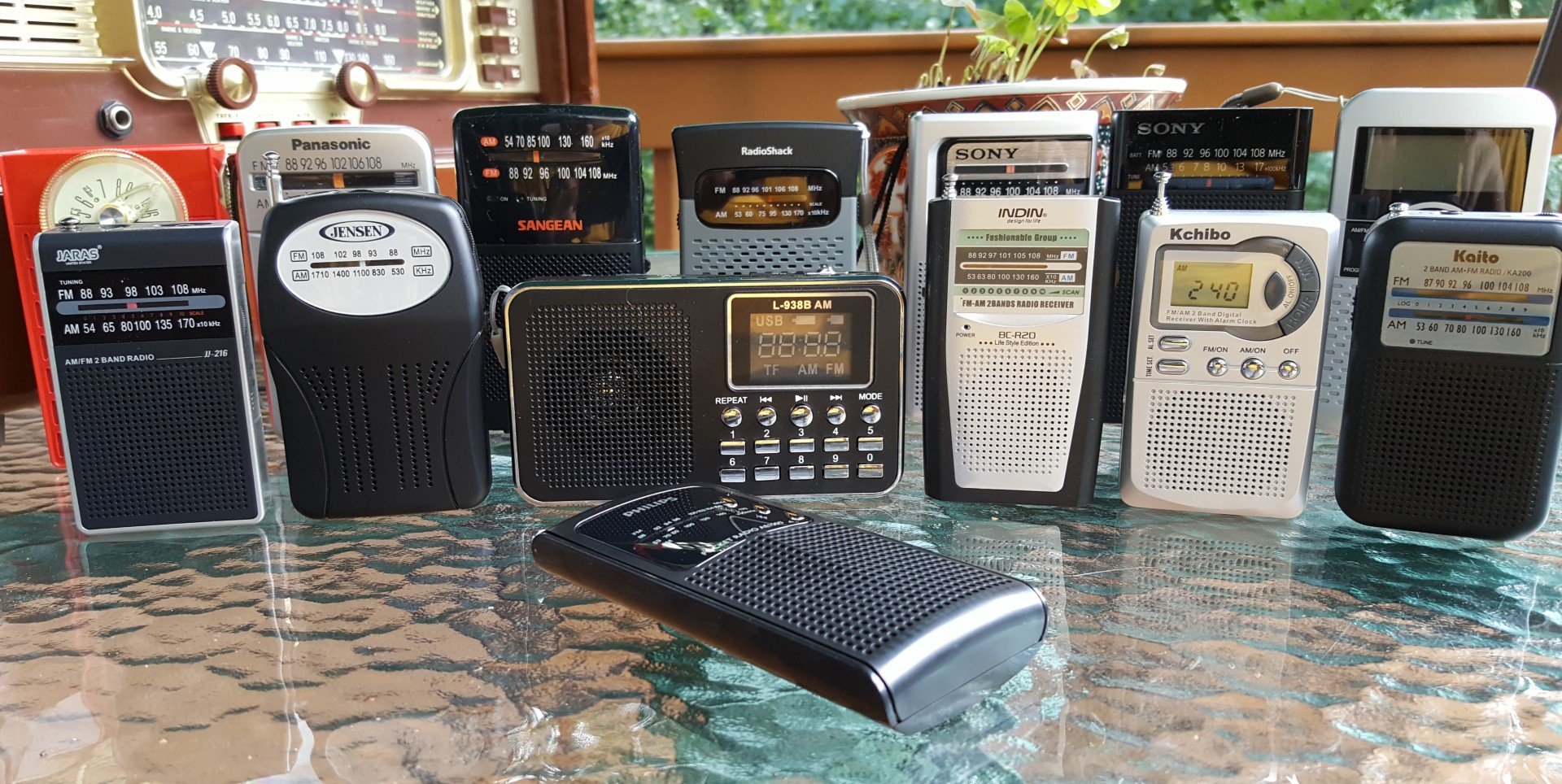
A Bevy of Modern Pocket Portables – Zenith Royal 50 (Circa 1960 in Red) Left Rear
It’s hard to believe that it has been so many years since I last updated the Pocket Portables Review, but here it is. Several new models have been added while some are discontinued. Recently discontinued models may still be found here and there but sometimes at grossly inflated prices so buyer beware. And one apparent clone of it’s well-known predecessor actually gives that discontinued radio a run for its money.
The biggest overall changes for this latest crop of pocket radios are that most currently-made radios are digitally tuned even though they have analog-like tuning knobs and dials. This means they tune in increments, popping from one frequency to the next rather than gliding continuously as in older, true-analog designs. This can make tuning a bit finicky if not well-designed but some radios tune more easily than others.
Another change is that all of the newly-introduced models feature stereo earphone jacks, so even though they only produce mono FM audio you will hear it through both sides of stereo earbuds…a decided convenience.
I suspect that the Radio Shack radios are no longer available which is a shame because their Model 1200586 had the best AM reception in last year’s review. Checking radioshack.com they all show as Out Of Stock and the ones I found at other online sites were at grossly inflated third party prices. (Radio Shack does still have a few larger portable radios on their site however so maybe there is still some hope that their pocket portables might reappear).
There are many other models available but the seven here represent the best performance and value of all the pocket portable radios I’ve seen which are designed primarily to be used with their speakers rather than with earbuds. Earbud portables such as the CC Pocket and Sangean DT-160 are more expensive and are generally in a higher class overall with digital tuning and its associated features along with Stereo FM and enhanced overall performance.
Onto The New Review – I will leave the older review for reference at the bottom of this page but some of those models are no longer available.
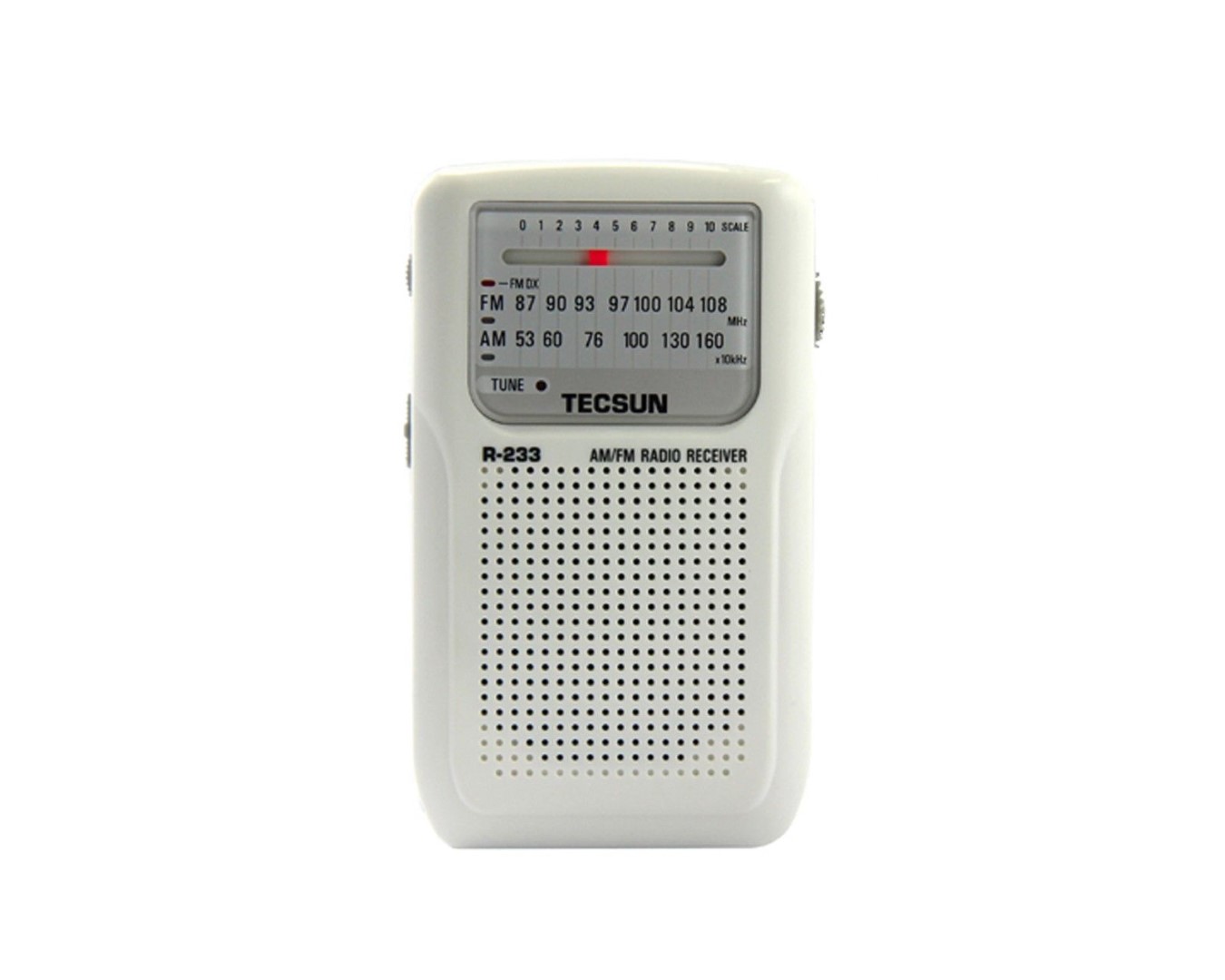
Pocket Radios Under $20: Degen DE797 – Kaito – KA-210 – Tecsun R-233 – Vondior 926

Degen DE797

Kaito KA-210
Tecsun R-233
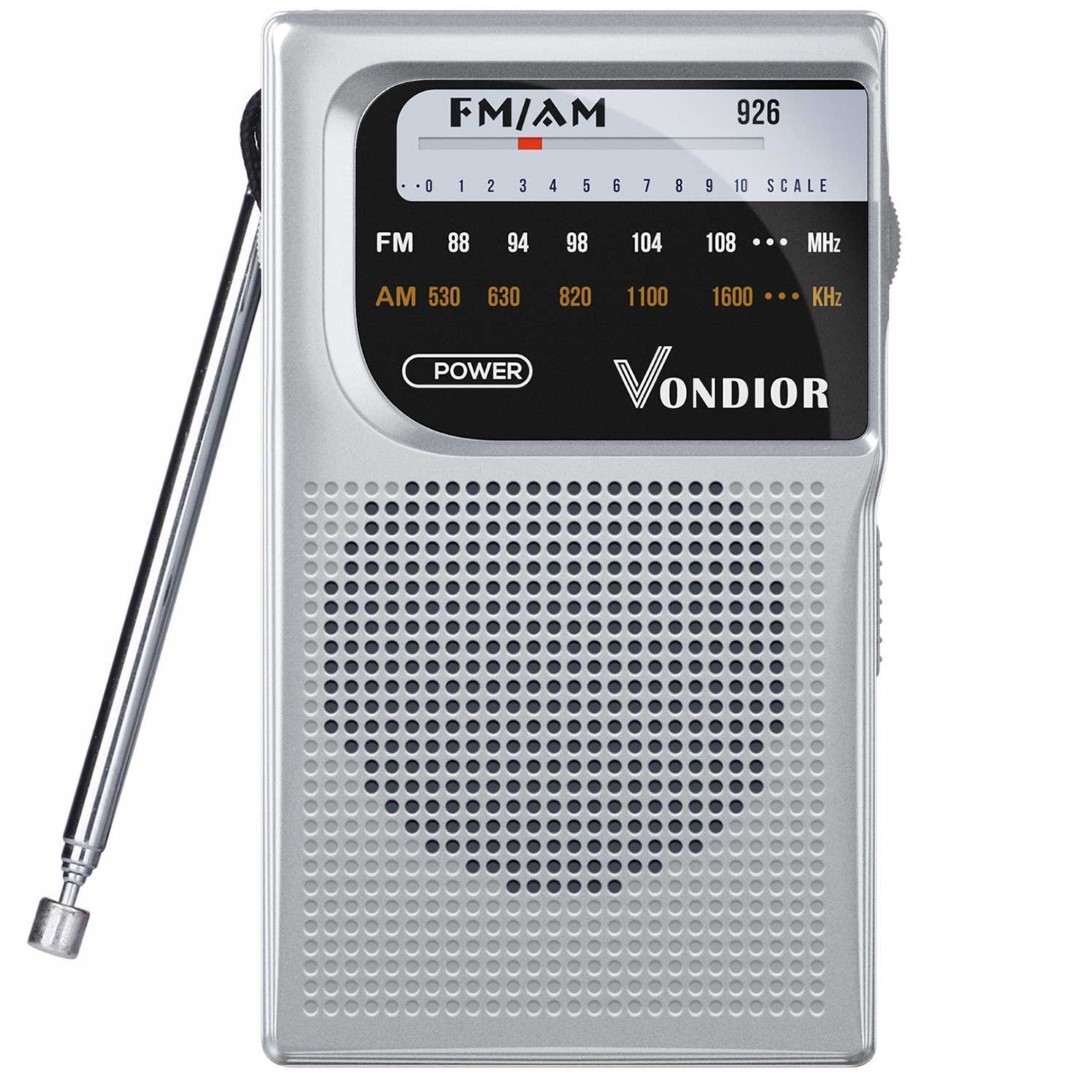
Vondior 926
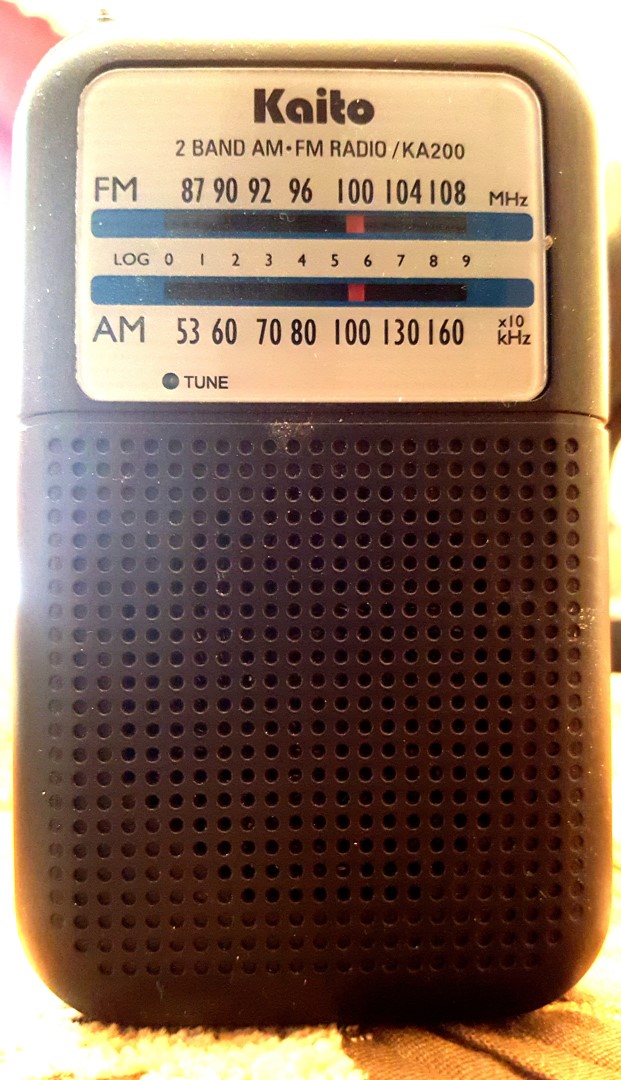
Kaito KA-200 / Degen DE-333
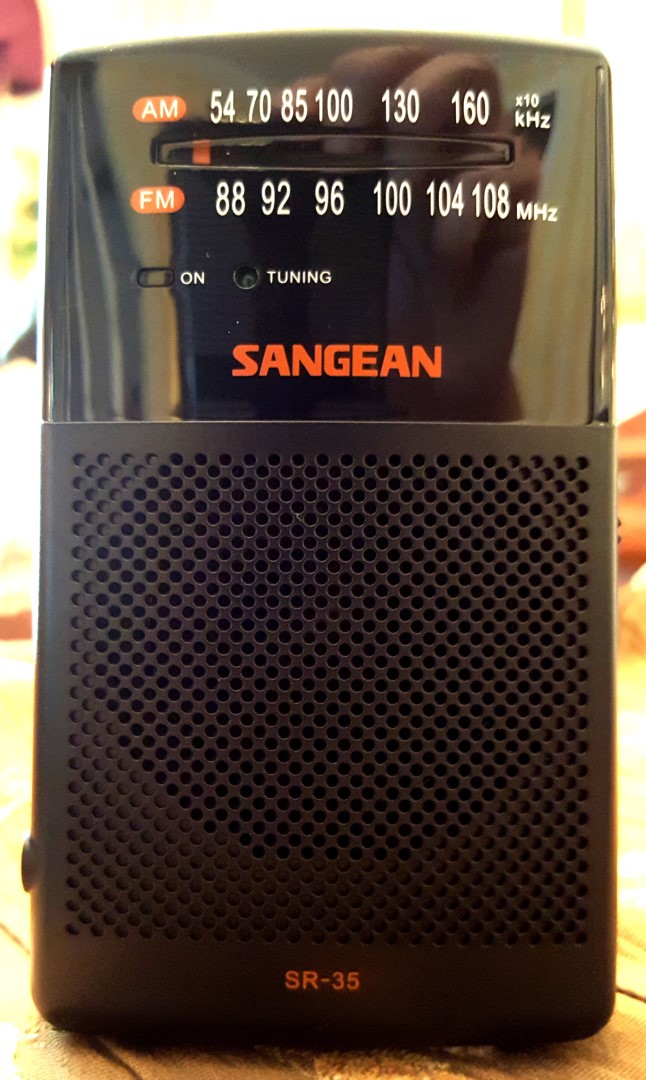
Sangean SR-35

Sony ICF-P26
And a comparison with other models from the original Pocket Portables review which are still available including the Kaito KA-200/Degen DE-333, Sangean SR-35 and Sony ICF-P26.
These small radios will fit into a large pocket but they still vary considerably in size with the Degen DE797 and Kaito KA-200 literally half the size of others, so choose accordingly. As a group they remind me of the old “transistor radios” we all carried with us in the 50’s and 60’s. Of course, today’s pocket sets bear no internal relationship with those all-analog sets of old. Modern radios are chip-based to varying extents with many DSP designs which incorporate almost all the active circuitry in one chip, but even non-DSP types are still IC-based to simplify manufacture. This design trend with more and more of the radio’s circuits all contained in individual chips can be both good and bad as long-time readers of this website will attest. Modern DSP radios range from mediocre in some sets to state-of-the-art where those chips are better utilized, so the presence of DSP is no guarantee of quality – each radio must still be judged based on its performance rather than its design concept. And since the internal AM ferrite rod antennas are necessarily small in these radios their AM reception will never compare with larger, more sophisticated radios, although the best are decent. FM reception on the other hand can be very good and is sometimes much better than yesterday’s small portable radios..
The most interesting thing I found (the same as in years past) is how much these pocket radios vary in their areas of strengths and weaknesses. Some are better on AM, others are better on FM, and some have more balanced sound than others. While no one expects top grade performance from a $10 to $20 pocket portable, picking the right one can make all the difference depending on what is important to you.
For this report I chose seven currently-available, inexpensive radios ranging from $9 for the tiny Degen DR797 (2.2” x 3.5” x 0.8”) to $15.59 for the Tecsun R-233 (4.5” x 2.5” x 1.1” ) and $19.95 for the Kaito KA-210 (4.5 x 0.75 x 2.75 in) and Vondior 926 (8.8 x 6 x 0.1 in). The Degen DE797 cost $9 Plus Shipping from Anon-co.com (I bought this along with the Tecsun R-233 for a total of $24.49 with $1.50 combined shipping for a total of $25.99. The Kaito was from Amazon.com with free shipping for Prime Members. The Vondior came from Amazon and cost $19.97 with free Prime Member shipping. The two smaller radios here are the Degen DR797 and the similarly-sized Kaito KA-200/Degen DE-333 while all of the other larger radios are very close in size to each other.
Still available since the last review are the Kaito KA-200/Degen DE-333, Sangean SR-35 and Sony ICF-P26.
The basic specs on all such pocket portables are pretty much the same, the main differences being that models intended for the US Market feature the US Expanded AM band up to 1710 KHz whereas the other units are only spec’d to just above 1600, although they will typically tune quite a bit higher. My DE797 was actually not meeting its spec -see below. Some radios have dials which are only calibrated up to 16 KHz but still reached beyond 1700 KHz to cover the full Expanded Band. Here are the actual measured Upper Tuning Limits for my samples…yours can be expected to vary slightly.
Degen DE797 1594.5 KHz (Spec’d to 1605, but mine couldn’t reach 1600 KHz)
Kaito KA-200/Degen DE-333 1665.6 KHz
Kaito KA-210 1686.7 KHz
Sangean SR-35 1730.8 KHz (Full Expanded Band)
Sony ICF-P26 1719.5 (Full Expanded band)
Tecsun R-233 1672.6 KHz
Vondior 926 1718.9 KHz (Full Expanded Band)
Many of these radios offer pretty good reception for the low cost but most have finnicky tuning due to less-than-ideal use of digital signal processing. They tune in steps even though the dials move smoothly and there are sometimes false peaks on either side of the true signal which can make finding the clearest peak a bit tricky. Radios with LED Tuning Indicators simplify this by helping you visually see when you are tuned to the strongest peak. Also, these radios may skip over a weak signal which is near a stronger signal on the dial, but if you tune slowly back and forth you will often be able to get the desired station to pop in. You can learn the feel of this and eventual reception can be quite acceptable, and of course, tuning is easier on stronger signals.
New Portables:
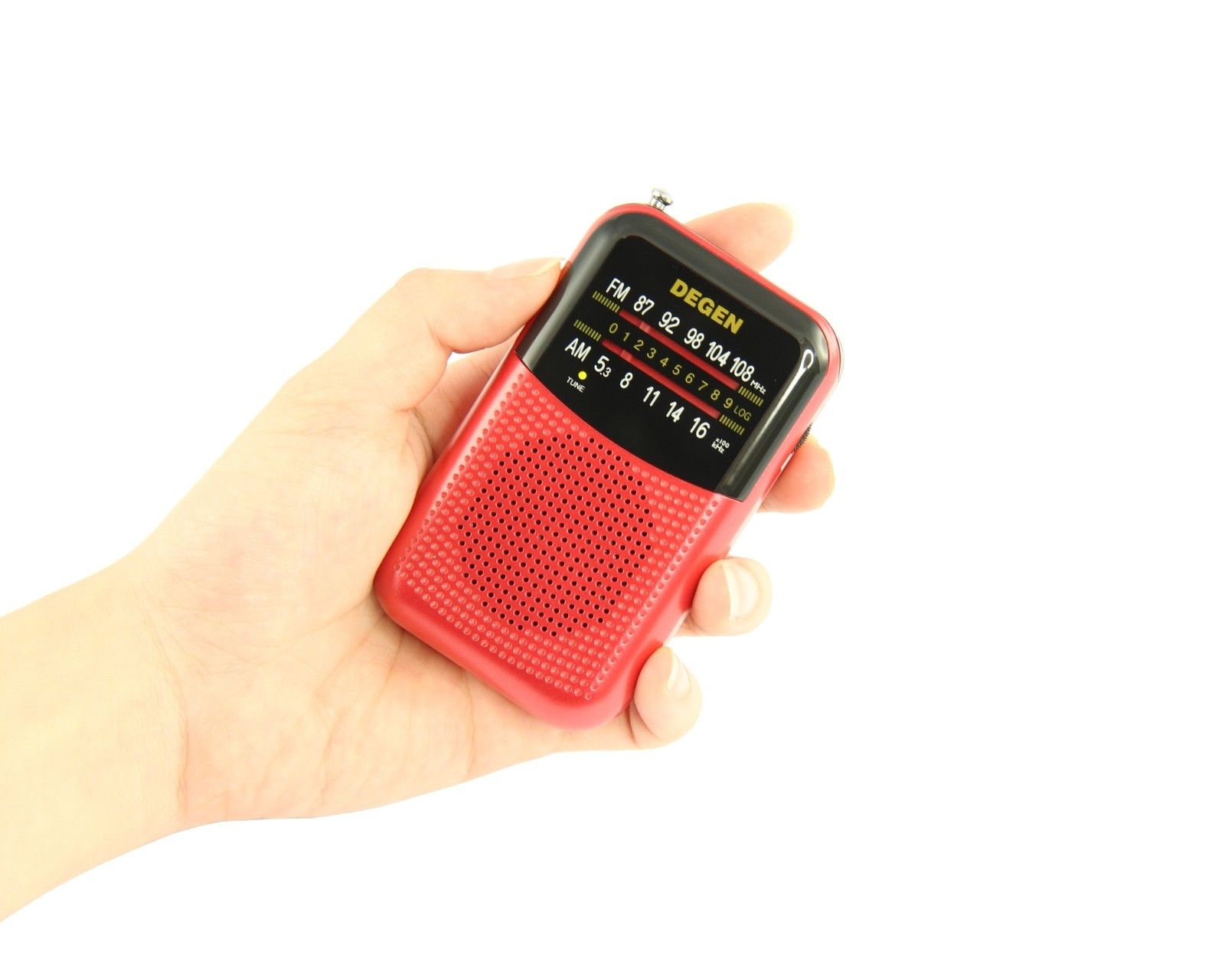
Pint-sized Degen DE797
The tiny Degen DE797 AM/FM portable is available in red only. It is a DSP design and as the smallest radio in this group (along with the Kaito KA-200) fits easily in the hand or a small pocket. It is powered by two AAA batteries. Fairly weak AM reception is OK for local stations and my sample did not tune any higher than 1594.5 KHz but it has very good FM reception and very good audio for its tiny size. Definitely a radio for FM lovers and very cute.
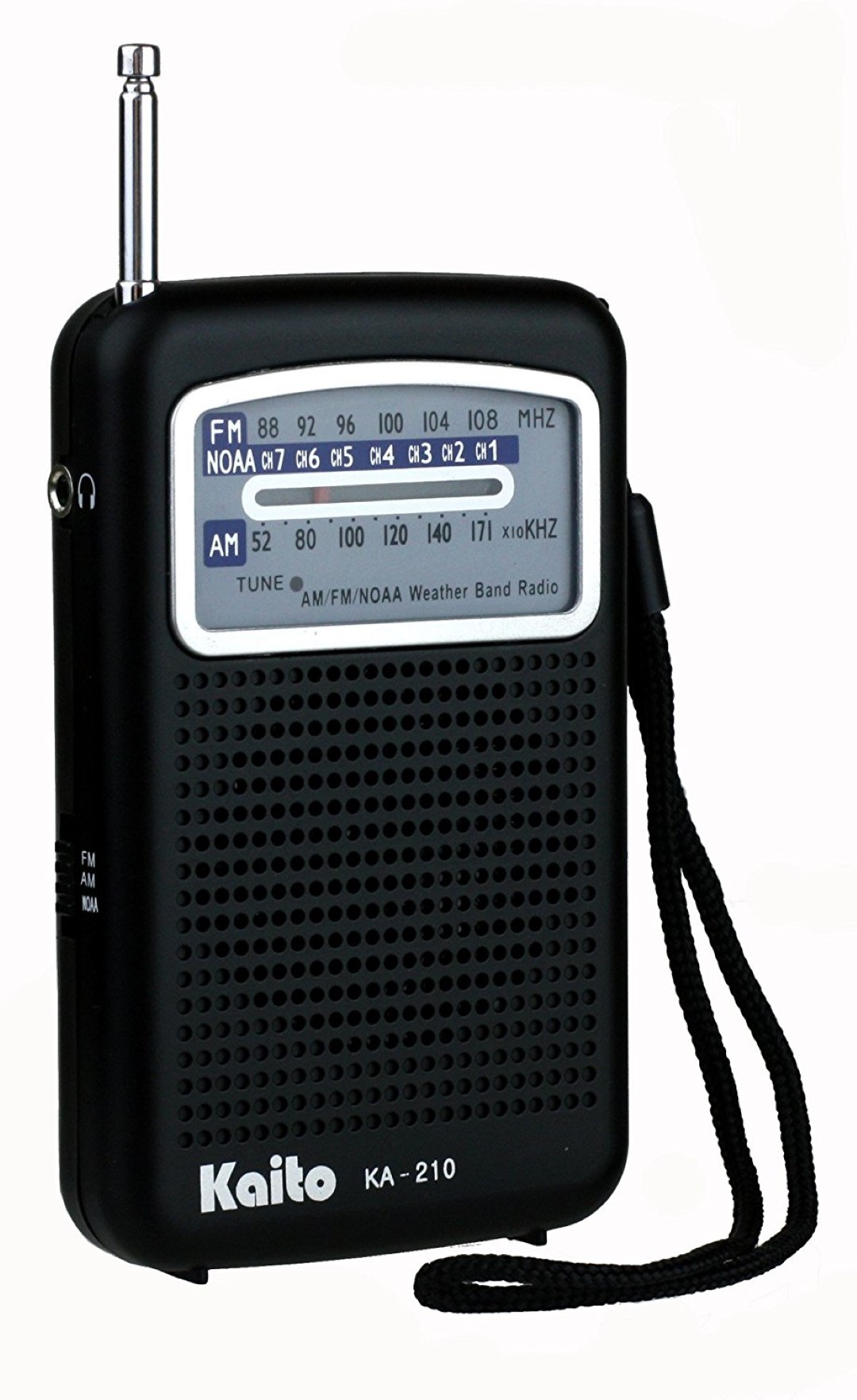
| The Kaito KA210 is the only radio in this report which features the NOAA Weather Band which makes it a natural for outdoor enthusiasts and others who need to keep an eye on the sky. It also has as an LED Tuning Indicator and is powered by two AA cells. Good AM and FM reception for this group but unfortunately it had somewhat thin sounding audio. |

The Tecsun R-233 is available in Black or White and offers an FM DX Feature which is said to “reduce interference or noise” to improve FM reception but I couldn’t hear that it had any real effect with any of the several marginal FM signals I listened to and, in fact, FM reception was weaker than most. AM reception however was very good and sound quality was pleasing. LED Tuning Indicator is a plus. It runs on two AA batteries and comes with stereo earbuds.

Left: Sony ICF-S10MK2 – Right Vondior 926
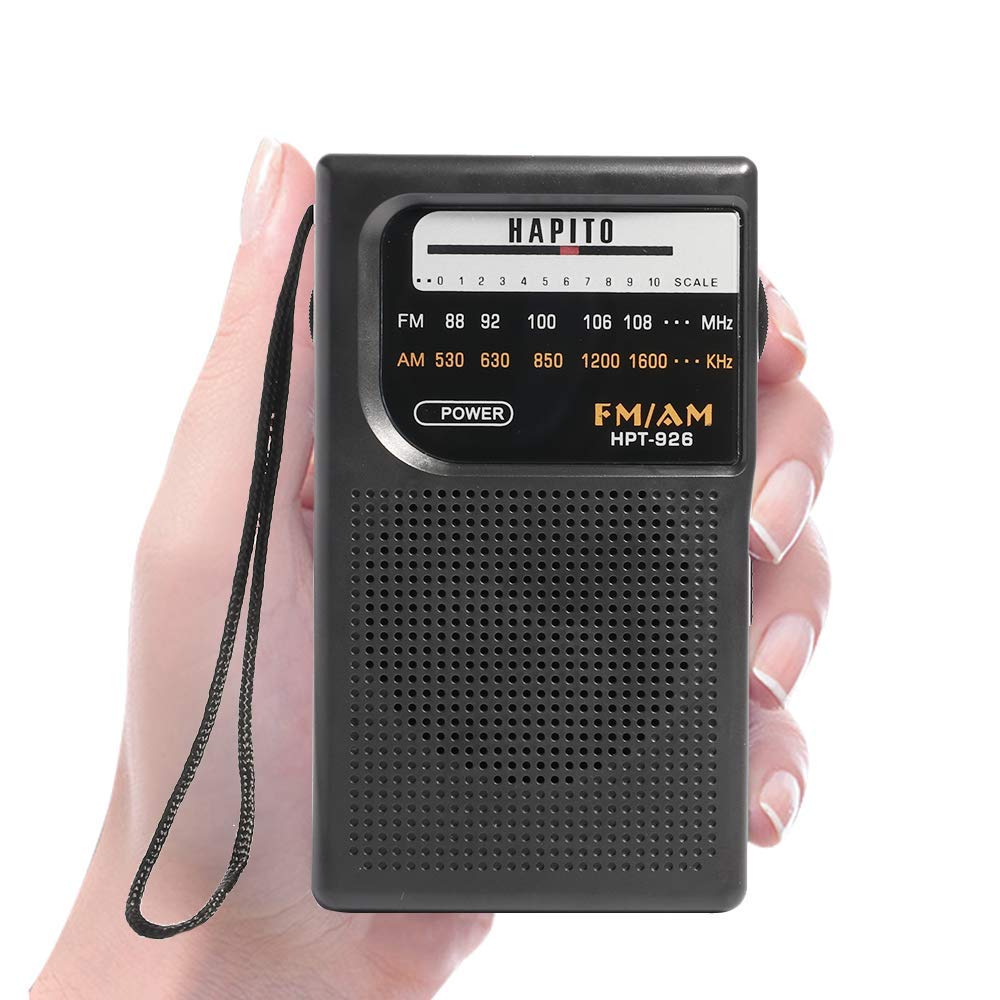
Hapito HPT-926
The Vondior 926 is clearly a copy of the longtime popular but now discontinued Sony ICF-S10MK2 (See Pictures). It is available in Black or White and also with other brand names such as the Hapito HPT-926 pictured here. Knowing that the innards would have nothing in common with the original Sony model I was especially curious to compare their performance. While the old Sony was an analog design and thus tunes more smoothly, the new Vondior actually outperformed it in FM reception due to improved selectivity. It was also slightly more sensitive on some AM signals and in addition to full coverage of the expanded AM band offers similar audio quality, but it does have the finicky tuning behavior of many current models and has a Power Indicator rather than a more useful Tuning Indicator. Note: my radio does not have the number 926 on it anywhere as you can see although some internet pictures show it on the front…mine only says VX, so clearly there are different production runs with different cosmetics.
Available in Black or Silver (Choose once you get to the Amazon page): See It At Amazon:
Still Available From The Previous Review:
Kaito KA-200 – $12.99 in Black or White at Amazon http://amzn.to/2binElF or $ 12.99 from http://www.kaitousa.com/ Same small size as the less-expensive Degen DE797 but the Degen outperformed it on FM reception and sound quality. Runs on two AAA cells.
Sangean SR-35 – Lists at $40 but currently $19.99 at Amazon http://amzn.to/2bmXqBN with free Prime Shipping). Best sounding portable in this group but not quite as loud as some others which push much more midrange audio. Has very good AM and FM reception, a Tune LED and runs on two AA’s. For best sound quality on music this is a great choice.
Sony ICF-P26 – $18.00 http://amzn.to/2biruvn Average AM/FM reception and audio. Has the Expanded AM band and a Tune LED.
Conclusion: As long as your expectations are realistic one of these pocket portables might suit you very well. None will replace my favorite new or vintage radios of larger size but the convenience of a pocket portable and the sheer fun factor of them along with very reasonable prices can make one of these a fun addition to your listening hobby.
Jay Allen
—————————————————————————
Below is the original Pocket Portable Review published Fall 2016 – Much of this info is updated in the current review above.
One of my most prized possessions as a kid was my first portable transistor radio…a Constant 6T-200. I thought it was beautiful just to look at and indeed the Japanese reverse-painted radios on the late 50’s/early 60’s were very eye-catching. It wasn’t long though until I realized there were better radios to be had and as I’ve written in my bio this started a lifelong passion for high performing radios… mainly portable radios.

My First Radio – Constant 6T-220
Many of today’s inexpensive AM/FM pocket-sized portables offer good enough performance to be truly enjoyable companions in situations where you would not want to lug a larger radio. The best of them are decent on AM and some are very good on FM. Interestingly, modern portables have improved in FM performance more than AM – many early FM portables, especially less expensive models suffered from poor FM selectivity which is much more of a problem today than it was in the 70’s and 80’s because the FM band has become so much more crowded. Many newer portables feature razor-sharp FM selectivity, letting you easily separate signals which are closely spaced on the dial.
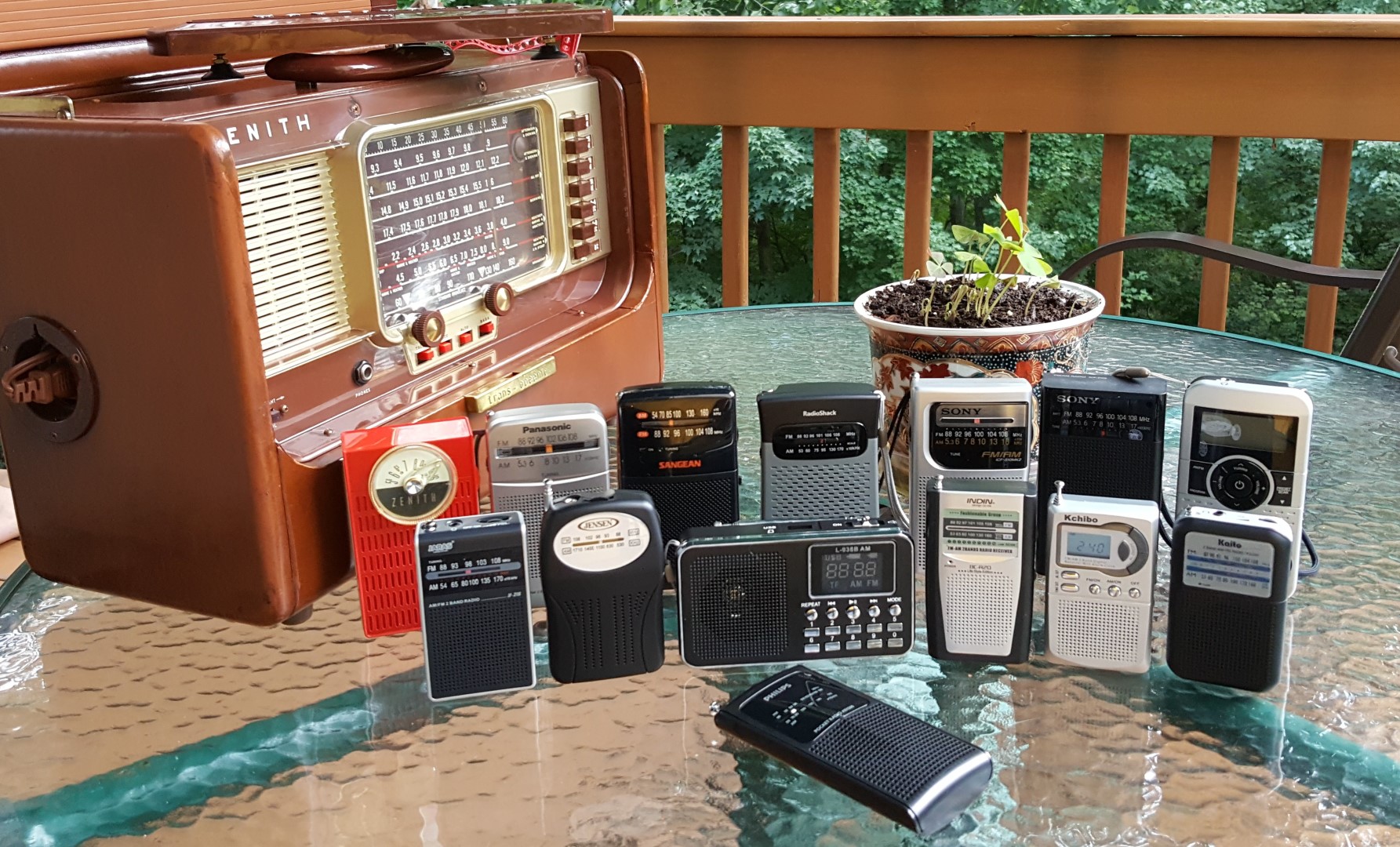
A Bit Of Perspective On Size!
Dwarfed by my 1958 Zenith Royal A600L Trans-oceanic are this year’s 13 pocket portables along with Zenith’s first pocket portable from 1960, a red and white AM only Royal 50 (Left Rear. For Zenith fans that Royal 50, Zenith’s least expensive radio of its day, is among the best performing radios of its size and era – it is at least as good as the best of today’s pocket portables on AM).
When I first compared AM/FM Pocket Portable Radios a few years ago I found 5 relatively popular units, all of which are still available today. However a little internet searching revealed many new models, two with digital readouts (one is digitally tuned, the other is analog tuned with a digital display), at “pocket” prices. Clearly it was time for an update with more AM/FM portables.
To be included in this review the radio must be self-contained which means built-in antennas for AM and FM and speaker. I did not include pocket portables meant primarily for earbud use, even if they contain a built-in speaker (such as the excellent Sangean DT-400W, DT-210 and CC Pocket), because they are not only more expensive and generally a higher quality level, but they rely on the earphone cable or a dummy wire as their FM antenna and so are not really convenient for FM portable use with the speaker. Pocket portables are for convenience above all else
In addition a pocket portable should obviously be small enough to fit into a pocket but some of these are half the size of the others. It should be inexpensive enough that if it is lost or dropped the loss is minimal, and it should be good enough that your local and most semi-local suburban-grade signals will come in well enough to be listened to enjoyably. Some are of course better than this minimum requirement. Finally one doesn’t expect Hi-Fi sound from any tiny device but it should be pleasant enough that you can enjoy the program you are listening to. Most of these are OK in that regard but some are not so great.
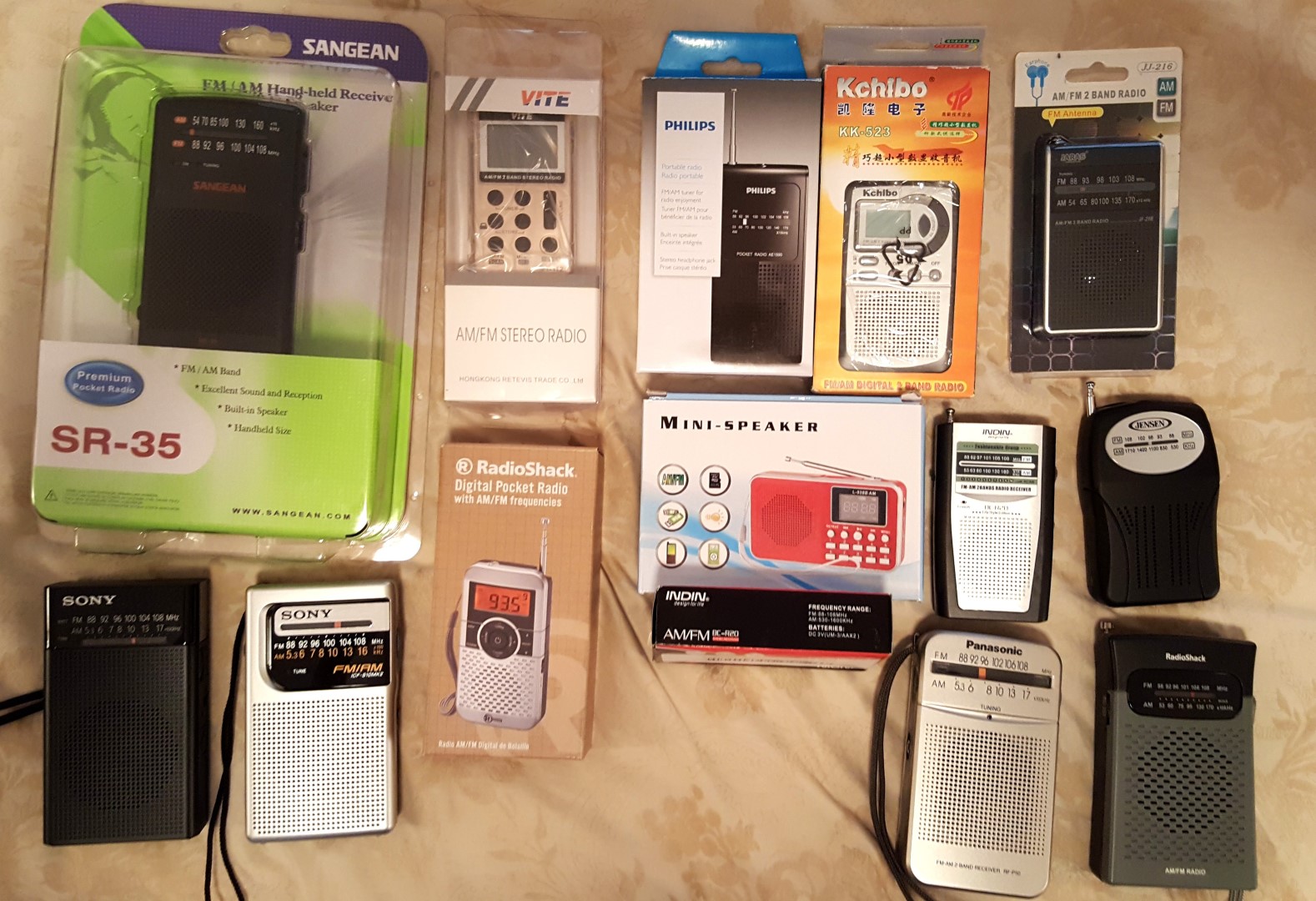 Luckily many of the radios in this report deliver on all those points and you can’t go too far wrong with any of the recommended models. However some are definitely better in one area of performance (such as AM versus FM reception or sound quality) so your preferences may dictate or rule out a particular model.
And unfortunately there are a few I cannot recommend – they are just so cheaply made that they don’t function properly, or they work so poorly they can’t be regarded as anything more than toys. One unit (the MFine L-938B) was both quirky and defective so I did not rate it.
General Notes:
- Several of these are just plain miserable on AM, barely receiving even local and semi-local signals, but surprisingly, all were at least acceptable on FM, so if your needs are not too fancy almost any will do for FM only use.
- Only one of these radios provides FM stereo reception with earbuds, the digital Radio Shack 1201475, but most of the others, except as noted, have stereo earphone jacks so you can hear their mono sound through stereo earbuds. Units with mono jacks will play only through the left channel unless you use a mono to stereo adapter.
- The average size of the larger pocket portables is approximately 4 ½ x 3 x 1 1/4. The smaller units are approximately 3 x 2 by 1 – see the group picture to see visually how they compare.
- Some models are noted as “tuning in steps”- a result of the increasing digitalization of their design. They actually increment up and down rather than progressing smoothly as in fully analog designs. However these steps are fine enough that in this class of equipment it is of little concern and many users won’t even notice it.
Best For AM & FM:
 Radio Shack – Cat No. 1200586 (Formerly Cat No 12-586) $14.99 http://www.radioshack.com or in-store
Best AM Sensitivity – Mono earphone jack – Average FM Performance – Good Sound for a small portable – Tuning feel slightly stiff but manageable – a good bargain
Sangean SR-35 lists at $40 but currently $18.75 at Amazon http://amzn.to/2bmXqBN
Very Good FM – Best Audio In This Article with Best Tonal Balance among all of these radios but at the sacrifice of maximum volume – Good AM almost as good as the model above – Seems to tune in steps – Tune LED
 Sony ICF-S10 MK2 currently $15.93 at Amazon http://amzn.to/2b0qw6n also sometimes found at discount & drugstores for even
less – I found mine for $9.99
AM just slightly noisier than the above radios but still respectable – Good FM – Mono earphone jack – no expanded AM band – Tune LED.
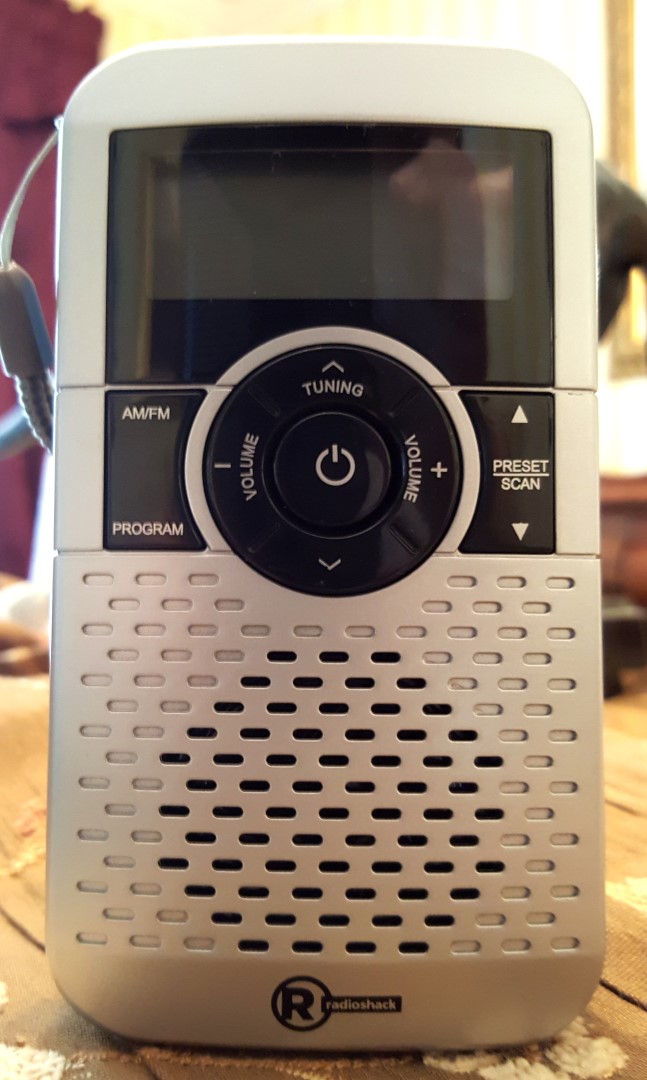 Radio Shack Cat No 1201475 $29.99 http://www.radioshack.com
Only True Digital Tuner In This Report – Stereo FM through earbuds but no mono switch – Adequate AM – Scan Tuning – 20 Presets – Key Lock – Good Sound
Sony ICF-P26 $19.99 http://amzn.to/2biruvn
Total re-design of ICF-S10 MK2 above but overall a slight step backwards in performance with slightly weaker reception and audio. However it adds the Expanded AM band and stereo earphone jack.
Kaito KA-200 – $12.99 At Amazon http://amzn.to/2binElF or $ 19.99 from http://www.kaitousa.com/
Smaller than the radios above (see group picture) but solidly made – decent reception and sound for the size. No Expanded AM Band
Best For FM Only (AM Is considerably weaker than the models above)
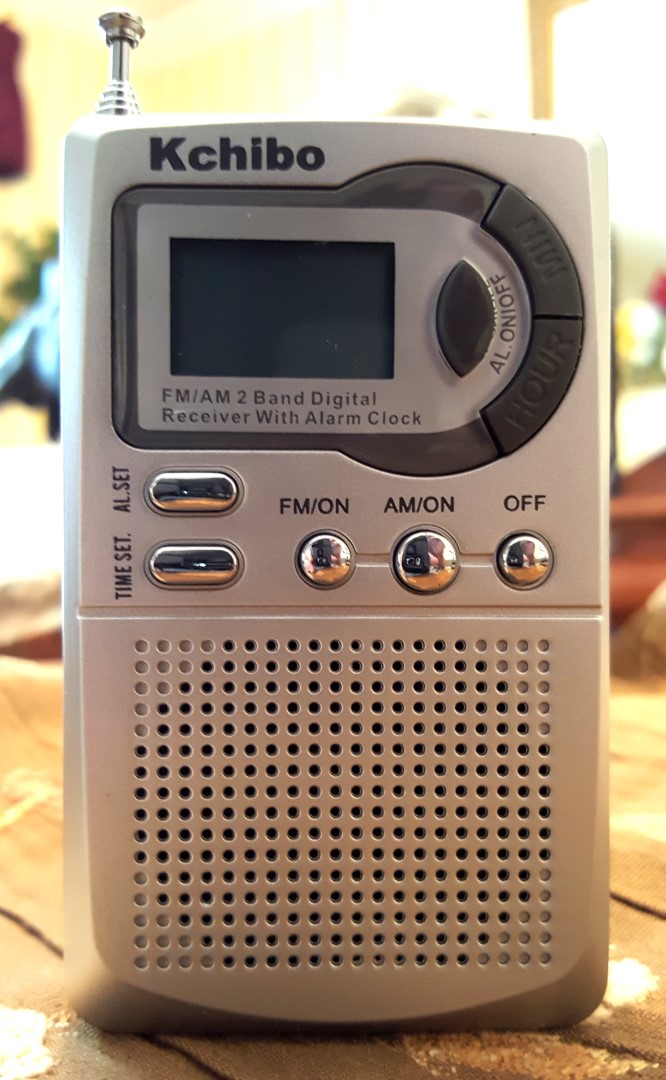 Kchibo – KK-523 $16.99 At Amazon http://amzn.to/2bmC3BO
Sensitive AM is unfortunately hampered by loud digital noise – FM Fair – Analog-tuning is somewhat touchy but digital readout is a plus – Very small
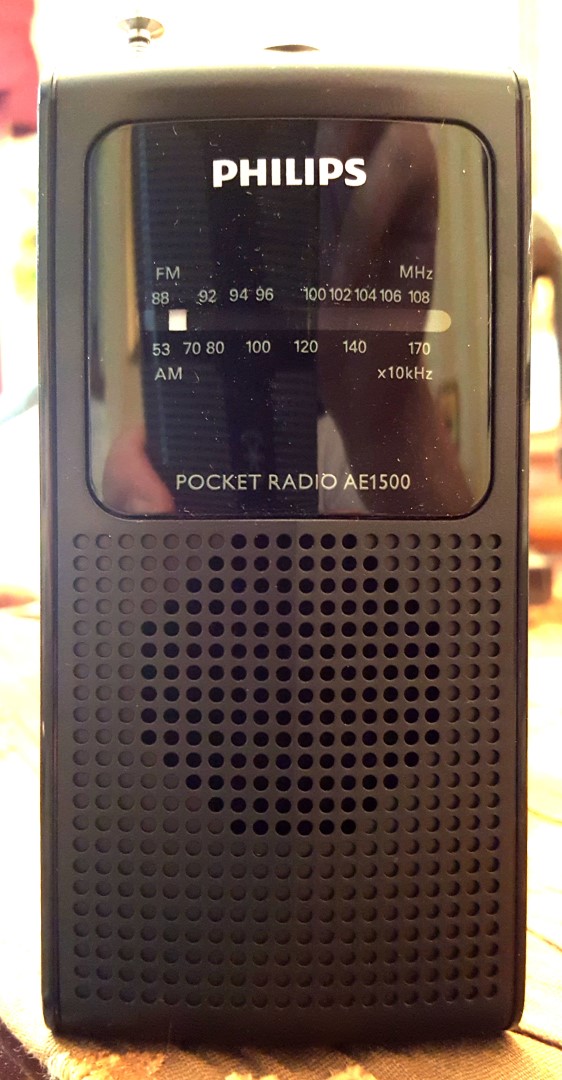 Philips – AE1500(37) $12.99 Black http://amzn.to/2bmYMN4 $14.79 Silver http://amzn.to/2bmCrjZ
Seems to tune in steps – FM OK – AM Weak – Very thin audio – tall but very slim
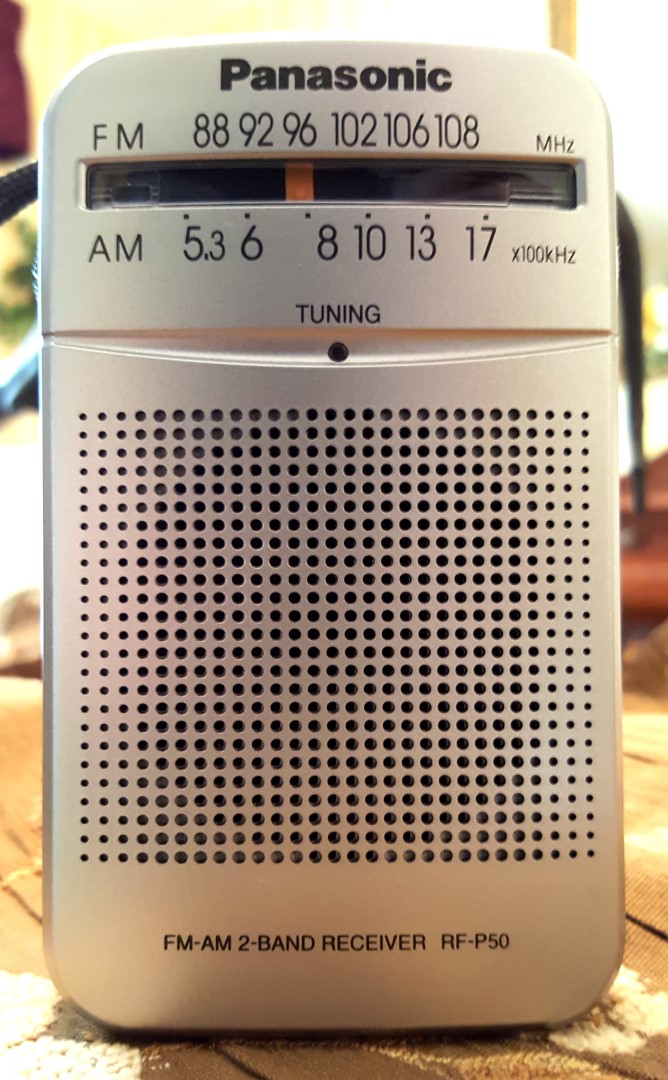 Panasonic – RF-P50 $16.95 Amazon http://amzn.to/2bmBc4c
Adequate FM – Very weak AM – Mono earphone jack
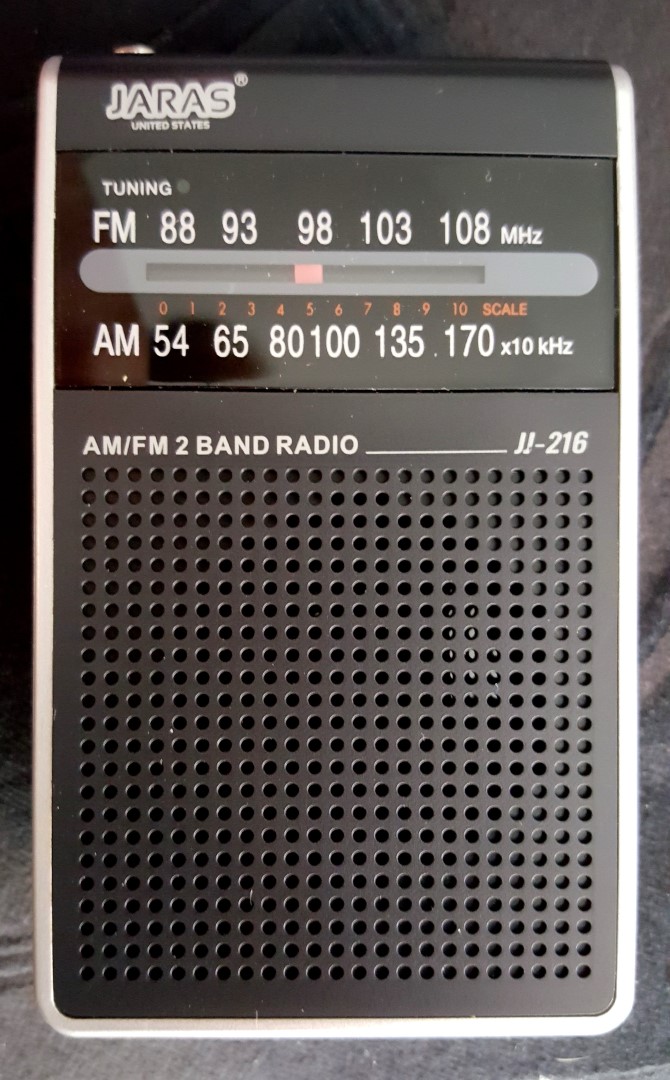 Jaras – JJ-216 $10.99 At Amazon http://amzn.to/2b0rn7a
Adequate FM for the price – Very weak AM – small – seems to tune in steps – very small
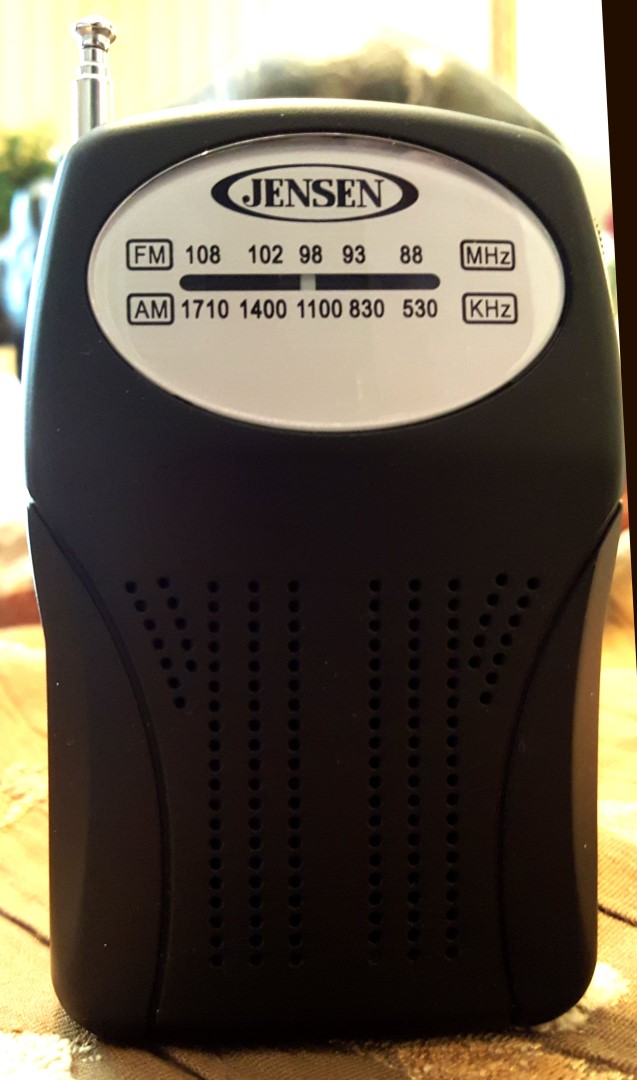 Jensen – MR-75 $9.99 At Target
Fair FM – Worst AM Of Group – actually makes electronic game-like beeps while tuning on AM – medium size
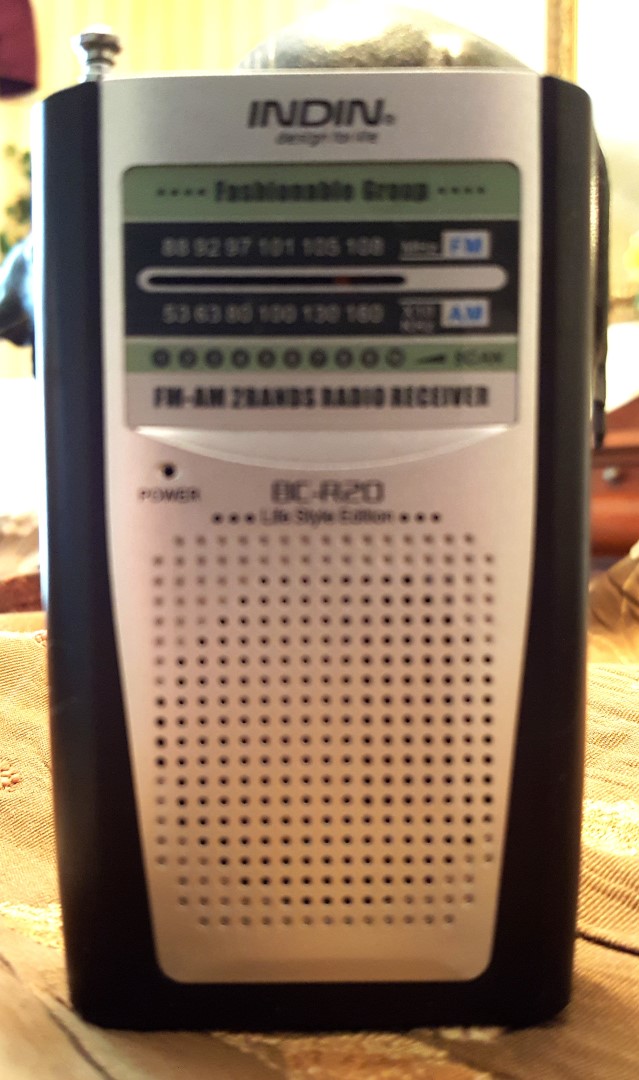 Indin – BC-R20 $10.99 At Amazon http://amzn.to/2bmBM1V
Adequate FM for the price – small – very tiny hard to read dial scale – minimal AM reception – fairly small
 Defective Sample: MFIne L-938B $13.99 At Amazon http://amzn.to/2aV9jiX
Not rated
Unacceptable AM: These were very insensitive or had interference or noise issues making anything but the strongest of local AM signals unlistenable: Listed alphabetically:
Indin – BC-R20
Jaras JJ-216
Jensen MR-75
Panasonic RF-P50
Conclusion: As a group there were more good FM performers than AM. In fact none of these were really poor on FM…even the worst were acceptable, at least for local signals, whereas on AM there were some that barely worked at all and had a tough time tuning in even locals.
If you’re more into FM you have more choices. The Sangean SR-35 has great overall FM performance and is also by far the nicest sounding of all of these units. It might not play as loudly as the other top AM radios on weaker AM signals, but on FM its tuner is excellent and its sound seems almost Hi-Fi by pocket standards…you really have to hear the SR-35 on FM compared with any of the others to appreciate the difference. The two Radio Shack models on the other hand were very close on FM and the 12-586 was slightly better on AM while the digital 1201475 has digital tuning and Stereo FM with earbuds. The smaller Kaito KA-200 was the best performing radio in its size group…half the size of the radios above it in the Top AM Group.
Originally Posted Fall 2016.
 radiojayallen
You must be logged in to post a comment.