GE Digital Superadio 7-2882A

The GE Superadios are among the best known and best performing AM/FM portable radios ever made anywhere near their price and have achieved cult status among knowledgeable radio hobbyists. The Classic 3 models included:
The original SR (Model 7-2880) introduced in 1979 and retailing for $79.95.
1982 brought the SR II (Model 7-2885) still selling for $79.95 until at least 1986.
And the SR III (Model 7-2997) debuted in 1992 and was sold under GE and later RCA brand names.

Top: Original SR – SR II – Bottom: SR III – Digital Superadio 7-2882A
The SR and SR II were highly similar and boasted Tuned RF stages, Ceramic IF filters, an impressive 6 1/2″ speaker (the SR II added a small piezo tweeter) and a 200 mm/ 7 7/8” Ferrite Rod Antenna. The SR III was a step backward in build quality now feeling very plasticky and light weight by comparison to the earlier models with slightly weaker AM reception but with somewhat better sound quality.
But I digress…this is just a brief introduction to the original Superadios which I have written about in detail here: Suffice it to say they are among my favorite AM portable radios of all time and are among the very few radios which rank Five Stars in my AM Mega Shootout.

But onto the subject of this report: Enter the little-known Digital Superadio (Model 7-2882A) introduced in 1982 for $139.95. It was clearly designed to offer pretty much the same performance as the original analog SR’s which were sold concurrently but with the change to a PLL Tuning design with an LCD readout. It had the same circuit attributes of the original analog versions such as a Tuned RF stage for AM and FM, Ceramic FM IF filter, 4 stage AM IF tuned circuits, 6 1/2″ speaker and a 200 mm/7 7/8” ferrite rod loopstick antenna. Controls include Power On/Off, AM/FM, Bass, Treble, Tune Up/Down, Fast Up, pushbutton Dial Light, Memory Set, 8 Memory keys for AM and 8 for FM, a 10 KHz/9 KHz switch on the back panel and an 1/8” earphone jack on the right side.

I don’t think many were made…perhaps the price was a bit much for an AM/FM portable radio at the time…the analog SR II retailed for $79.95 while the digital version sold for $139.95…those two 1982 prices convert to $257 versus $453 in 2024. I’ve owned many SRs, SR IIs and SR III’s but I had never seen the digital 7-2882 until a reader offered to give me a malfunctioning one to evaluate. He said the radio did work somewhat but that its tuning was erratic and did not always indicate the actual frequency being received. I was eager to learn about this radio so I gladly accepted his kind offer and soon the radio arrived, functioning just as he had described. I installed 6 D cells and 3 AA’s for the digital circuits and soon it was playing nicely. At first it seemed OK but as I tuned around the AM band I discovered that tuning UP and Down sometimes caused incorrect frequency displays such that one station on 590 appeared on 630 as an example. But tuning up and down it could be made to show 590 at other times. It also reverted to 530 KHz every time I powered the radio off which clearly was not right. I was glad though that the reception seemed fairly strong and the sound was great but I needed to get to the bottom of what was happening.

I obtained the original GE Service Manual which is great for everything other than disassembly instructions. Actually, the amount of disassembly needed for routine cleaning and alignment is easy only requiring that 7 screws be removed from the back panel after which the front cabinet comes away from the rear half which holds the chassis. The only hassle is that the speaker wires, while long enough to allow you to open the radio up really need to be desoldered and extended with clip pleads for full access. As it turns out all the adjustment points are accessible either directly or through holes in the sub-chassis and there is even an elongated slot to access the L6 sliding coil on the ferrite rod…very nice.
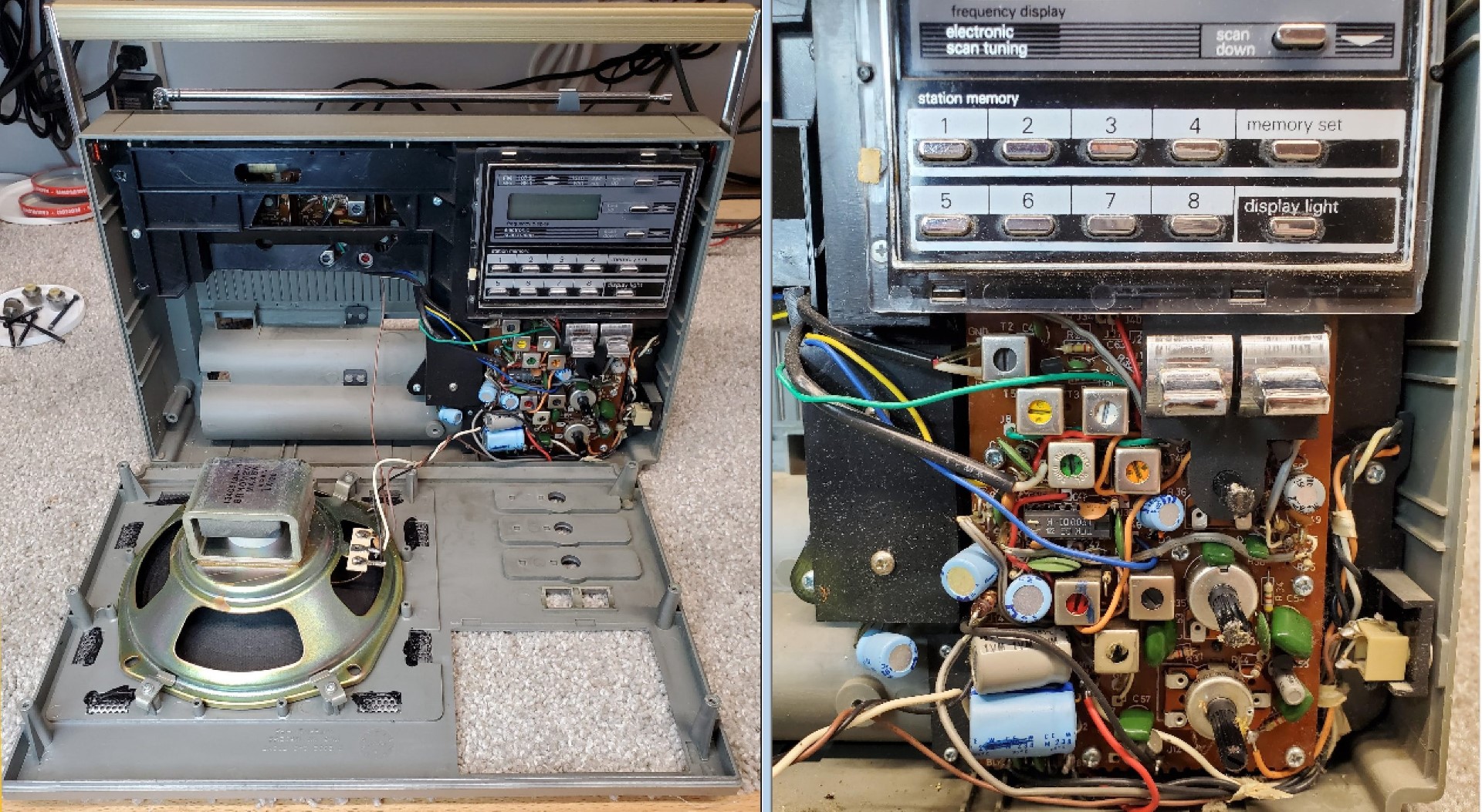
However, I could see behind the chassis that the AAA battery connections from the rear panel were completely covered with leaked battery acid and would need to be desoldered and cleaned. It also appeared that possibly this acid had at one point become aerosolized covering the interior with a pitted coating. However, lifting the chassis up and away from the back panel to access to the back printer circuit side of the chassis and those corroded connections on the inside of the back of the radio is not easy because several short wires make access for desoldering a bit difficult. After that and cleaning the band switch, I proceeded to alignment and found that although some were spot on a few were far enough off that there was a noticeable improvement after adjustment. (Note: This radio uses 450 KHz for the AM IF rather than the more usual 455 KHz).
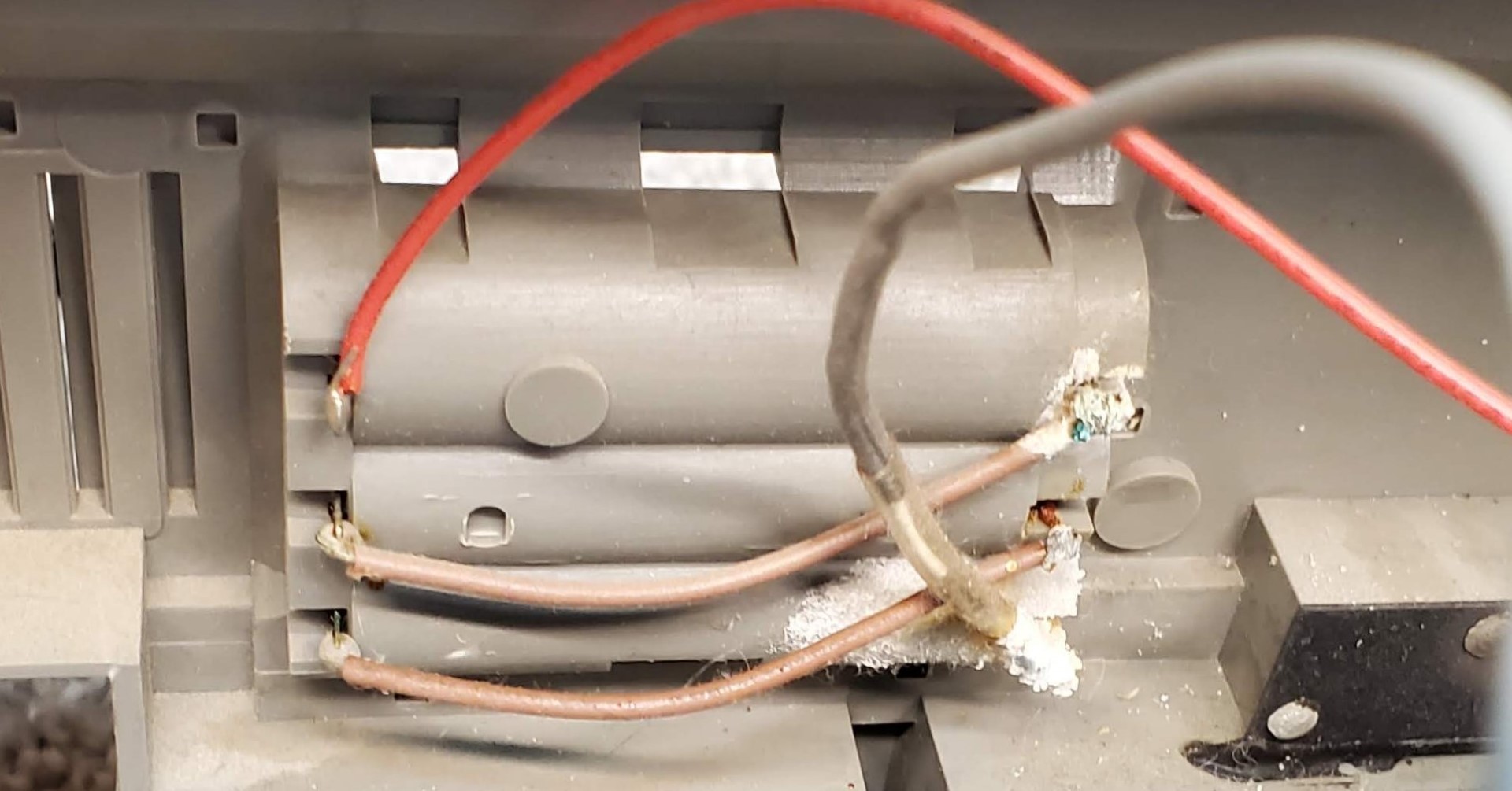
AA Battery Box – Easy Fix But Hard To Get At
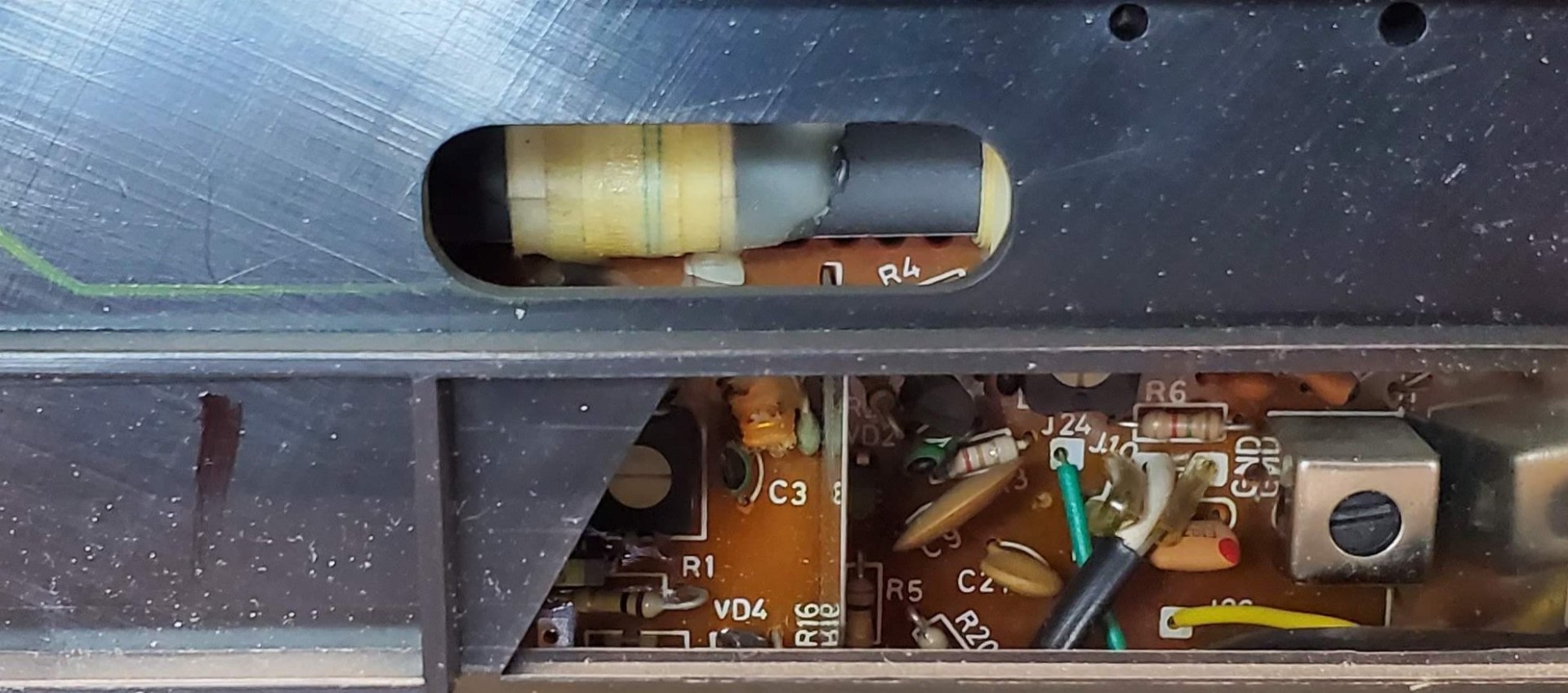
Access To L6 Adjustment on Ferrite Rod
Performance: Is this truly a Superadio? Yes and no. As I said above the 7-2882A Digital Superadio shares many attributes with the analog SR’s but with the change to a PLL digital tuner. The radio is a joy to use and unlike today’s radios with 1000’s of memories and menus it is refreshingly simple with a minimum of controls…On/Off switch, AM/FM switch, Tune Scan Up/Down/Fast Up buttons, Memory Set and 8 Memory buttons for each band and a dial light button. And of course, the same Bass and Treble controls of the analog SR’s. Putting the Digital Superadio alongside its contemporary SR’s they sound the same and in most typical cases reception seems very similar. There is one problem though and that is noise from the synthesizer or display which slightly raises the AM noise floor compared with the analog models, but let me put this into perspective. In typical homes with medium levels of RFI the difference between the noise floor of the digital and analog versions is subtle and only heard on fairly weak signals. I could happily listen to the Digital Superadio all day long and at night with many stronger signals the difference is even harder to hear. But in low noise locations you can really hear the difference on weaker signals. There is a background noise which is not there on the analog SR’s. So yes, there is a compromise but I don’t want to overstate it to the point where it seems that the 7-2882A is not a great radio…it is and it is better on AM than many current day radios, and it ranks **** 1/2 on the AM Mega Shootout list. FM is more similar to the analog SR’s with good sensitivity but not great selectivity compared with modern portables whose DSP designs offer razor sharp selectivity for today’s crowded FM band. It comes in at **** on the FM Mega Shootout list.

Conclusion: The GE Digital Superadio model 7-2882A is an interesting design from the early days of digital design. Clearly GE’s intention was to duplicate the performance of the analog SR’s adding digital tuning and frequency readout. It was pricey in 1982 retailing for $139.95 at a time when the SR II was retailing for $79.95 which probably explains why so few were sold…you can find nice examples of the original SR and the SR II every day but the 7-2882A Digital Superadio is very hard to find on the used market. The big question of course is whether or not it matches the performance of the well-known SR or SR II and as I’ve explained it is close but not quite the same due to a bit of digital noise in the background of weak signals. There is no doubt that were I were Dxing and seeking weak signals I would choose the SR or SR II but on balance, for typical program listening the Digital Superadio is very close. It’s AM reception is better than today’s typical multiband radios and close to the analog Superadios, and with its digital readout and memories it is a joy to use. And even if its FM reception does not compete with modern DSP radios the FM sound is wonderful. I’m glad to add it to my collection!
Jay Allen mailto:radiojayallen@gmail.com
 radiojayallen
You must be logged in to post a comment.