Emerson 31P61 AM/FM Radio

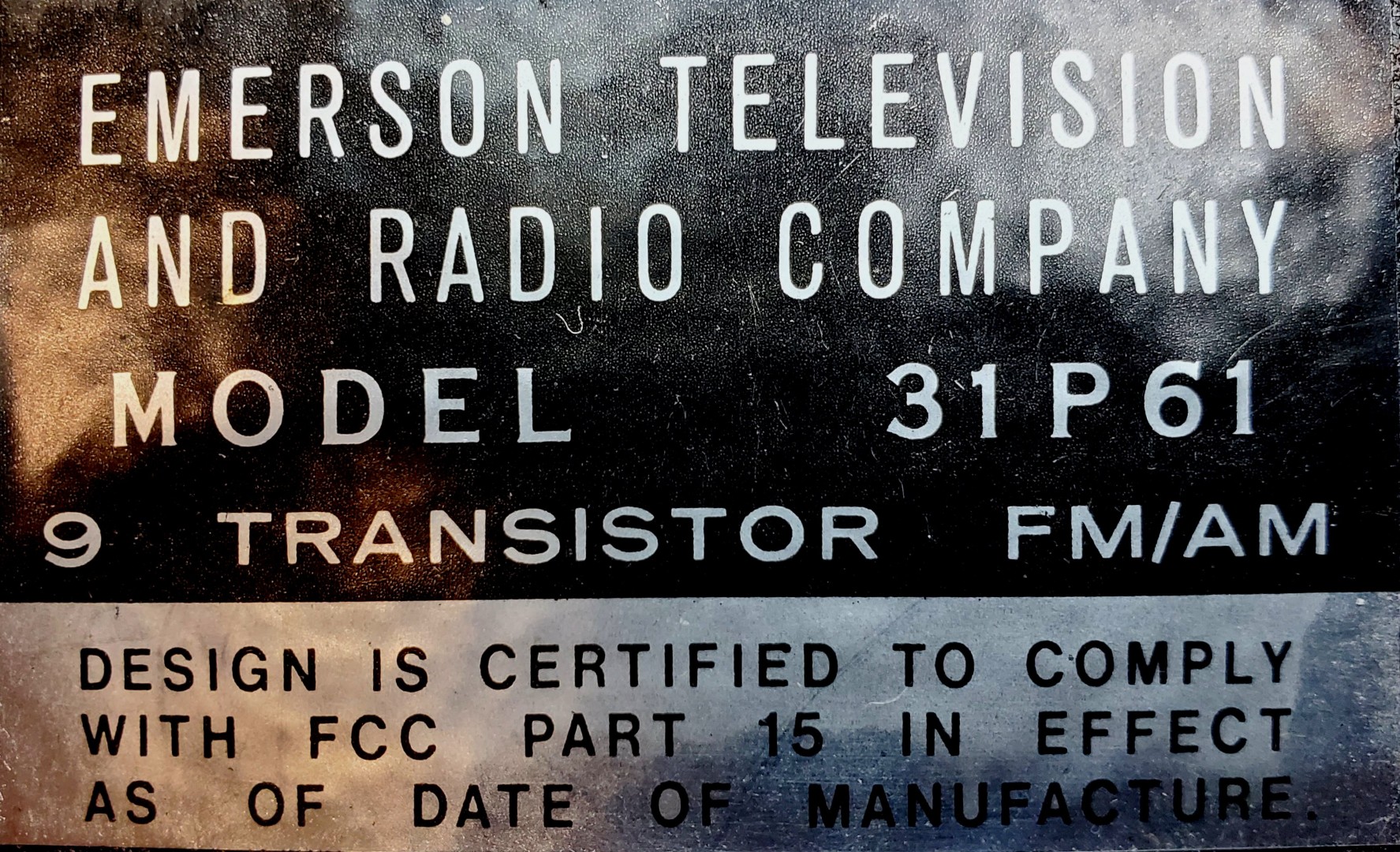
Here’s another radio that has been sitting on the shelf since I bought it 10 – 15 years ago and I decided it was time to finally check it out. Some online sources say the Emerson 31P61 was introduced in 1966 but my SAMS Service Manual is dated 1968 so that may be the better guess. It is an all-analog 9 transistor design powered by 4 C cells and measuring 9” x 5.25” x 2.5”. Although it uses a ceramic vari-cap tuning condenser, has no tuned RF stage on AM and has a smallish 4 1/4” ferrite rod antenna, its AM performance is amazingly good. Once again, we are seeing that transistor technology was advancing at a fast rate and by 1968 their superior gain and signal-to-noise specs allowed fairly simple circuits to perform surprisingly well. Controls are basic: On/Off/Volume and Tuning knobs and an AM/FM/FM AFC slide switch. There is a mono earbud jack and a 6 Volt DC input jack on the left side. Its design is simple yet visually appealing…this is a nice-looking radio.
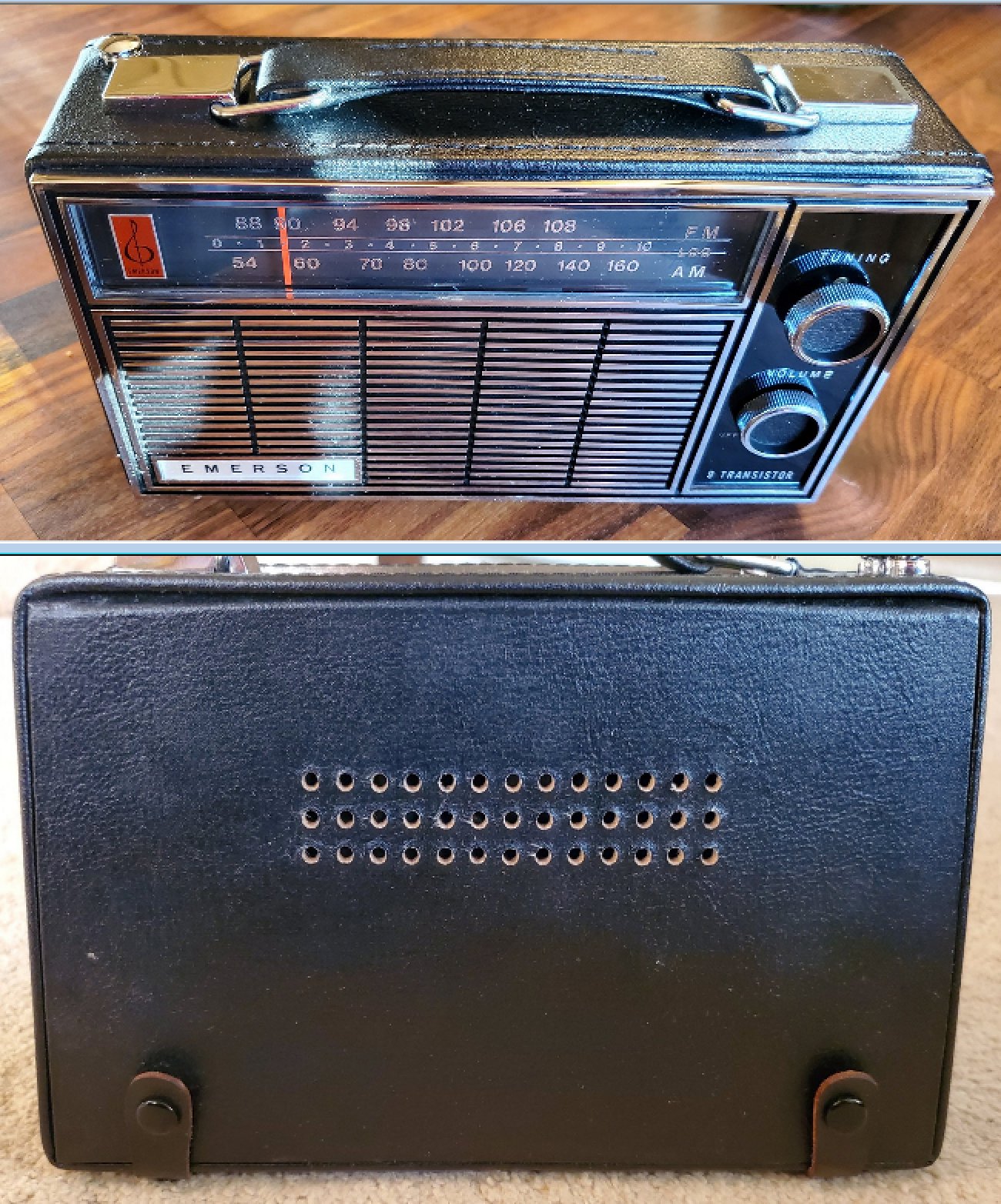
Not having been used for at least the years I’ve owned it and who knows how long before that I wasn’t surprised that the volume control was very noisy and intermittent but a quick shot of De-Ox-It cured that. Performance seemed as if the alignment was quite far off but sound was pretty good so I proceeded to align it.


Performance: After getting the Service Manual from SAMS I found the alignment was indeed noticeably off and after the adjustments were done performance and dial calibration were much improved. I mentioned above that the 31P61’s design was typical of the late 1960’s and its performance bears that out. Typical portable radios of this era tend to be better on AM than FM since the AM transistor technology had matured while FM in portables was still rather new and some circuit components such as FM IF filters were crude by today’s standards. Maybe the fact that the FM band was much less crowded in 1968 meant that FM selectivity was not considered as important as it is today. The Emerson’s AM performance was surprisingly good rating **** on the AM Mega Shootout, while FM performance was mediocre, rating *** on the FM Mega Shootout list. On FM selectivity is more of limiting factor compared with sensitivity which was average and again typical for the era. But overall, I find the radio enjoyable to use with strong AM, natural analog tuning and decent audio. Battery life from the 4 C cells should be excellent.
Sound Quality: I would characterize the 31P61’s audio as crisp and clear and a bit on the lean side. If you favor clarity and intelligibility, you will like it, but for music lovers who want a warmer, full-bodied kind of sound there may be better choices.
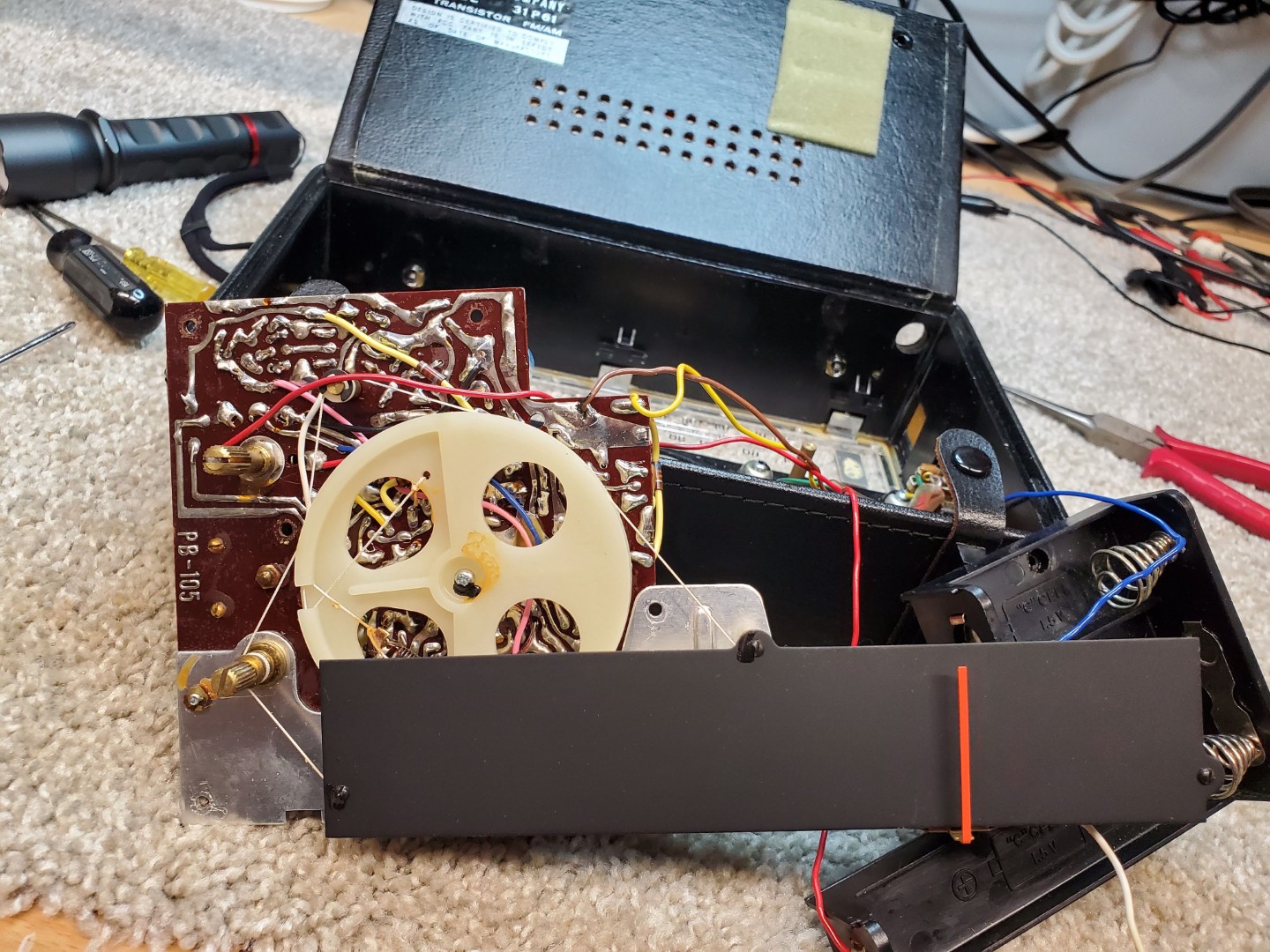
Above: Tuning Wheel Makes PCB Access Difficult
The only negatives concern serviceability. Although all of the alignment points are accessible by merely opening the back of the radio (many radios require that you remove the chassis to align them) , removing the chassis to access the printed circuit side of the board reveals that repairs would be difficult. The biggest problem is that much of the board is covered by the large tuning wheel…to access the entire board would require removing the dial string. I was able to check some but not all of the 8 electrolytic capacitors and they tested good…since the radio seemed to be working normally, I decided not to remove the dial string to access the rest. Another potential problem is that the earphone and DC input jacks are glued into the cabinet so if any of those connections break while you are jockeying the chassis around you will probably have to remove that jack assembly and glue it back after you have made repairs.
One other minor complaint is that they couldn’t manage to stretch the FM band to fill the full length of the tuning dial as the AM does so the FM frequencies are squeezed a bit closer toether…not a deal killer, just an observation..
Conclusion: The unassuming Emerson 31P61 surprised me with excellent AM performance rating **** on the AM Mega Shootout list. And although FM was mediocre by today’s standards it is certainly good enough for typical reception. The 31P61 was a low-priced radio in its day which offered good performance and great value for the money and it takes its place in my prized stable of all-analog portable radios.
 radiojayallen
You must be logged in to post a comment.