Deshibo GA 800 Loop Antenna
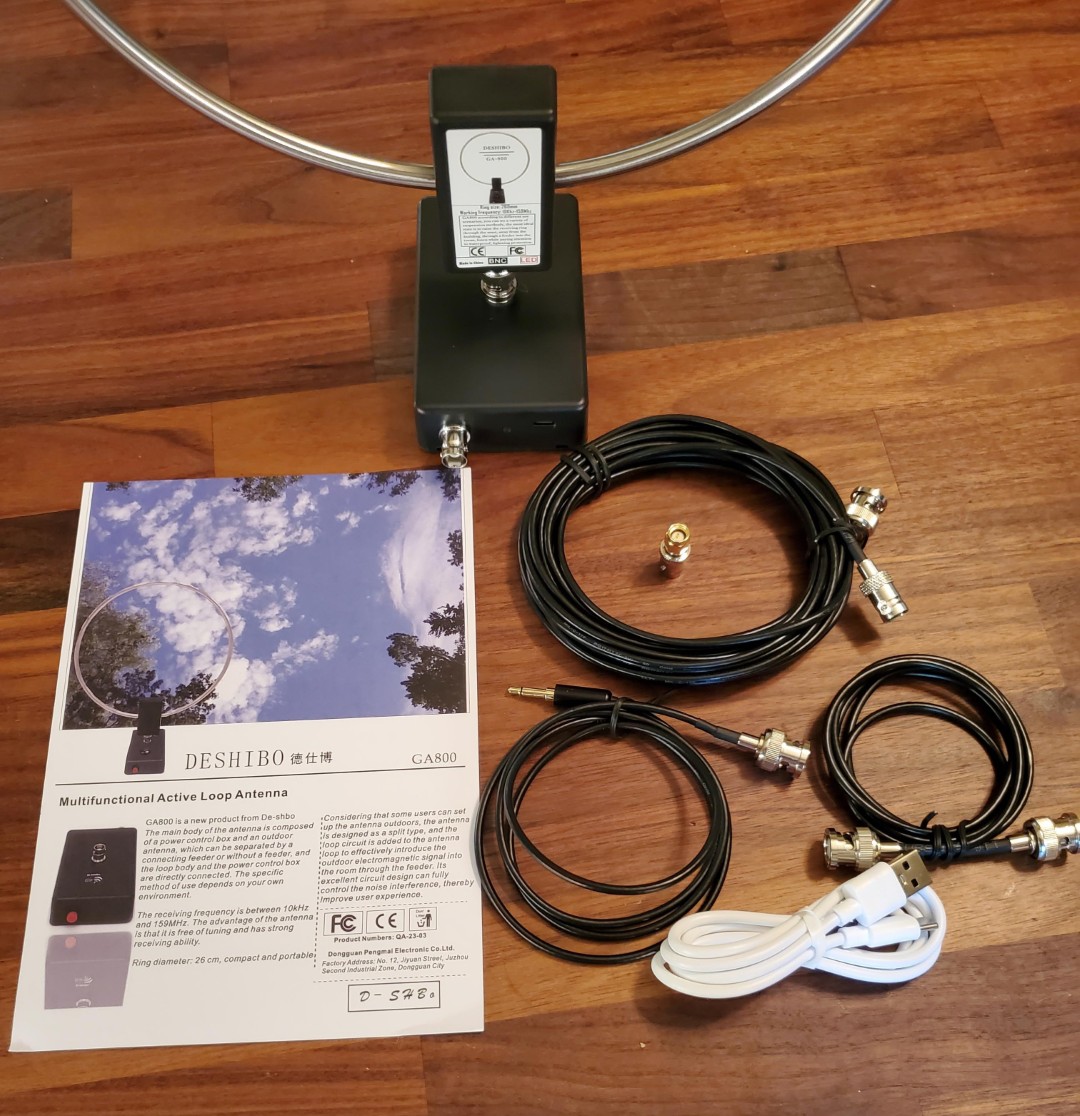
The Deshibo GA800 from GOOZEEZOO was introduced late 2023 as an update to their GA450. Although it is described as being automatically tuned I think it is more accurately described as an untuned loop…either way there is no tuning needed which makes remote placement possible. Frequency coverage is stated as 10 KHz through 159 MHz which means it includes LW, MW, SW, FM and even Airband…such wide coverage is unusual. It is currently selling for $119.
Reviews I’ve seen are mixed and after testing it I understand why different users have had different experiences. This antenna is great in certain applications…exactly how you intend to use it will determine how successful it will be for you.
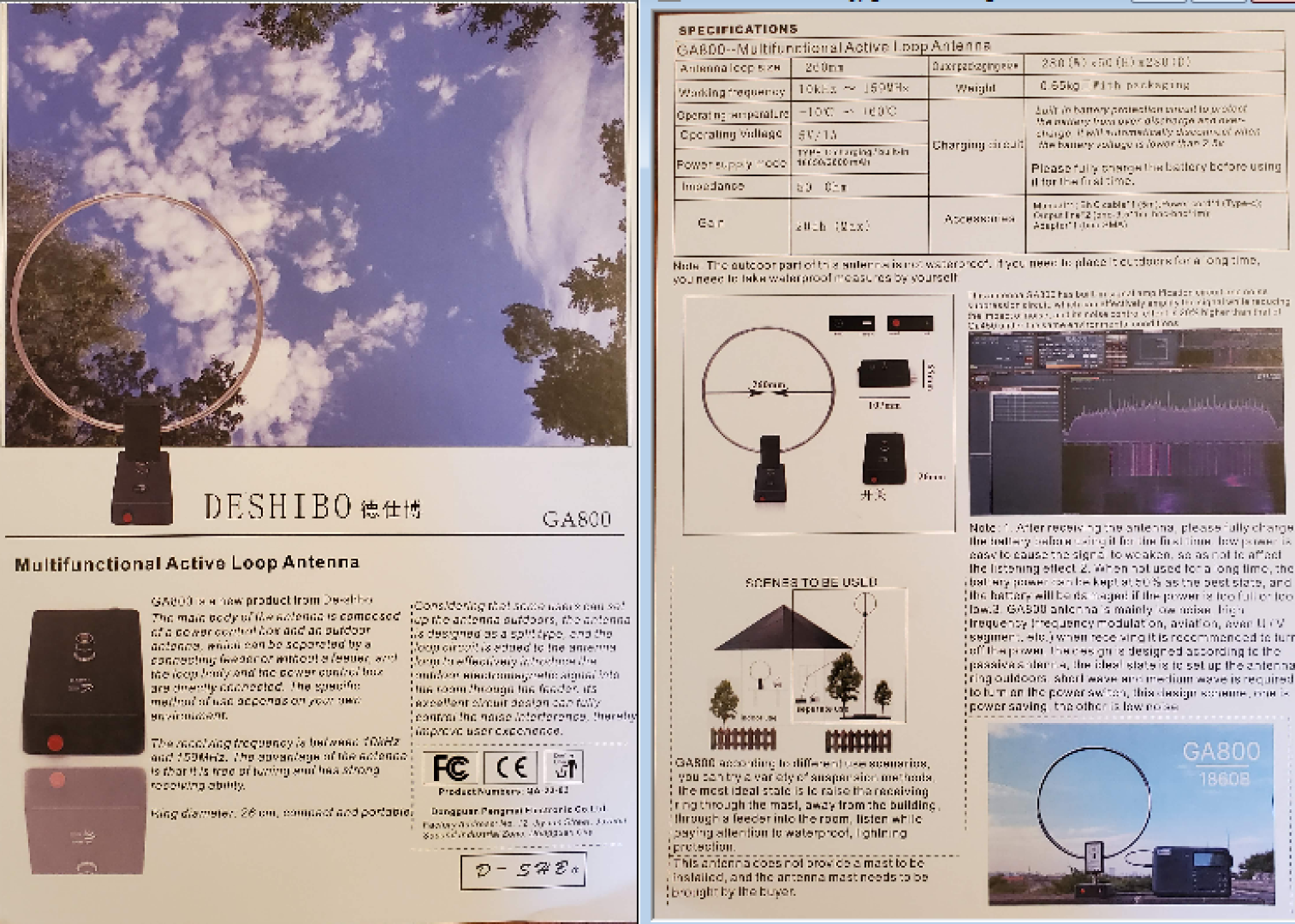
Specifications:
Loop Diameter: 10.2 inches
Output: 50 ohms via a BNC jack
Gain: 20 db
USB C Charging Jack with internal 2500mAh Li-ion battery
LED Power Indicator
LED Charging Indicator: Red=Charging – Green= Charged

In The Box:
GA800 Antenna
Operating Instruction Card
BNC cable: 16.4 feet (for remote loop placement)
BNC to 1/8” Mini Plug cable 3.3 foot
BNC to BNC Cable 3.3foot
USB C Charging Cable
BNC to SMA Adapter
Interestingly, the instructions say to turn power off for use at FM and higher frequencies…more on that later.

Checking It Out: Depending on how you are going to use this antenna setup can be very simple. One of the benefits of this design is that, since it requires no tuning, the loop can be placed away from your radio, ideally outdoors or at least away from local noise sources and where signals are stronger, such as in a window. For this purpose, a 16 foot cable is provided but you could substitute a longer lead-in if needed. But my first tests were using the loop right at my radio listening location to see how its reception compared with what the radios could do with theirs built-in antennas. I used a few popular portable radios and results were similar with all of them but it was also true that lesser radios showed more improvement with the loop…that was to be expected.
Shortwave was most impressive. Many signals were improved significantly with not only stronger signals levels but improved signal to noise ratios. SW performance was excellent, especially considering the relatively small loop size. It did seem that some frequencies were more improved than others…signal levels were higher with the loop but the signal to noise improvement ranged from no improvement to substantial improvement. On some stations the improvement was dramatic.

MW (AM) was better at the top of the AM band than at the bottom. Athough I often saw increased signal levels, that didn’t necessarily equate to better reception. There were a few signals that could be improved dramatically by careful loop positioning but the overall AM performance was not as good as a typical passive tuned AM loop.
FM was another story. The instructions say to turn the power off for FM and higher frequencies which means the amplifier does not work at FM frequencies and this was indeed the case. With power off the FM reception was interesting. With the loop in the same location as the radio I never saw any improvement on FM and usually reception was worse. . My instincts tell me that what I was seeing was random effects of using the loop and perhaps its associated wiring to pick up FM signals. (More on this when I test the loop in a remote location).
To Sum Up: Using the antenna right at your radio’s location the Deshibo is by far most impressive on SW with sometimes dramatic improvement in listenability. It sometimes helped a bit on AM as well but not as much as a passive tuned AM loop. Of course, all of that might change once the antenna is located remotely.
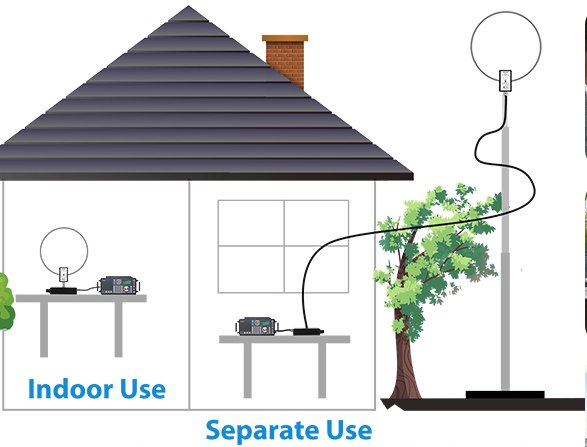
Using The Loop Away From The Radio: As I expected, this is where the GA800 impressed me the most. There is no provision for mounting the loop element…for that you will have to devise your own installation. For testing I improvised a temporary setup which put the loop about 15 feet above the ground but more significantly, it was out in the backyard in a spot where there is no RFI. (My listening room has fairly low RFI but things are much better out in the yard). Here the results were truly spectacular. SW, which was good indoors, was that much better outdoors. AM and FM were much better too with many signals showing significant improvement when switching to the loop. Even FM was better due to the receiving element being in a much better location. However, I don’t think the loop is very efficient on FM but combined with the lead-in FM signals were not too bad…perhaps the lead in itself was actually capturing some FM signal.

Conclusion: The Deshibo GA800 is an interesting loop. For me its main advantage is that, since it needs no tuning, it can be located away from your listening location to import a cleaner signal. While it did certainly improve SW reception when used near the radio, its performance on other bands was far better when remotely mounted, away from local noise sources and at a higher elevation.
It comes with a nice assortment of cables with the ability to output to BNC, Mini or SMA jacks as well as a 16 foot cable for remote loop placement. You will have to improvise your own mounting but for die-hard radio fans this shouldn’t be too much of an obstacle as the loop element is small and light weight. One important note though is that since the antenna is not weather proof, for a permanent outdoor installation you would have to waterproof it yourself. It might be better to use it with a temporary outdoor setup as I did for my tests. Even indoors it gives a nice boost for SW signals and some AM signals were improved as well but if you want an indoor AM antenna there are better options using relatively inexpensive tuned AM loops such as the Kaito AN-100 or Terk AM Advantage. I would say that FM was poor when used in the same location as the radio. But, (and this is a BIG but), if you can get the receiving element outdoors or at least in a better location it will let you grab more clean signals and could significantly increase your listenable signals.
Conditionally Recommended.
 radiojayallen
You must be logged in to post a comment.