CountyComm GP-1/WB AM/FM/Weather Radio
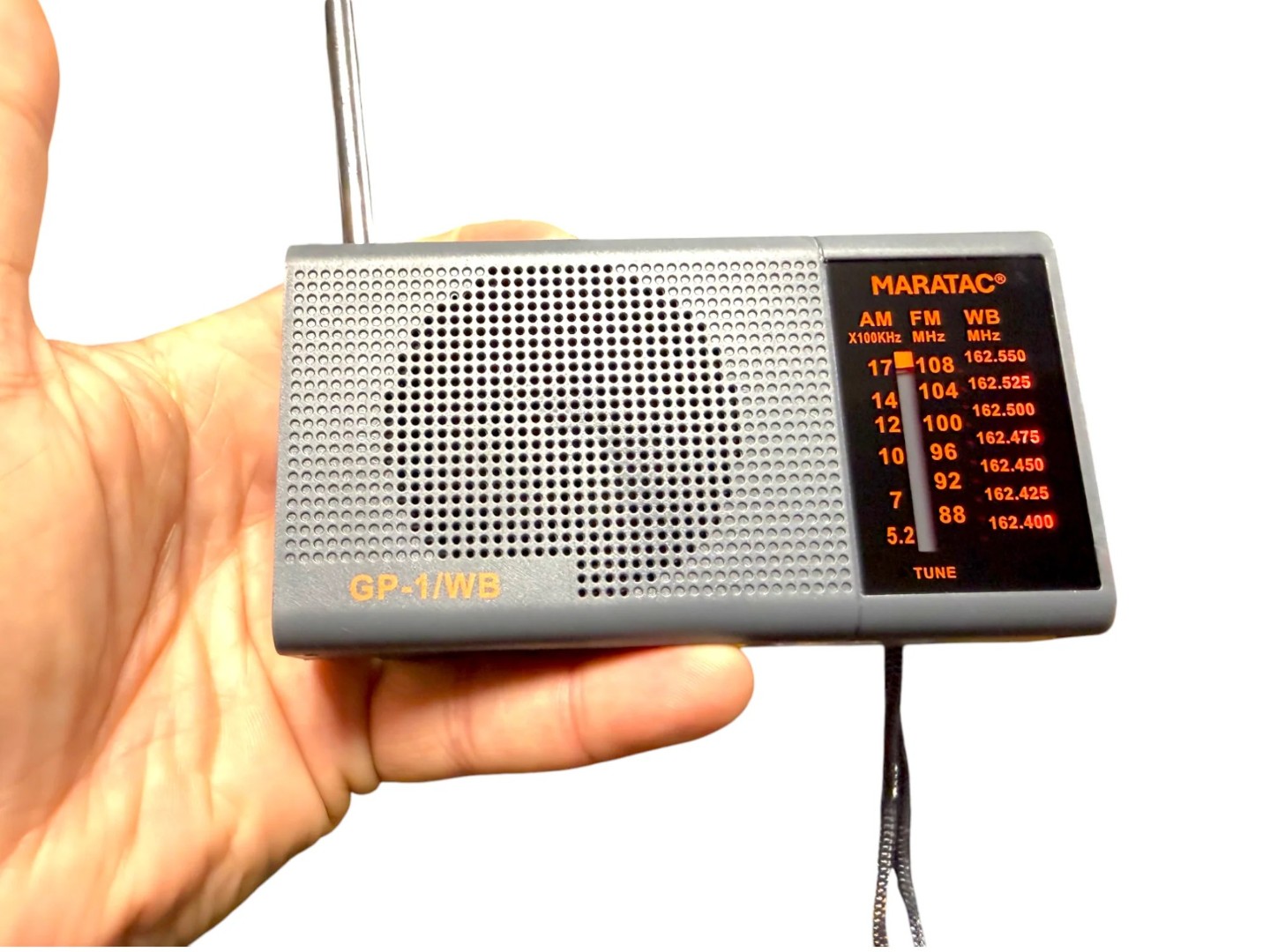
The new GP-1 follows the tactical concept of many CountyComm products designed to be survival tools. It currently sells for $19.50 and with tax and shipping mine cost a total of $25.96. CountyComm specializes in emergency preparedness gear…see their full line of items here:
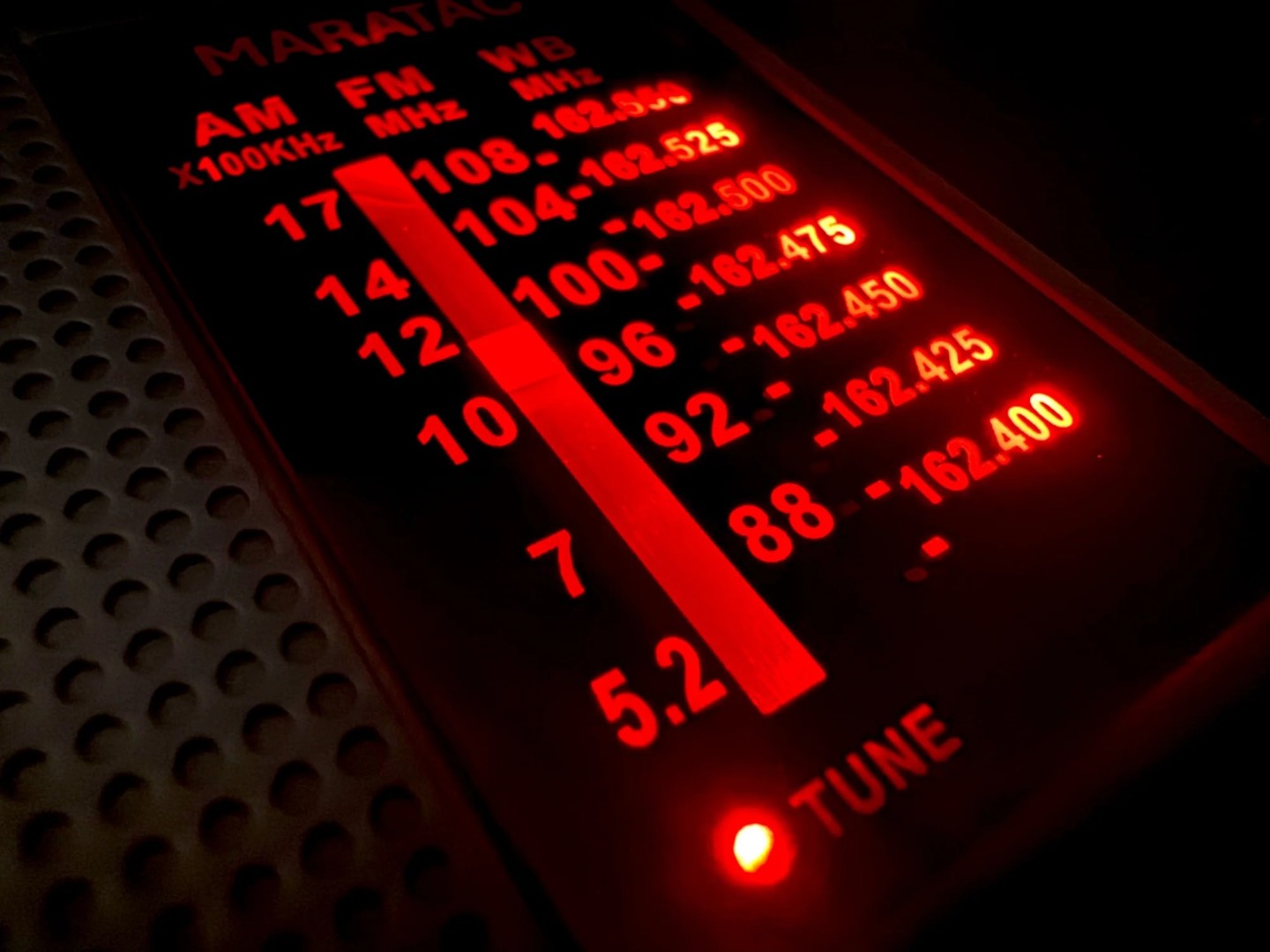
The GP-1/WB is described as a purpose-built AM/FM & Weather Band radio engineered for reliability in the harshest conditions. CountyComm’s website goes on to describe it as “Compact, Rugged, Emergency-Ready, Fully Backlit Display, Night Vision Red AM / FM / WB, Full Polycarbonate Body for Incredible Strength, Built for resilience, Designed for clarity.”
There are other interesting design considerations given: “Housed in UV-stabilized polycarbonate, this radio shrugs off daily wear and long-term outdoor exposure. Inside, a custom circuit board ensures exceptional performance and clarity that far exceeds expectations for a unit this compact. Power is simple and field-ready: the GP-1/WB runs on two standard AA batteries (alkaline or rechargeable), delivering 50+ hours of runtime with the backlight engaged. Ultra-compact and lightweight, it’s smaller than you think—but tougher than you’d expect. Unlike most consumer radios, the GP-1/WB was originally developed under U.S. government contract specifications. Designed in Santa Clara, California with input from a University of California engineering professor. After rigorous prototyping, production was handed to a major radio manufacturer—who further enhanced its internal performance while preserving its original mission: deliver a compact, rugged, go-anywhere radio built for emergencies.”

Specifications
- Weight: 4.6 oz
- Dimensions: 4.9″ × 2.6″ × 1.25″
- FM: 88–108 MHz
- AM: 520–1710 KHz
- WB: 162.400 – 162.550 MHz
In Use: OK. CountyComm’s claims are impressive and rather unique in the realm of consumer portable AM/FM/WB radios so given its relatively low price I was interested to see how it would compare with other inexpensive radios. I have no way to test CountyComm’s claims concerning the structural longevity of the polycarbonate cabinet or its custom circuit board but their corporate mission has always stressed ruggedness and emergency preparedness of all of their items (both radios and non-radio items) and I have no reason to dispute them. The radio does seem like a solid package and I like the fact that it runs on AA batteries giving you the choice of primary or rechargeable cells (although the radio does not charge cells internally. Quality modern alkalines have a shelf life of 10 years or so and this radio does not put a load on the batteries while off so you could tuck this radio away knowing it will be ready when you need it.

Performance was not bad for an inexpensive small portable radio but it was not a standout either. Actual reception was not bad but tuning is a bit finicky. To explain, all of the small analog-style DSP radios I have seen have tricky tuning…this is to be expected. As you tune into a station you will find that it has several peaks…the correct peak will be the strongest. But the quirk of such radios is that this proper tuning position can move as if there is some kind of automatic fine tuning. This means that you can find what seems like the strongest peak, but if you turn the radio off, then on again, it may no longer be tuned to the station at all…again, this seems to be inherent in all such designs. Sometimes, after turning the radio back on, as you try to find the last station you had tuned in you may encounter a different station. This doesn’t affect actual reception, it is just inconvenience. My guess is that the circuit attempts to seek signals or lock onto a frequency as you tune which is why turning the power off then on usually winds up at a different frequency. I would think different programming of the chip might reduce or eliminate this but I am just guessing.

On a more positive note, reception is pretty good on AM and quite good on FM and Weather Band. I have 4 receivable WB signals here at varying strengths and this radio heard all of them as well as my other radios. FM too was good for a small inexpensive radio…typical reception will be fine for general use.
You don’t expect big sound from such a small portable but here it was what you would expect…definitely designed for midrange clarity. The radio is handsome and the red illuminated dial is cool as well, and it seems clear that the radio is physically well-made.
There are other small AM/FM portables that also include NOAA Weather…you can find several in this roundup of pocket portables: Pocket Portable Radios | radiojayallen
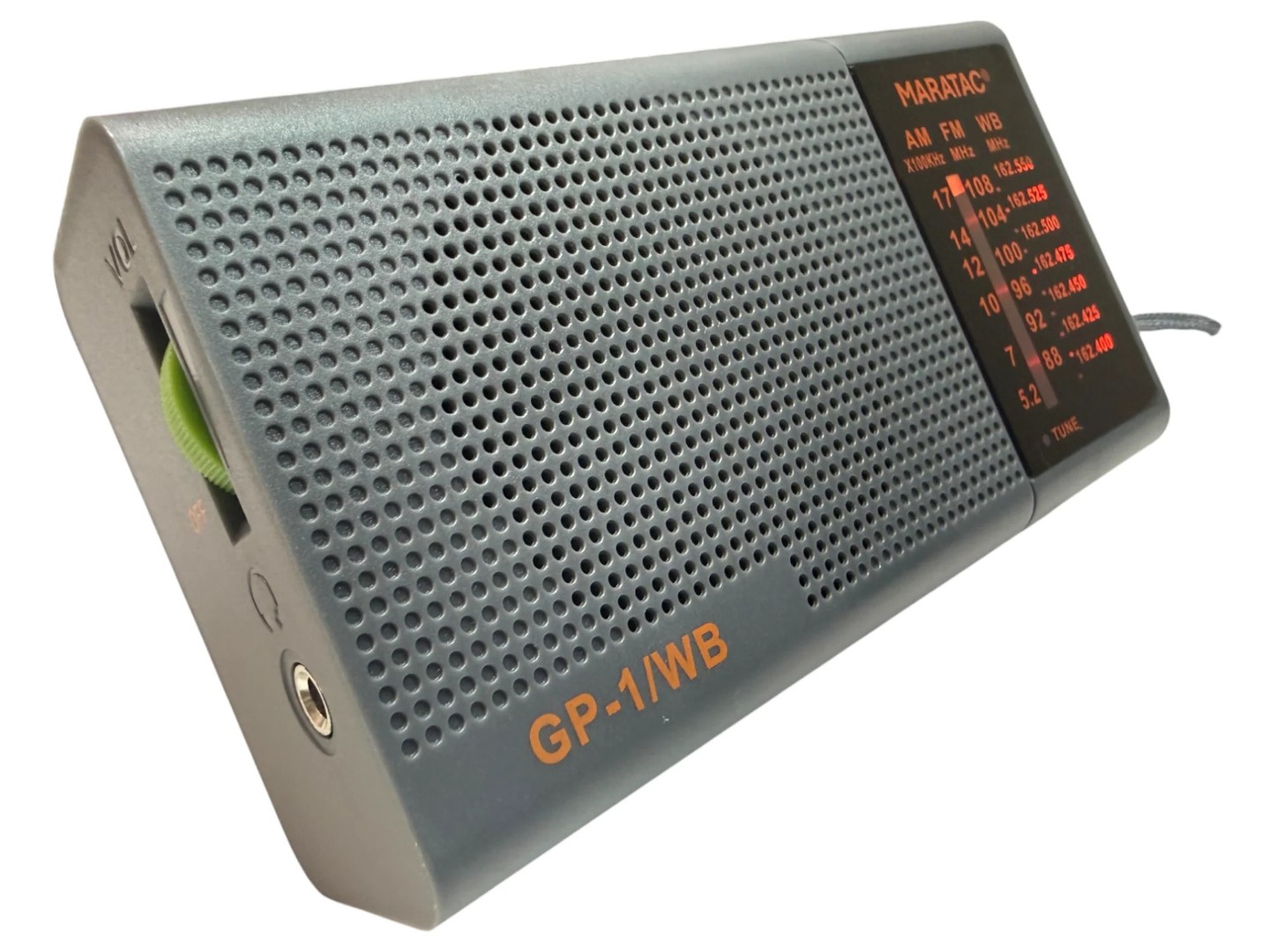
Conclusion: I am often asked after posting a new review questions such as, “What is the reason to buy this radio” or “what makes it different from other radios it competes with”. In the case of the GP-1/WB there are two things which distinguish it from many of the smaller radios being made today. The most obvious difference is construction materials and quality. The CountyComm is designed to withstand physical punishment that might destroy more typical radios…ruggedness and survivability is the raison d’etre of all CountyComm products. While I didn’t subject the radio to physical abuse to test this, CountyComm products have earned a reputation for quality. A less obvious difference is that it runs on standard AA batteries which many users would consider an advantage. As I mentioned earlier, quality alkaline batteries have a 10 year shelf life and unlike digital radios the GP-1/WB puts no load on the batteries when the radio is off so this radio can be tucked away and ready for use long into the future.
Recommended.
Available at CountyComm’s website:
 radiojayallen
You must be logged in to post a comment.